 Back
Classification, Systematics, and Phylogeny: Understanding Biological Diversity
Study Guide - Smart Notes
 Tailored notes based on your materials, expanded with key definitions, examples, and context.
Understanding Biological Diversity
Introduction to Biological Classification
Biological classification is the process by which scientists organize and categorize all life forms based on shared characteristics and evolutionary history. This system allows biologists to communicate about species, understand relationships, and study the diversity of life on Earth.
Taxonomy: The science of naming, describing, and classifying organisms.
Classification: The arrangement of organisms into hierarchical groups based on similarities and differences.
Systematics: The study of evolutionary relationships among organisms, integrating taxonomy and classification to reflect phylogeny.

Common Descent and Phylogeny
Evolutionary Relationships
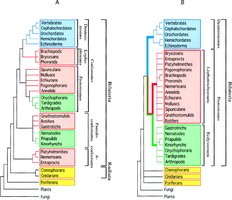
All organisms have descended, with modification, from ancestral forms. The evolutionary history of life is depicted as a branching diagram called a phylogeny, which illustrates patterns of lineage splitting and common ancestry.
Phylogenetic tree: A diagram that represents evolutionary relationships among organisms.
Each branch point (node) represents the divergence of two or more groups from a common ancestor.
Homology and Analogy
Homologous Structures
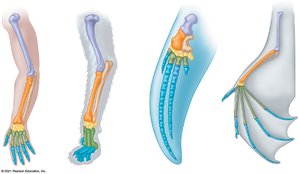
Homology refers to characteristics inherited with modification from a corresponding feature in a common ancestor. Homologous structures may differ in function but share an underlying anatomical similarity due to shared ancestry.
Example: The forelimbs of humans, cats, whales, and bats are structurally similar, reflecting descent from a common tetrapod ancestor.
Analogy (Homoplasy)
Analogous structures arise from convergent evolution, where unrelated organisms independently evolve similar adaptations to similar environments or lifestyles. These similarities are not due to shared ancestry.
Example: The wings of bats and birds are analogous as wings, but the underlying bone structure is homologous.
Taxonomy and the Linnaean System
Carl Linnaeus and Binomial Nomenclature
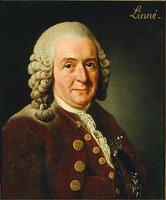
Carl von Linné (Carolus Linnaeus) established the hierarchical structure of classification and the conventions for naming species using binomial nomenclature. Each species is given a two-part Latin name: the genus and the specific epithet.
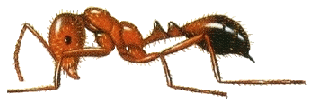
Example: Solenopsis invicta (red imported fire ant)
Both parts must be used to accurately identify the species.
The Hierarchy of Life
The Linnaean hierarchy organizes life into increasingly specific categories, from the most inclusive to the least inclusive:
Domain
Kingdom
Phylum
Class
Order
Family
Genus
Species
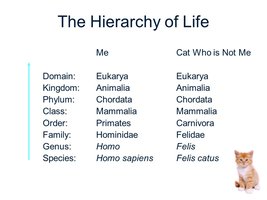
Example of Hierarchical Classification
Category | Me | Cat Who is Not Me |
|---|---|---|
Domain | Eukarya | Eukarya |
Kingdom | Animalia | Animalia |
Phylum | Chordata | Chordata |
Class | Mammalia | Mammalia |
Order | Primates | Carnivora |
Family | Hominidae | Felidae |
Genus | Homo | Felis |
Species | Homo sapiens | Felis catus |

Linking Classification and Phylogeny
Systematics and Phylogenetic Trees
Systematics aims to make classification reflect evolutionary history (phylogeny). Organisms are grouped into clades, which include an ancestor and all its descendants. Phylogenetic trees (cladograms) are hypotheses about evolutionary relationships, constructed using shared derived characters (synapomorphies).
Clade: A group consisting of an ancestor and all its descendants.
Synapomorphy: A shared derived character unique to a clade.
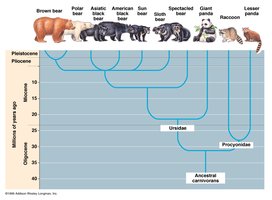
Homology, Analogy, and Character States
Identifying Homologous and Analogous Characters
Homologous characters are inherited from a common ancestor, while analogous characters result from convergent evolution. Determining whether a trait is homologous or analogous is crucial for reconstructing accurate phylogenies.
Plesiomorphy: Ancestral character state.
Apomorphy: Derived character state.
Synapomorphy: Shared derived character state.
Outgroup Comparison
Outgroup comparison helps determine whether a character state is ancestral or derived by comparing the study group to a closely related group outside it. If a character state is found in both the study group and the outgroup, it is considered ancestral (plesiomorphic).
Phylogenetic Reconstruction and Cladistics
Building Cladograms
Cladistics is a method of phylogenetic analysis that groups organisms based on shared derived characters. The resulting cladogram is a branching diagram that represents hypotheses about evolutionary relationships.
Each branch point (node) represents the divergence of two or more groups from a common ancestor.
Clades are nested within larger clades, reflecting the hierarchical nature of evolutionary relationships.
Modern Phylogenetics
Modern phylogenetic analysis incorporates both morphological and genetic data from many taxa. Methods such as maximum parsimony and maximum likelihood are used to find the most probable evolutionary trees.
Maximum parsimony: Assumes the simplest explanation (fewest evolutionary changes) is most likely correct.
Maximum likelihood: Uses probability models to find the tree most likely to have produced the observed data.
Summary
Classification systems are dynamic and reflect our understanding of evolutionary history.
Taxonomy, classification, and systematics are interconnected fields that organize biological diversity.
Phylogenetic trees are hypotheses that help us understand the evolutionary relationships among organisms.
Homology and analogy must be carefully distinguished to accurately reconstruct evolutionary history.
