 Back
Colonization of Land by Fungi: Evolution, Diversity, and Ecological Roles
Study Guide - Smart Notes
 Tailored notes based on your materials, expanded with key definitions, examples, and context.
Colonization of Land by Fungi
Introduction and Evolutionary Context
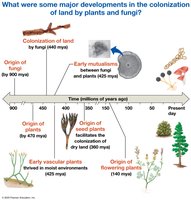
The colonization of land by fungi was a pivotal event in Earth's history, fundamentally altering terrestrial ecosystems. Fungi, along with plants and animals, were among the first organisms to transition from aquatic to terrestrial environments, shaping the evolution of life on land.
Fungi are eukaryotic organisms that absorb nutrients from their environment.
They played a crucial role in enabling plants to colonize land, often forming symbiotic relationships.
Fungi and plants likely colonized land together around 500 million years ago (mya).
Early mutualisms, such as mycorrhizae, facilitated nutrient acquisition for plants lacking true roots.
Fungal Characteristics and Adaptations
Major Characteristics of Fungi
Fungi are defined by several unique structural and functional features that distinguish them from plants and animals.
Heterotrophic by absorption: Fungi secrete enzymes to break down complex molecules and absorb the resulting small organic compounds.
Cell walls contain chitin: Chitin is a strong, flexible polysaccharide that provides structural support.
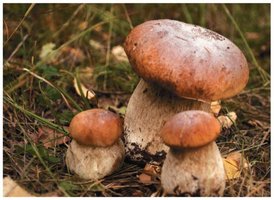
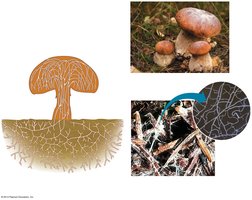
Body structure: Most fungi are multicellular and composed of networks of hyphae, forming a mycelium adapted for efficient nutrient absorption.
Specialized Hyphae and Mycorrhizal Associations
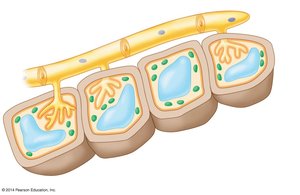
Some fungi have evolved specialized hyphae, such as haustoria, to interact closely with plant hosts. These adaptations are essential for symbiotic relationships like mycorrhizae.
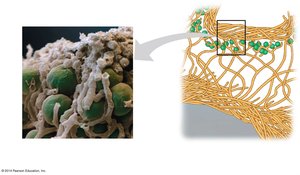
Haustoria: Specialized hyphae that penetrate plant cell walls (but not plasma membranes) to exchange nutrients.
Mycorrhizae: Symbiotic associations between fungal hyphae and plant roots, enhancing nutrient and water uptake for plants.
Fungal Life Cycles and Reproduction
Sexual and Asexual Reproduction
Fungi reproduce by producing spores, which can be generated sexually or asexually. Their life cycles often include unique stages not found in plants or animals.
Sexual reproduction: Involves plasmogamy (fusion of cytoplasm), karyogamy (fusion of nuclei), and meiosis to produce genetically diverse spores.
Asexual reproduction: Many fungi can also reproduce rapidly by mitotic production of spores.
Heterokaryotic stage: A unique phase where cells contain two or more genetically distinct nuclei.
Evolution and Diversity of Fungi
Origin and Phylogeny of Fungi
Fungi are more closely related to animals than to plants, sharing a common ancestor with unicellular protists. Molecular and fossil evidence has clarified their evolutionary history.
Closest relatives: Fungi are most closely related to nucleariids, while animals are related to choanoflagellates.
Fossil record: Fossilized fungal hyphae and spores date back to about 460 million years ago.
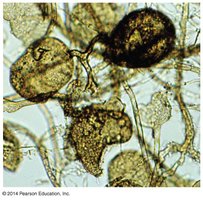
Major Groups of Fungi
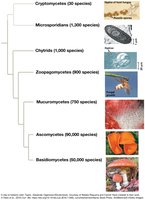
Fungi are classified into several major groups based on molecular and morphological data. Each group has distinct characteristics and ecological roles.
Group | Key Features | Example |
|---|---|---|
Chytrids | Flagellated spores; aquatic and terrestrial |
|
Ascomycetes | Produce ascocarps; diverse habitats |
|
Basidiomycetes | Produce basidiocarps (mushrooms); important decomposers |
|
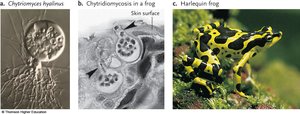
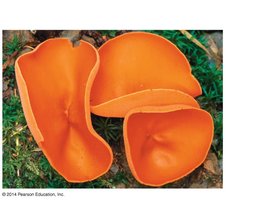
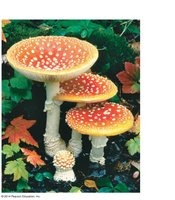
Ecological Roles of Fungi
Fungi and Chemical Cycling
Fungi are essential decomposers, breaking down organic matter and recycling nutrients in ecosystems. They also form mutualistic relationships that impact chemical cycling and soil formation.
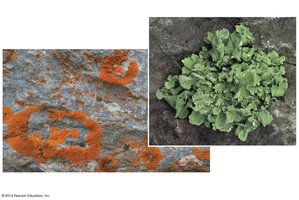
Lichens: Symbiotic associations between fungi and photosynthetic microorganisms (algae or cyanobacteria). Lichens contribute to soil formation and colonization of new habitats.
Biotic Interactions: Mutualists and Pathogens
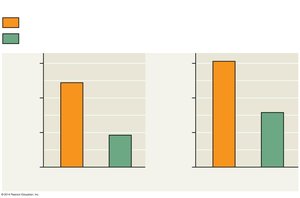
Fungi engage in a variety of biotic interactions, acting as mutualists, endophytes, or pathogens. These relationships can benefit, harm, or have no effect on their hosts.
Mycorrhizal fungi: Enhance plant nutrient uptake and stress tolerance.
Endophytes: Fungi that live inside plant tissues, often providing protection against pathogens.
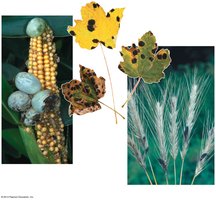
Pathogens and parasites: About 30% of known fungal species are parasitic, primarily on plants but also on animals.
Summary
Fungi were among the first organisms to colonize land, playing a key role in the evolution of terrestrial ecosystems.
They exhibit diverse forms, reproductive strategies, and ecological roles, including mutualism, decomposition, and pathogenesis.
Fungi and plants together transformed Earth's chemical cycling and biotic interactions, enabling the rise of complex terrestrial life.
