 Back
Colonization of Land by Fungi: Evolution, Diversity, and Ecological Roles
Study Guide - Smart Notes
 Tailored notes based on your materials, expanded with key definitions, examples, and context.
Colonization of Land by Fungi
Evolutionary History and Importance
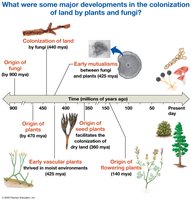
The colonization of land by fungi was a pivotal event in Earth's history, fundamentally shaping terrestrial ecosystems. Fungi, along with plants and animals, were among the first organisms to inhabit land, playing essential roles in nutrient cycling and biotic interactions.
First land organisms: Fungi likely colonized land before plants, with fossil evidence dating back over 460 million years.
Mutualism: Early mutualistic relationships between fungi and plants (such as mycorrhizae) facilitated plant survival and nutrient acquisition.
Ecological impact: Fungi contributed to soil formation and enabled the diversification of land plants.
Key adaptations: Fungi developed specialized structures and symbiotic relationships to thrive in terrestrial environments.
Major Characteristics of Fungi
Fungi are heterotrophic eukaryotes that absorb nutrients from their environment. Their unique structural and reproductive adaptations distinguish them from other life forms.
Cell walls: Fungal cell walls contain chitin, a strong, flexible polysaccharide.
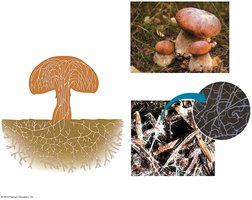
Mycelium and hyphae: Fungi consist of networks of branched hyphae (filaments) forming a mycelium, which is adapted for efficient absorption.
Feeding: Fungi absorb nutrients externally, breaking down organic matter with enzymes.
Specialized Hyphae and Mycorrhizal Associations
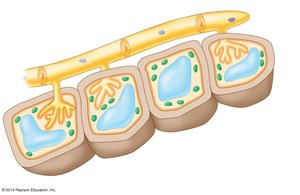
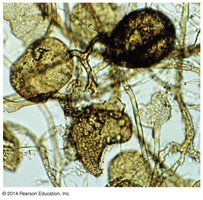
Some fungi possess specialized hyphae called haustoria, which allow them to extract or exchange nutrients with plant hosts. Mycorrhizal fungi form symbiotic relationships with plant roots, enhancing nutrient uptake.
Haustoria: Specialized hyphae that penetrate plant cells without damaging them, facilitating nutrient exchange.
Mycorrhizae: Symbiotic associations between fungi and plant roots, crucial for plant growth and soil health.
Diversity and Evolution of Fungi
Phylogeny and Major Groups
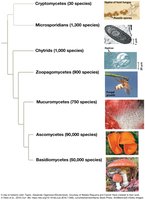
Molecular analyses have clarified the evolutionary relationships among fungal groups. Fungi are more closely related to animals than to plants, with a wide diversity of species and ecological roles.
Phylogenetic relationships: Fungi are most closely related to unicellular protists called nucleariids.
Major groups: Chytrids, Zygomycetes, Ascomycetes, Basidiomycetes, and others.
Species diversity: Over 150,000 known species, with estimates up to 1.5 million.
Chytrids
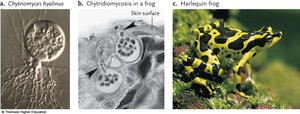
Chytrids are early-diverging fungi found in aquatic and terrestrial habitats. They possess flagellated spores and play roles in decomposition and disease.
Flagellated spores: Unique among fungi, allowing movement in water.
Ecological impact: Some chytrids are pathogens, affecting amphibian populations.
Ascomycetes
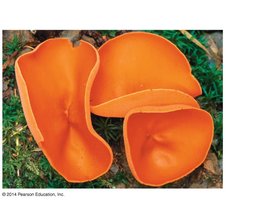
Ascomycetes are the largest fungal group, inhabiting diverse environments and producing fruiting bodies called ascocarps.
Ascocarps: Structures where spores are produced.
Ecological roles: Decomposers, pathogens, and mutualists.
Example: Orange peel fungus (Aleuria aurantia).
Basidiomycetes
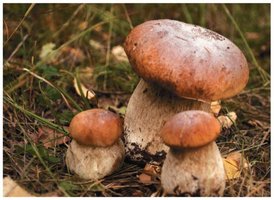
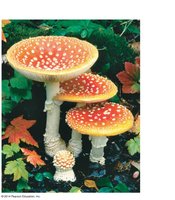
Basidiomycetes include important decomposers and ectomycorrhizal fungi. Their fruiting bodies are commonly known as mushrooms.
Basidiocarps: Mushroom structures where spores are produced.
Ecological roles: Decomposition, nutrient cycling, and symbiosis with plants.
Example: Fly agaric (Amanita muscaria).
Reproduction in Fungi
Sexual and Asexual Reproduction
Fungi reproduce by producing spores, which can be generated through sexual or asexual life cycles. These reproductive strategies contribute to their adaptability and diversity.
Sexual reproduction: Involves plasmogamy (fusion of cytoplasm), karyogamy (fusion of nuclei), and meiosis.
Asexual reproduction: Spores produced by mitosis, allowing rapid colonization.
Life cycle stages: Haploid, diploid, and heterokaryotic phases.
Ecological Roles of Fungi
Mutualisms and Pathogenic Interactions
Fungi engage in a variety of biotic interactions, acting as mutualists, pathogens, or decomposers. These relationships are essential for ecosystem functioning and plant health.
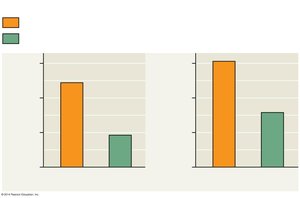
Mutualists: Mycorrhizal fungi and endophytes enhance plant growth and resistance to stress.
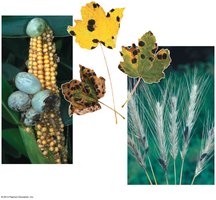
Pathogens: About 30% of fungi are parasites or pathogens, affecting plants and animals.
Examples: Corn smut, tar spot fungus, and ergots on rye.
Lichens and Chemical Cycling
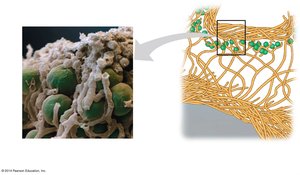
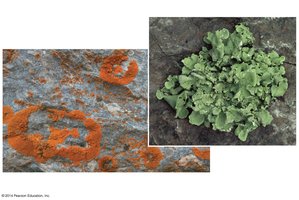
Lichens are symbiotic associations between a photosynthetic microorganism (usually an alga) and a fungus. They play a crucial role in soil formation and nutrient cycling, especially in early terrestrial ecosystems.
Lichen anatomy: Fungal hyphae surround algal cells, facilitating nutrient exchange.
Growth forms: Foliose (leaflike) and crustose (encrusting) lichens.
Ecological impact: Lichens help create soil and may have aided in the colonization of land.
Summary and Key Concepts
Fungi played an essential role in the colonization of land, forming mutualistic relationships with plants.
Fungi are diverse, with specialized adaptations for feeding, reproduction, and symbiosis.
Fungi fundamentally changed chemical cycling and biotic interactions in terrestrial ecosystems.
Understanding fungal biology is crucial for appreciating their ecological and economic importance.
