 Back
Colonization of Land by Plants: Evolution, Adaptations, and Diversity
Study Guide - Smart Notes
 Tailored notes based on your materials, expanded with key definitions, examples, and context.
Colonization of Land by Plants
Evolutionary History and Major Characteristics of Plants
The colonization of land by plants marks a pivotal event in Earth's history, fundamentally altering ecosystems and biotic interactions. Plants evolved from aquatic ancestors and developed adaptations that enabled survival and diversification on land.
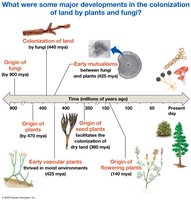
First land organisms: Small plants, fungi, and animals appeared on land around 500 million years ago.
Major developments: Mutualism between plants and fungi, origin of vascular and seed plants, and the rise of flowering plants.
Key characteristics: Multicellularity, photosynthetic autotrophy, and presence of chlorophyll a and b.
Phylogenetic Relationships and Plant Evolution
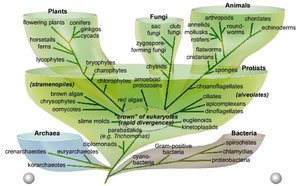
Plants are part of the eukaryotic domain and share evolutionary history with other groups such as fungi and animals. The closest relatives of land plants are charophyte algae.
Charophytes: Share traits with land plants, including rings of cellulose-synthesizing complexes and flagellated sperm structure.
Phylogenetic tree: Shows relationships among plants, fungi, animals, protists, archaea, and bacteria.
Adaptations Enabling the Move to Land
Benefits and Challenges of Terrestrial Life
Transitioning from aquatic to terrestrial environments provided plants with new opportunities and challenges.
Benefits: Unfiltered sunlight, abundant CO2, and nutrient-rich soil.
Challenges: Scarcity of water, lack of structural support, and risk of zygote dehydration.
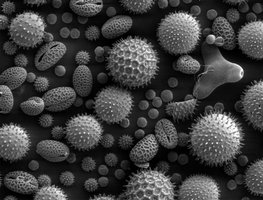
Sporopollenin: Protective layer found in charophytes and land plant spores/pollen grains, preventing desiccation.
Key Derived Traits of Land Plants
Land plants possess several derived traits absent in their algal ancestors, which facilitated their success on land.
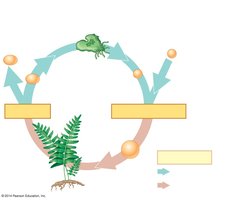
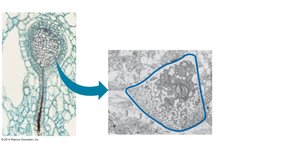
Alternation of generations: Life cycle alternates between multicellular haploid gametophyte and multicellular diploid sporophyte.
Multicellular, dependent embryos: Embryos are retained within female gametophyte tissue and receive nutrients via placental transfer cells.
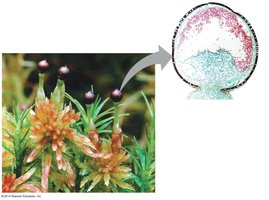
Walled spores produced in sporangia: Spores are protected by sporopollenin and produced in multicellular organs.
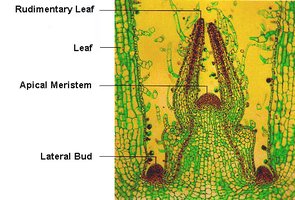
Apical meristems: Regions of cell division at the tips of roots and shoots, enabling growth throughout life.
Additional Adaptations
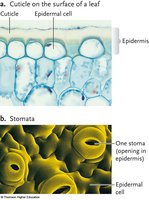
Other adaptations include the development of a cuticle and stomata.
Cuticle: Waxy covering that prevents water loss and protects against microbial attack.
Stomata: Specialized pores for gas exchange (CO2 and O2).
Diversification of Land Plants
Bryophytes: Early Diverging Lineages
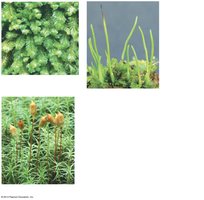
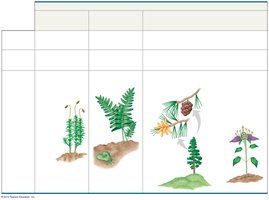
Bryophytes are nonvascular plants that include liverworts, mosses, and hornworts. They are thought to be the earliest diverging lineages from the common ancestor of land plants.
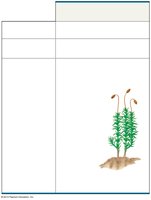
Characteristics: Small, herbaceous, nonwoody plants; gametophyte is dominant and longer-living than sporophyte.
Rhizoids: Anchor bryophytes to the substrate.
Flagellated sperm: Require water for fertilization.
Height constraint: Due to lack of vascular tissue.
Seedless Vascular Plants
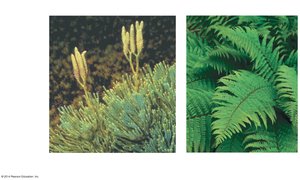
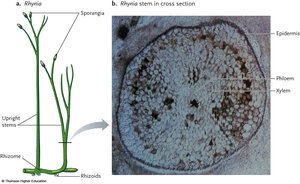
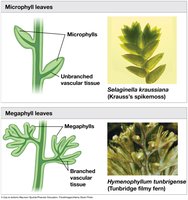
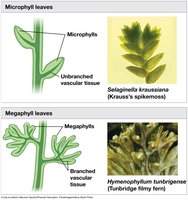
Vascular tissue enabled plants to grow tall and diversify. Early vascular plants lacked seeds and are divided into lycophytes and monilophytes.
Xylem: Conducts water and minerals; contains tracheids strengthened by lignin.
Phloem: Distributes sugars, amino acids, and organic products.
Roots: Anchor plants and absorb water/nutrients.
Leaves: Increase surface area for photosynthesis.
Seed Plants: Gymnosperms and Angiosperms
Seed plants originated about 360 million years ago and are divided into gymnosperms and angiosperms. Seeds and pollen grains are key adaptations for terrestrial life.
Seed: Consists of an embryo, food supply, and protective coat.
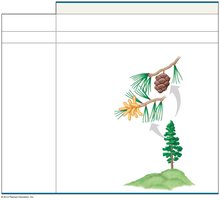
Gymnosperms: "Naked" seeds not enclosed in chambers.
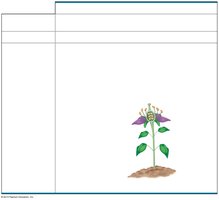
Angiosperms: Seeds develop inside chambers called ovaries (flowers and fruits).
Reduced gametophytes: Microscopic, protected within sporophyte tissues.
Ovules, Pollen, and Seed Evolution
Ovules and pollen grains are essential for reproduction in seed plants. Pollination eliminates the need for water and allows for wide dispersal.
Ovule: Contains female gametophyte surrounded by integument.
Pollen: Male gametophyte enclosed in protective wall; enables pollination by air or animals.
Seed advantages: Dormancy, stored food, and protection.
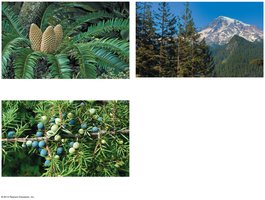
Gymnosperms
Gymnosperms became dominant as the climate became drier, with adaptations such as thick cuticles and small leaves.
Angiosperms: Flowering Plants
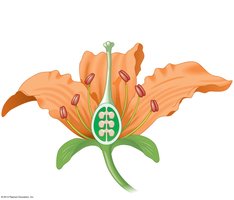
Angiosperms are the most diverse and widespread group of plants, characterized by flowers and fruits.
Flowers: Specialized shoots with four types of modified leaves (sepals, petals, stamens, carpels).
Pollination: Mostly by insects or animals, some by wind.
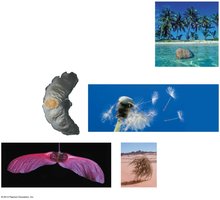
Fruits: Aid in seed dispersal by water, wind, or animals.
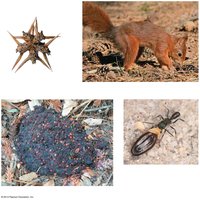
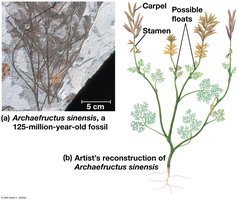
Angiosperm Evolution and Diversity
Angiosperms originated at least 140 million years ago and rapidly diversified, dominating terrestrial ecosystems by the end of the Cretaceous period.
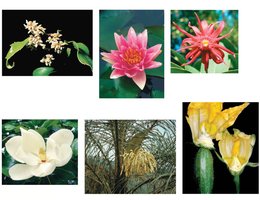
Monocots vs. Eudicots
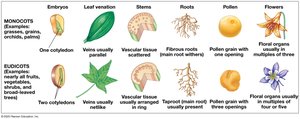
Angiosperms are classified into monocots and eudicots based on several morphological traits.
Trait | Monocots | Eudicots |
|---|---|---|
Embryo | One cotyledon | Two cotyledons |
Leaf venation | Veins usually parallel | Veins usually netlike |
Stems | Vascular tissue scattered | Vascular tissue arranged in ring |
Roots | Fibrous roots (main root lost) | Taproot (main root usually present) |
Pollen | Pollen grain with one opening | Pollen grain with three openings |
Flowers | Floral organs usually in multiples of three | Floral organs usually in multiples of four or five |
Summary
Plants colonized land over 470 million years ago, leading to major evolutionary innovations.
Early land plants radiated into diverse lineages, including bryophytes, seedless vascular plants, gymnosperms, and angiosperms.
Seeds and pollen grains are key adaptations for terrestrial life.
Land plants fundamentally changed chemical cycling and biotic interactions on Earth.
