 Back
BackColonization of Land: Evolution and Diversity of Land Plants and Fungi
Study Guide - Smart Notes
 Tailored notes based on your materials, expanded with key definitions, examples, and context.
Chapter 26 – The Colonization of Land
Evidence of Algal Ancestry
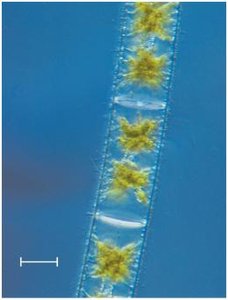
Land plants evolved from photosynthetic algae, specifically green algae, sharing many key traits. These traits provide insight into the evolutionary transition from aquatic to terrestrial life.
Multicellular, eukaryotic, photosynthetic autotrophs: Both plants and algae are complex organisms that produce their own food via photosynthesis.
Cell walls made of cellulose: This structural carbohydrate provides rigidity and protection.
Chloroplasts with chlorophyll a and b: Essential for capturing light energy for photosynthesis.
Circular rings of proteins that synthesize cellulose: Found in both plants and charophyte algae.
Flagellated sperm: Similar structure in charophytes and some land plants.
The Movement to Land: Opportunities and Challenges
Transitioning to terrestrial environments offered new resources but also posed significant challenges for early plants.
Advantages:
Brighter light for photosynthesis
Plentiful CO2 in the atmosphere
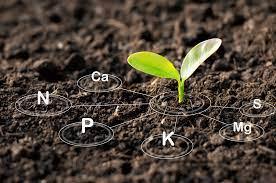
Abundant nutrients in the soil
Challenges:
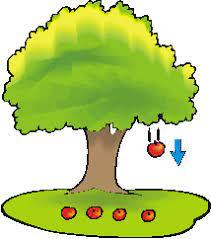
Gravity: Need for structural support
Reliable water source: Risk of desiccation
Drying out: Adaptations required to prevent water loss

Derived Traits Facilitating Movement to Land
Land plants evolved several key traits absent in their algal ancestors, enabling successful colonization of terrestrial habitats.
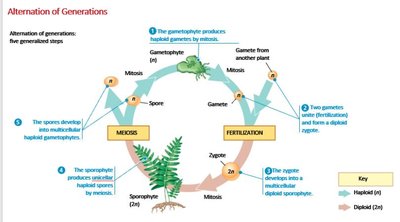
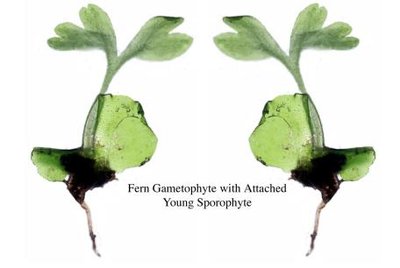
Alternation of generations: Life cycle alternates between multicellular haploid (gametophyte) and diploid (sporophyte) stages.
Multicellular, dependent embryos: Embryos develop within parental tissue, receiving protection and nutrients.
Walled spores produced in sporangia: Spores are protected by sporopollenin, allowing survival in harsh conditions.
Apical meristems: Regions of active cell division at root and shoot tips, enabling growth and resource acquisition.
Alternation of Generations
Plants exhibit a life cycle with two distinct multicellular stages: the gametophyte (haploid) and the sporophyte (diploid).
Gametophyte: Haploid generation producing gametes by mitosis.
Sporophyte: Diploid generation producing haploid spores by meiosis, formed by fusion of egg and sperm.
Variation among plant groups: Size and longevity of each generation, and whether they live independently.
Multicellular, Dependent Embryos
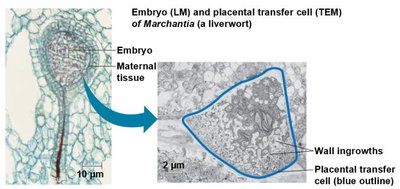
Land plants are called embryophytes because their embryos are retained and nourished within parental tissue, providing protection and nutrition during early development.
Embryo develops within gametophyte tissue.
Maternal tissue supplies nutrients via placental transfer cells.
Walled Spores Produced in Sporangia
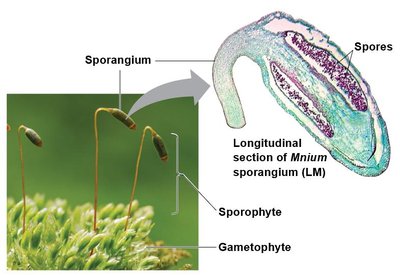
Sporophytes produce spores in multicellular organs called sporangia. The spore walls contain sporopollenin, a durable polymer that protects spores from desiccation and environmental stress.
Allows spores to disperse in air without drying out.
Apical Meristems
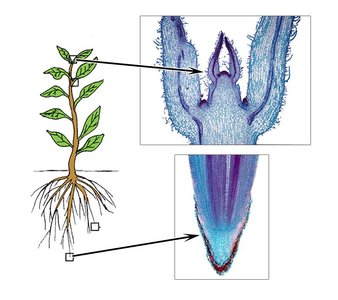
Apical meristems are regions of active mitotic cell division at the tips of roots and shoots, enabling plants to grow and access new resources above and below ground.
Facilitates growth and resource acquisition.
Other Derived Traits: Cuticle and Stomata
Additional adaptations help land plants conserve water and regulate gas exchange.
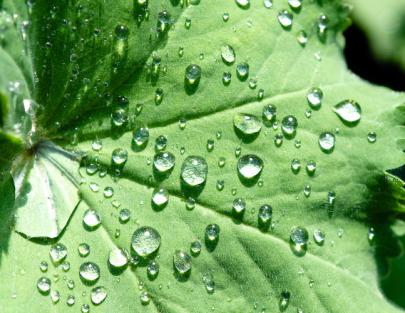
Cuticle: Waxy outer layer covering the epidermis, reducing water loss.
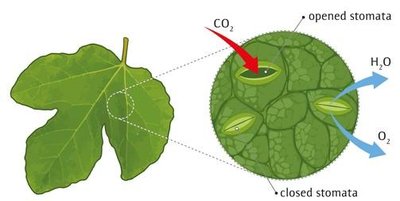
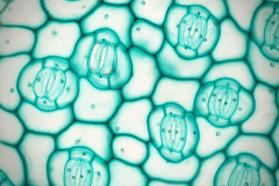
Stomata: Pores in the epidermis that regulate gas exchange and water loss, closing during hot and dry conditions.
Fungi Played a Key Role in the Colonization of Land
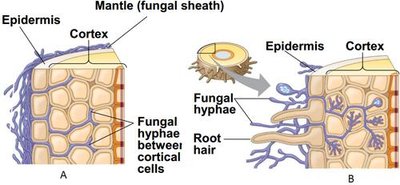
Mycorrhizal Relationships
Early land plants lacked true roots and leaves, relying on symbiotic relationships with fungi (mycorrhizae) to obtain nutrients from the soil.
Mutualistic relationship: Both fungi and plants benefit.
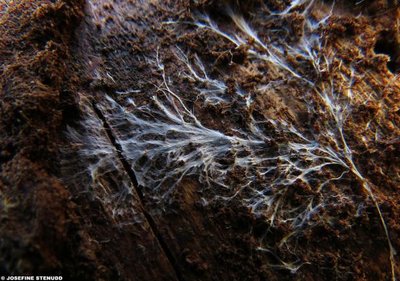
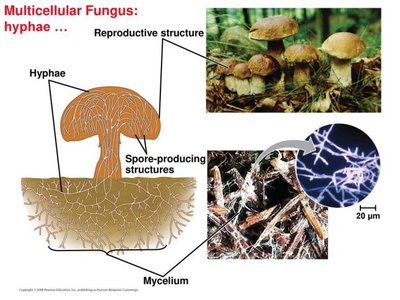
Fungi are heterotrophs: Absorb nutrients via filaments called hyphae.
Adaptations of Fungi
Fungi secrete hydrolytic enzymes to break down food externally, then absorb nutrients. Their cell walls contain chitin, and their hyphae form dense, branched networks called mycelium, increasing surface area for absorption.
Hydrolytic enzymes: Digest organic material externally.
Chitin: Provides structural support to fungal cells.
Mycelium: Interwoven mass of hyphae for efficient nutrient absorption.
Types of Mycorrhizal Fungi
There are two main types of mycorrhizal associations:
Arbuscular mycorrhizae (endomycorrhizae): Hyphae penetrate the plant root cell wall but remain outside the cytoplasm.
Ectomycorrhizae: Hyphae form a sheath around the root and grow into extracellular spaces of the root cortex.
Early Plants Radiated into a Diverse Set of Lineages
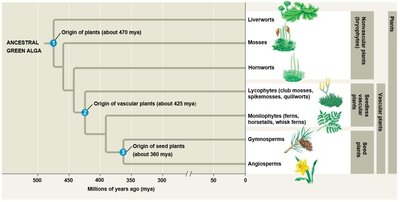
Major Plant Groups: Vascular and Nonvascular
Plants are classified based on the presence or absence of vascular tissue, which is specialized for transporting water and nutrients.
Nonvascular plants (Bryophytes): Lack vascular tissue; include mosses, liverworts, and hornworts.
Vascular plants: Possess vascular tissue; include seedless and seeded plants.
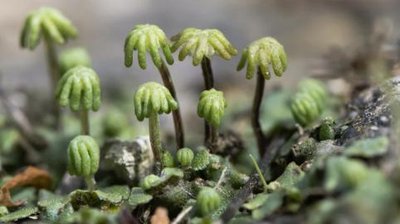
Bryophytes: Nonvascular Plants
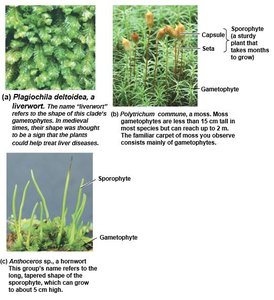
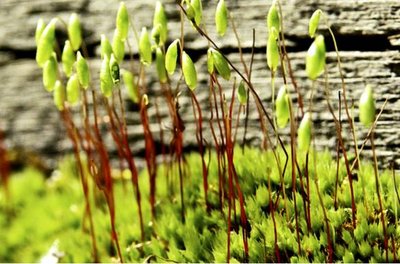
Bryophytes were the first plants to diverge and dominate early terrestrial environments. They are typically small, herbaceous, and found in moist habitats due to their reliance on water for reproduction.
Three clades: liverworts, mosses, hornworts
Anchored by rhizoids (not true roots)
Gametophyte is the dominant life stage
Seedless Vascular Plants
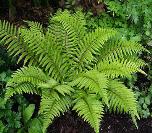
Seedless vascular plants originated about 425 million years ago, developing vascular tissues, roots, and leaves. Their sporophyte generation is dominant, and they include two major clades: lycophytes and monilophytes.
Vascular tissue: Xylem (water/mineral transport) and phloem (sugar transport)
Roots: Anchor plant and absorb water/nutrients
Leaves: Main photosynthetic organ; microphylls (single vein) and megaphylls (branched veins)
Sporophyte: Larger, more complex, free-living and photosynthetic
Transport in Xylem and Phloem
Vascular plants have two types of vascular tissue:
Xylem: Conducts water and minerals upward through tube-shaped cells.
Phloem: Transports sugars, amino acids, and other organic molecules throughout the plant.
Seeds and Pollen Grains: Key Adaptations of Seed Plants
Seed Plants: Gymnosperms and Angiosperms
Seed plants originated around 360 million years ago and are divided into two major clades:
Gymnosperms: "Naked" seeds, no flowers; seeds develop on cones.
Angiosperms: Seeds develop in chambers within flowers; produce fruit.
Key Adaptations of Seed Plants
Seed plants possess several adaptations that allow them to thrive in dry environments:
Reduced gametophytes: Microscopic, develop within tissues of parent sporophyte for protection and nutrition.
Ovules: Structure containing the female gametophyte and egg cell, surrounded by protective integument.
Pollen: Male gametophyte encased in a protective wall, enabling fertilization without water.
Seeds: Consist of a sporophyte embryo, food supply, and protective coat; provide advantages in protection, dispersal, dormancy, and nutrition.
Gymnosperms
Gymnosperms were the first seeded plants, dominant during the Permian period. They lack flowers and fruits, and their seeds are exposed on cones. Pollination occurs via wind.
Angiosperms
Angiosperms are the most diverse group of plants, making up over 90% of all extant plant species. Their key adaptations include flowers for reproduction and fruit for seed dispersal.
Flowers: Specialized reproductive organs
Fruit: Mature ovary that protects and aids in dispersal of seeds
Recap
The colonization of land by plants and fungi was a pivotal event in Earth's history, leading to the evolution of diverse terrestrial ecosystems. Key adaptations such as alternation of generations, multicellular embryos, walled spores, apical meristems, and symbiotic relationships with fungi enabled plants to thrive on land. The development of vascular tissue, seeds, and flowers further diversified plant lineages, shaping the modern flora.
