 Back
BackCommunities and Ecosystems: Interactions, Health, and Energy Flow
Study Guide - Smart Notes
 Tailored notes based on your materials, expanded with key definitions, examples, and context.
Communities and Ecosystems
Introduction
Communities and ecosystems are fundamental units of ecological study, focusing on the interactions among organisms and their environment. Understanding these interactions is essential for grasping how biodiversity is maintained and how energy and nutrients flow through biological systems.
Community Structure and Interactions
Definition of a Community
A community consists of all populations of organisms living close enough for interaction. Each species within a community occupies a niche, which is its functional role, including its habitat, activity patterns, resources obtained, and interactions with other species.
Niche: The sum of a species' use of the biotic and abiotic resources in its environment.
Habitat: The physical environment where an organism lives.
Resource Partitioning: The differentiation of niches that enables similar species to coexist.
Types of Community Interactions
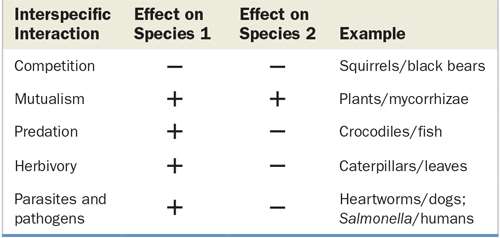
When niches overlap, populations interact in various ways. These interactions shape community structure and influence species survival and reproduction.
Competition: Both species are harmed by the interaction as they vie for the same resources.
Mutualism: Both species benefit from the interaction.
Predation: One species (predator) benefits and the other (prey) is harmed or killed.
Herbivory: An animal consumes plant parts, benefiting the herbivore and harming the plant.
Parasitism/Pathogens: The parasite/pathogen benefits while the host is harmed.
Commensalism: One species benefits while the other is neither helped nor harmed.
Interspecific Interaction | Effect on Species 1 | Effect on Species 2 | Example |
|---|---|---|---|
Competition | – | – | Squirrels/black bears |
Mutualism | + | + | Plants/mycorrhizae |
Predation | + | – | Crocodiles/fish |
Herbivory | + | – | Caterpillars/leaves |
Parasites and pathogens | + | – | Heartworms/dogs; Salmonella/humans |
Competition and Resource Partitioning
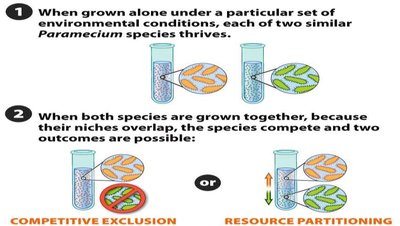
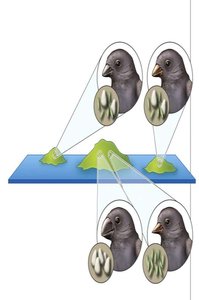
Competition occurs when two species use the same limited resource. This can lead to competitive exclusion (one species outcompetes the other) or resource partitioning (species evolve to use different resources or habitats).
Mutualism
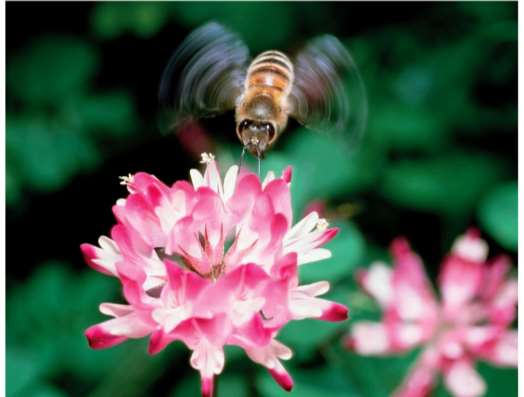
Mutualism is a relationship where both species benefit. Examples include pollinators and flowering plants, or mycorrhizal fungi and plant roots.
Predation
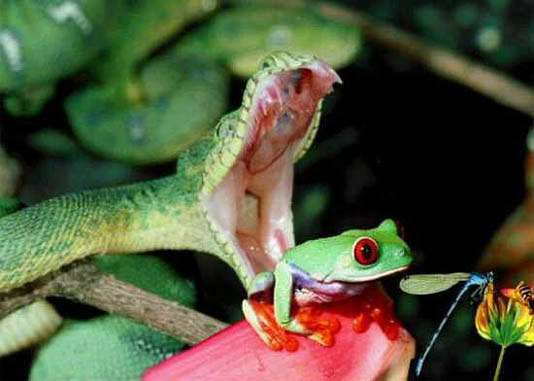
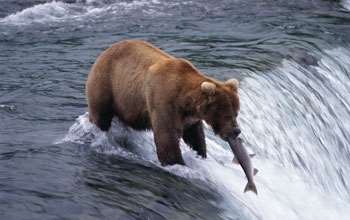
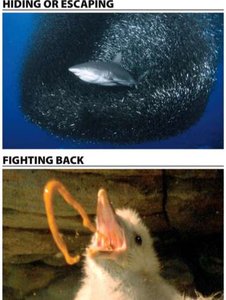
Predation involves one organism (the predator) killing and consuming another (the prey). Predators have adaptations for capturing prey, while prey have evolved defenses to avoid predation.
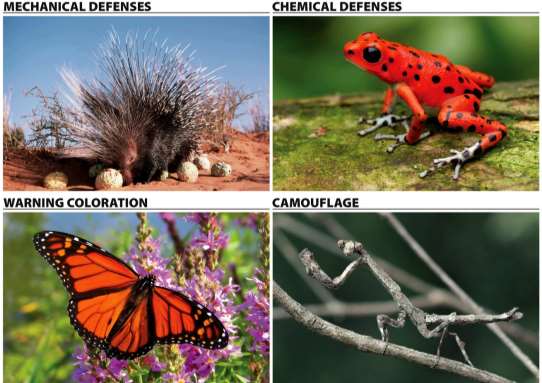
Physical defenses: Thorns, shells, spines, etc.
Chemical defenses: Toxins, poisons.
Behavioral defenses: Fleeing, hiding, forming groups.
Herbivory
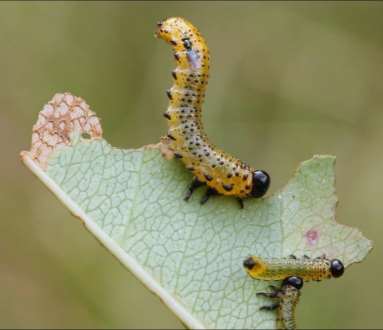
Herbivory is the consumption of plant parts by animals. Plants have evolved various defenses such as thorns, toxins, and tough leaves to reduce herbivory.
Parasitism and Pathogens
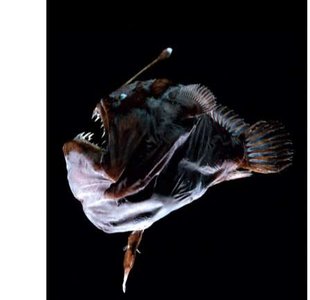
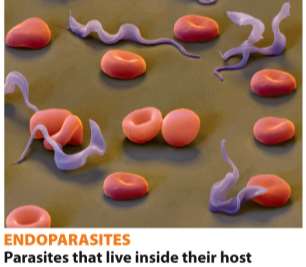
Parasites live in or on a host and derive nutrients at the host's expense. Pathogens are disease-causing organisms. Both have evolved strategies to maximize their success, sometimes manipulating host behavior.
Commensalism
Commensalism is an interaction where one species benefits and the other is unaffected. An example is birds riding on large mammals to eat insects stirred up by movement.
Community Health
Species Diversity
Species diversity, including species richness (number of species) and relative abundance, is crucial for community stability. Diverse communities are more resilient to disturbances and pathogens.
Keystone, Umbrella, Flagship, and Indicator Species
Certain species have a disproportionately large impact on community structure:
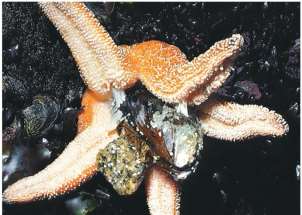
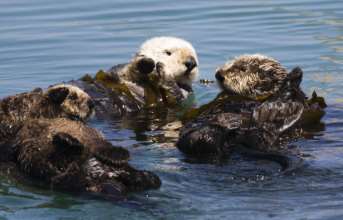
Keystone species: Their removal causes dramatic changes in community composition.
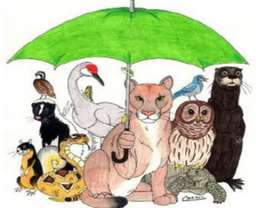
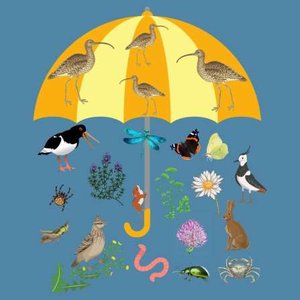
Umbrella species: Protecting them indirectly protects many other species.
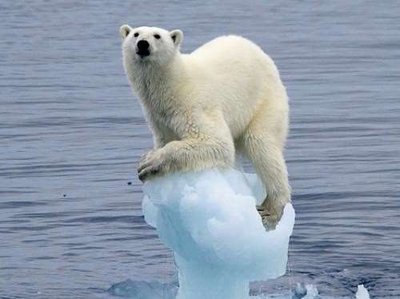
Flagship species: Charismatic species used to rally conservation efforts.
Indicator species: Their presence, absence, or abundance reflects environmental conditions.
Invasive Species
Invasive species are non-native organisms that cause ecological or economic harm in a new environment. They often outcompete native species, leading to reduced biodiversity and altered ecosystem processes.
Example: European rabbits in Australia multiplied rapidly, causing widespread ecological damage.
Ecosystem Determinants
Definition of an Ecosystem
An ecosystem includes all living organisms in a community plus the abiotic environment (chemical resources and physical conditions).
Biomes
Biomes are large ecosystems defined by climate, particularly temperature and precipitation. There are five major aquatic biomes (determined by salinity, depth, and water movement) and nine terrestrial biomes (determined by temperature and precipitation).
Climate Determinants
Temperature and precipitation are influenced by Earth's curvature, latitude, and ocean currents. These factors create distinct climate zones and influence biome distribution.
Energy and Chemical Flow in Ecosystems
Energy Flow
Energy enters ecosystems as sunlight and is converted to chemical energy by photosynthesis (primary production). Energy flows through trophic levels (producers, consumers, decomposers), but only about 10% of energy is transferred from one level to the next; the rest is lost as heat.
Producers: Autotrophs (plants, algae, some bacteria) that convert solar energy to chemical energy.
Consumers: Heterotrophs that eat other organisms.
Decomposers: Organisms that break down dead material, recycling nutrients.
Chemical Cycling
Chemical elements cycle between abiotic reservoirs and living organisms. Major cycles include:
Water cycle: Involves evaporation, condensation, precipitation, and runoff.
Carbon cycle: Driven by photosynthesis and respiration; affected by fossil fuel burning and deforestation.
Nitrogen cycle: Nitrogen fixation by bacteria makes atmospheric nitrogen available to living things; fertilizers and runoff can disrupt the cycle.
Phosphorus cycle: Phosphorus moves through rocks, water, soil, and living organisms; mainly a local cycle.
Eutrophication
Eutrophication is caused by excess nitrogen and phosphorus, often from fertilizers, leading to algal blooms. When algae die, decomposers consume oxygen, creating "dead zones" where few organisms can survive.
Human Impacts on Communities and Ecosystems
Humans can have both positive and negative effects on ecosystems. Overconsumption, pollution, introduction of invasive species, and habitat destruction can destabilize communities and reduce biodiversity. Conservation efforts often focus on protecting keystone, umbrella, flagship, and indicator species to maintain ecosystem health.
