 Back
BackCommunity Ecology II: Diversity, Trophic Structure, Succession, and Invasive Species
Study Guide - Smart Notes
 Tailored notes based on your materials, expanded with key definitions, examples, and context.
Community Diversity
Species Diversity: Richness and Abundance
Community diversity is a measure of the variety and relative abundance of species within a biological community. It is a key indicator of ecosystem health and stability.
Species richness: The number of different species present in a community.
Species abundance: The proportional representation of each species (i.e., how many individuals of each species are present).
High diversity is generally associated with more resilient and 'healthy' ecosystems, capable of withstanding environmental changes and disturbances.
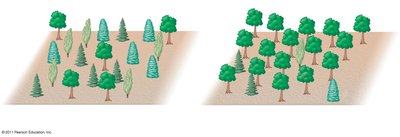
Example: Community 1 has four species, each making up 25% of the population, while Community 2 is dominated by one species (80%), with the others much less abundant. Community 1 is more diverse.
Studying the Importance of Diversity
Ecologists use experimental plots to study how species diversity affects ecosystem function, such as productivity and resilience to disturbance.
Research sites like the Cedar Creek Natural History Area use plots with varying numbers of perennial grassland species to investigate these effects.
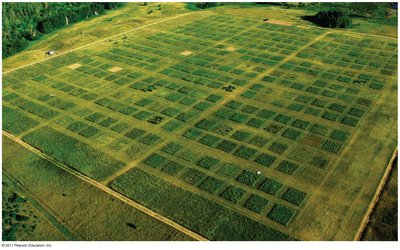
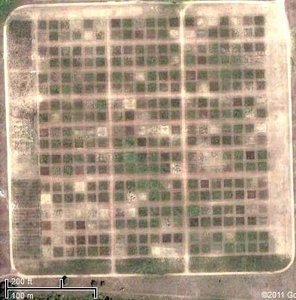
Example: Plots with higher species richness often show greater productivity and stability over time.
Community Trophic Structure
Food Chains and Food Webs
The trophic structure of a community describes the feeding relationships among organisms, which determine the flow of energy and nutrients.
Food chain: A linear sequence of organisms through which nutrients and energy pass as one organism eats another.
Food web: A more complex network of interconnected food chains, reflecting the reality that most organisms consume and are consumed by more than one species.
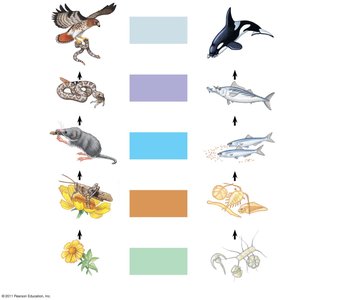
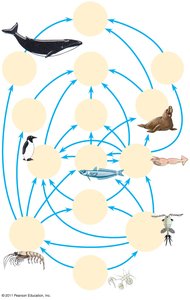
Key Point: Most food chains are relatively short (typically 3–5 links) due to energy loss at each trophic level (see the 10% rule in energy transfer).
Species Roles in Communities
Dominant Species
Dominant species are those that are most abundant or have the highest biomass in a community. They exert a strong influence on community structure due to their sheer numbers or size.
Dominance can result from superior competition for resources or resistance to predation and disease.
To determine the importance of a dominant species, ecologists may experimentally remove it and observe community changes.
Keystone Species
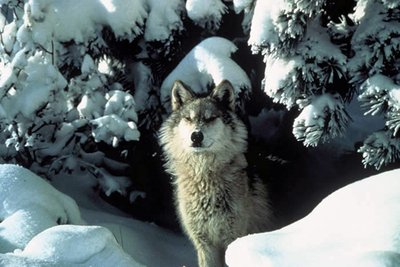
Keystone species have a disproportionately large effect on community structure relative to their abundance. They often occupy critical ecological niches, such as top predators.
Removal of a keystone species can lead to dramatic shifts in community composition and ecosystem function.
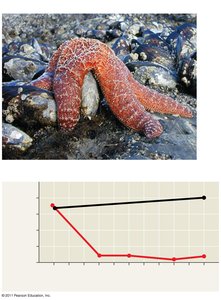
Example: The sea star Pisaster ochraceus is a keystone predator; its removal leads to a decline in species diversity as one mussel species dominates.
Case Study: Sea Otters as Keystone Predators
Sea otters in the North Pacific are a classic example of keystone predators. Their presence controls sea urchin populations, which in turn allows kelp forests to thrive.
When otters are removed, sea urchin populations explode, leading to overgrazing and collapse of kelp forests.
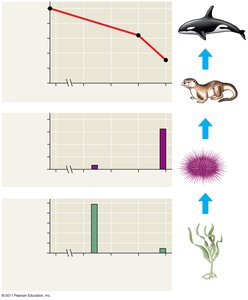
Foundation Species / Ecosystem Engineers
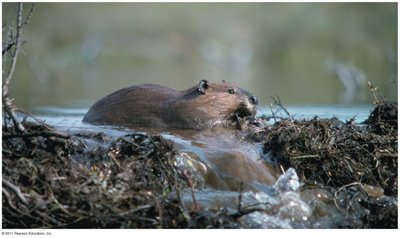
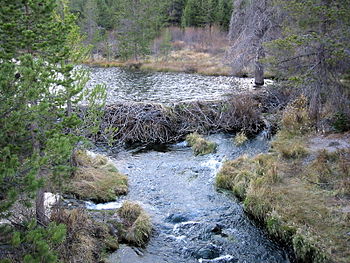
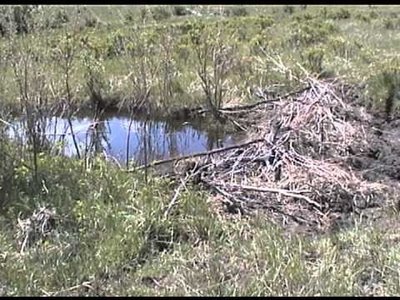
Foundation species, or ecosystem engineers, modify the physical environment in ways that create new habitats or alter resource availability for other species.
Examples include beavers building dams and birds or bats dispersing seeds.
Community Disturbance and Succession
Disturbance and the Non-Equilibrium Model
A disturbance is any event (e.g., storm, fire, flood, drought, overgrazing, or human activity) that changes a community by removing organisms or altering resource availability. The non-equilibrium model suggests that communities are often in a state of flux due to disturbances.
Ecological Succession
Succession is the process by which the structure of a biological community evolves over time following a disturbance.
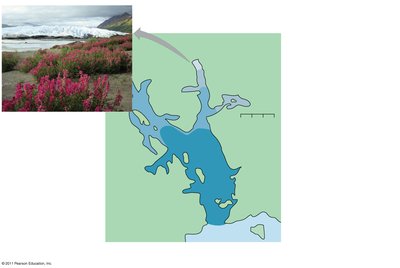
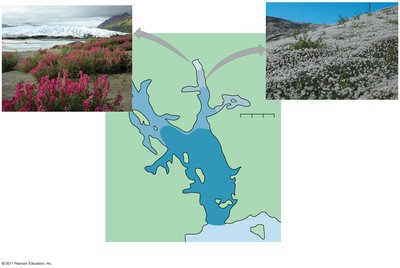
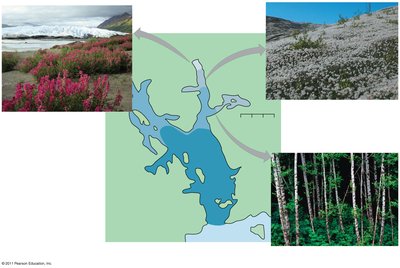
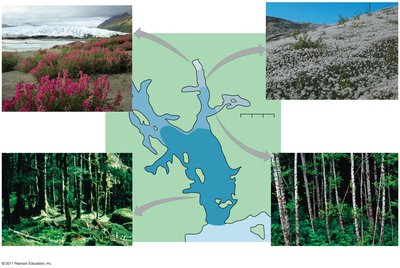
Primary succession: Occurs in lifeless areas where soil is initially absent (e.g., after a volcanic eruption or glacial retreat). Pioneer species such as bacteria, algae, lichens, and mosses colonize first, followed by grasses, shrubs, and trees.
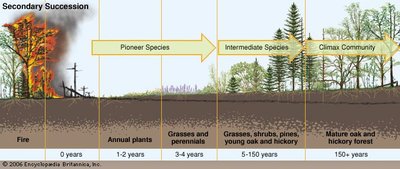
Secondary succession: Occurs where a disturbance has destroyed a community but left the soil intact (e.g., after a forest fire or logging). The area is recolonized by plants and animals, often returning to its original state over time.
Soil Nitrogen Changes During Succession
Soil nutrient content, especially nitrogen, typically increases during succession as plants and decomposers enrich the soil.
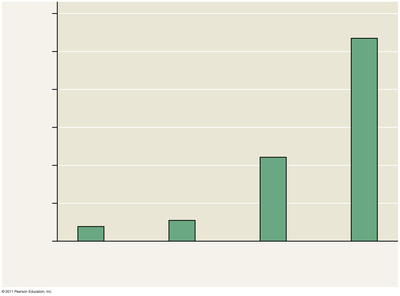
Example: In Glacier Bay, Alaska, soil nitrogen increases as succession progresses from pioneer to spruce stages.
Communities and Invasive Species
Introduced and Invasive Species
Introduced species are organisms that have been moved by humans from their native range to new areas. Some introduced species become invasive, disrupting local communities by outcompeting native species, altering habitats, or spreading disease.
Not all introduced species become invasive; some integrate without major disruption.
Examples of invasive species include Kudzu in South Carolina, rabbits in Australia, purple loosestrife in British Columbia, and the American bullfrog.
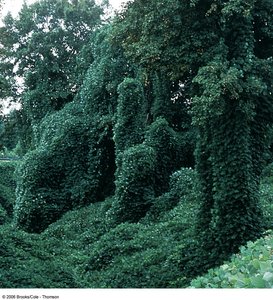
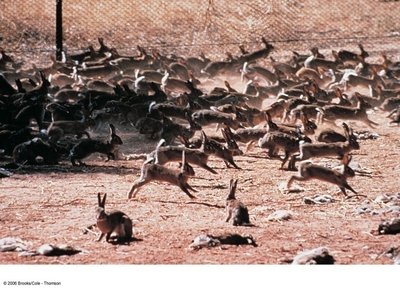
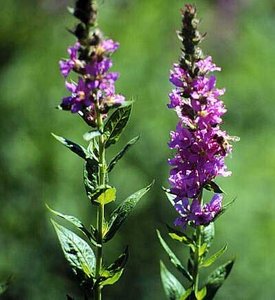
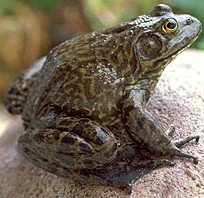
Impact: Invasive species can reduce biodiversity, alter ecosystem processes, and cause economic damage.
