 Back
Community Ecology: Interactions, Structure, and Dynamics
Study Guide - Smart Notes
 Tailored notes based on your materials, expanded with key definitions, examples, and context.
Chapter 54: Community Ecology
Introduction to Community Ecology
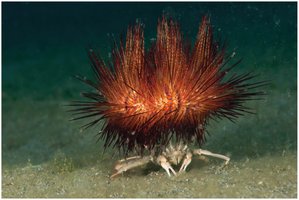
Community ecology examines the interactions between species living in close proximity and the structure and dynamics of biological communities. A biological community is an assemblage of populations of various species living close enough for potential interaction. These interactions shape the diversity, structure, and function of communities.
Community Interactions
Types of Interspecific Interactions
Ecologists classify relationships between species as interspecific interactions. These include competition, predation, herbivory, symbiosis (parasitism, mutualism, commensalism), and facilitation. Each interaction can affect the survival and reproduction of the species involved, with effects summarized as positive (+), negative (−), or neutral (0).
Interaction | Effect on Species 1 | Effect on Species 2 | Description |
|---|---|---|---|
Competition | − | − | Both species compete for a resource in short supply. |
Predation | + | − | One species (predator) kills and eats the other (prey). |
Herbivory | + | − | An herbivore eats parts of a plant or alga. |
Parasitism | + | − | Parasite derives nourishment from host, harming it. |
Mutualism | + | + | Both species benefit from the interaction. |
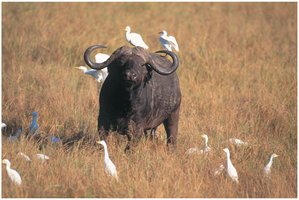
Commensalism | + | 0 | One species benefits, the other is unaffected. |
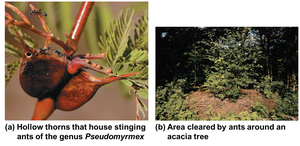
Facilitation | + | + or 0 | One species has positive effects on another without direct contact. |
Competition and the Niche Concept
Interspecific competition occurs when species compete for a resource in short supply. The competitive exclusion principle states that two species competing for the same limiting resources cannot coexist in the same place. The ecological niche is the sum of a species’ use of biotic and abiotic resources—its ecological role.
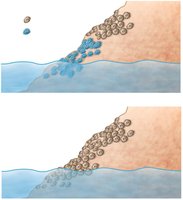
A species’ fundamental niche is the potential niche it could occupy, while the realized niche is the niche it actually occupies due to competition. Resource partitioning allows similar species to coexist by differentiating their niches.
Resource Partitioning and Character Displacement
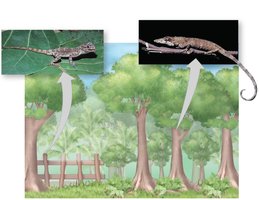
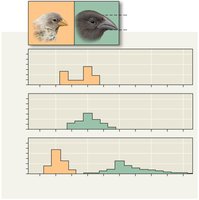
Resource partitioning is the differentiation of ecological niches, enabling similar species to coexist. Character displacement refers to the tendency for characteristics to be more divergent in sympatric populations (overlapping geographically) than in allopatric populations (geographically separate).
Predation and Defensive Adaptations
Predation
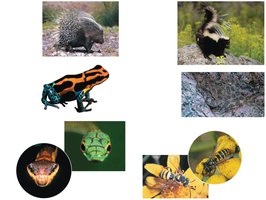
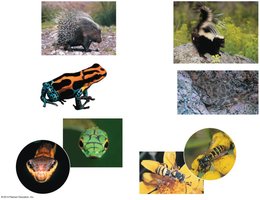
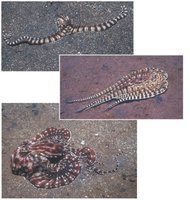
Predation is an interaction where one species, the predator, kills and eats the other, the prey. Predators have adaptations such as claws, fangs, and poison. Prey species have evolved behavioral, morphological, and physiological defenses, including hiding, fleeing, forming groups, mechanical defenses (e.g., porcupine quills), chemical defenses (e.g., skunk spray), aposematic coloration (warning colors), cryptic coloration (camouflage), and mimicry.
Mimicry
Batesian mimicry: A harmless species mimics a harmful one.
Müllerian mimicry: Two unpalatable species mimic each other.
Herbivory
Herbivory
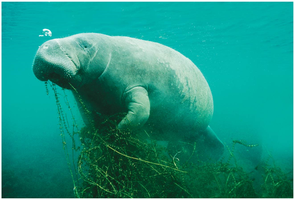
Herbivory is an interaction in which an herbivore eats parts of a plant or alga. This has led to the evolution of plant defenses (mechanical and chemical) and counter-adaptations by herbivores.
Symbiosis and Facilitation
Symbiosis
Symbiosis is a close and long-term biological interaction between two different species. Types include:
Parasitism ( +/− ): Parasite derives nourishment from host, harming it. Endoparasites live inside the host; ectoparasites live on the surface.
Mutualism ( +/+ ): Both species benefit. Can be obligate (required for survival) or facultative (optional).
Commensalism ( +/0 ): One species benefits, the other is unaffected.
Facilitation
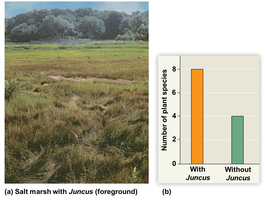
Facilitation occurs when one species has positive effects on another without direct and intimate contact. For example, the black rush (Juncus) makes soil more hospitable for other plant species.
Community Structure: Diversity and Trophic Structure
Species Diversity
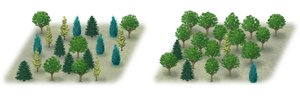
Species diversity is the variety of organisms in a community, with two components:
Species richness: Number of different species
Relative abundance: Proportion each species represents of all individuals
Communities with higher diversity are more productive, stable, and resistant to invasive species.
Trophic Structure
Trophic structure describes the feeding relationships between organisms. Food chains link trophic levels from producers to top carnivores, while food webs show complex trophic interactions.
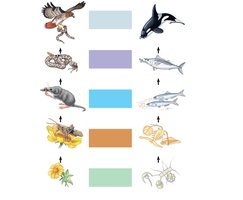
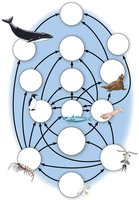
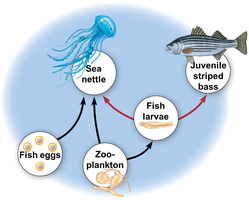
Limits on Food Chain Length
Food chains are usually short due to energy loss at each trophic level. The energetic hypothesis suggests that the length of a food chain is limited by the inefficiency of energy transfer.
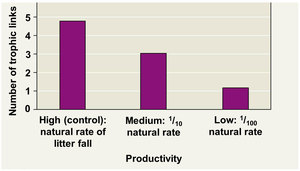
Species with Large Impacts
Dominant, Keystone, and Ecosystem Engineer Species
Dominant species: Most abundant or highest biomass; may be most competitive or best at avoiding predators.
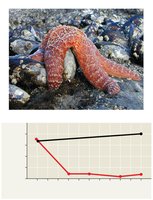
Keystone species: Not necessarily abundant but exert strong control on community structure by their ecological roles.
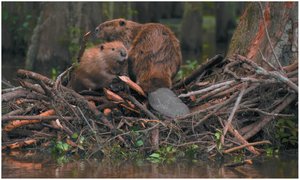
Ecosystem engineers: Cause physical changes in the environment that affect community structure (e.g., beavers building dams).
Community Dynamics: Bottom-Up and Top-Down Controls
Bottom-Up and Top-Down Models
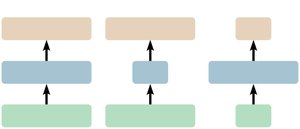
The bottom-up model proposes that lower trophic levels (nutrients, plants) control community structure, while the top-down model (trophic cascade) suggests that predators control herbivores, which in turn control plants and nutrient levels.
Disturbance and Community Structure
Disturbance and Succession
A disturbance is an event that changes a community by removing organisms or altering resource availability. The intermediate disturbance hypothesis states that moderate levels of disturbance foster greater diversity than high or low levels. Ecological succession is the sequence of community changes after a disturbance, including primary succession (no soil present) and secondary succession (soil remains).
Biogeographic Factors Affecting Community Diversity
Latitude and Area Effects
Species richness is generally higher in the tropics and declines toward the poles. Larger geographic areas tend to have more species, described by the species-area relationship:
where S is the number of species, c is a constant, A is area, and z is the slope in a log-log plot.
Island Equilibrium Model
Species richness on islands depends on island size, distance from the mainland, immigration, and extinction rates. The equilibrium model predicts a dynamic balance between immigration and extinction.
Pathogens and Community Structure
Pathogens and Disease
Pathogens, including microorganisms, viruses, viroids, and prions, can dramatically alter community structure. Human activities are increasing the spread of pathogens, including zoonotic diseases (transferred from animals to humans, sometimes via vectors).
Summary Table: Interspecific Interactions
Interaction | Effect on Species 1 | Effect on Species 2 | Description |
|---|---|---|---|
Competition | − | − | Both species compete for a resource in short supply. |
Predation | + | − | Predator kills and eats prey. |
Herbivory | + | − | Herbivore eats part of a plant or alga. |
Parasitism | + | − | Parasite derives nourishment from host, harming it. |
Mutualism | + | + | Both species benefit. |
Commensalism | + | 0 | One species benefits, the other is unaffected. |
Facilitation | + | + or 0 | One species has positive effects on another without direct contact. |
