 Back
Community Ecology: Structure, Dynamics, and Diversity
Study Guide - Smart Notes
 Tailored notes based on your materials, expanded with key definitions, examples, and context.
Community Ecology
Levels of Ecological Organization
Community ecology examines how groups of species interact and coexist within a defined geographic area, forming complex networks of relationships and energy flow. - Community: A group of species that coexist and interact within a contained geographic area. - Species Composition: The mix and abundance of species within a community.
Factors Influencing Community Structure
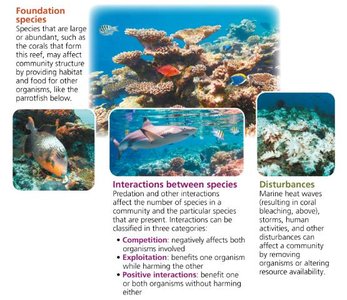
The structure of a community is shaped by multiple factors, including colonization, persistence, environmental gradients, extinction, disturbance, and trophic interactions.
Colonization & Persistence: Communities are formed by species that successfully colonize and persist in the area.
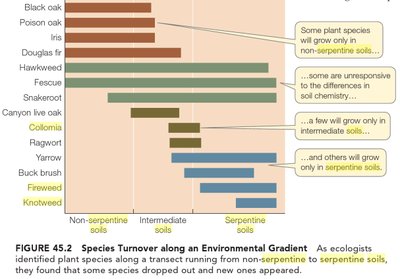
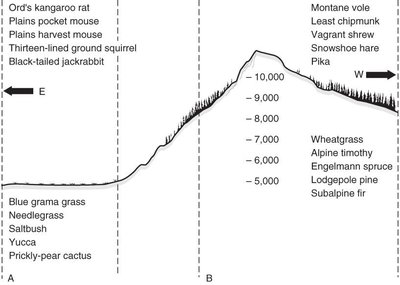
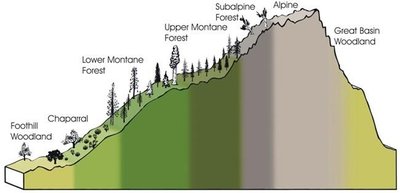
Environmental Gradients: Competition and species composition vary across gradients such as soil type, altitude, and rainfall.
Extinction & Colonization: Species may die out or new species may move in, altering community structure.
Disturbance: Sudden environmental changes (e.g., volcanoes, wildfires, hurricanes) can wipe out species and alter the physical environment.
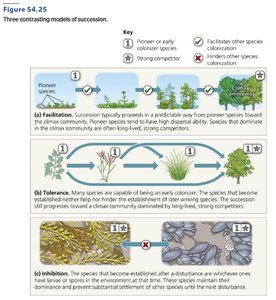
Succession: Predictable sequence of species replacement following disturbance or environmental change.
Trophic Interactions: Energy and nutrients move through communities via consumer-resource relationships.
Community Dynamics Over Space & Time
Environmental Gradients and Species Competition
Species competition and community composition change across environmental gradients such as soil type and altitude. - Generalists: Species with broad niches, adaptable to many environments. - Specialists: Species with narrow niches, more likely to become extinct if conditions change. 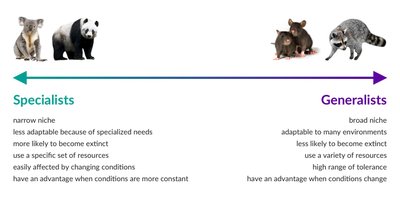
Altitude and Rainfall Effects
Altitude and rainfall influence which species can survive in a given area, affecting both plant and animal assemblages. 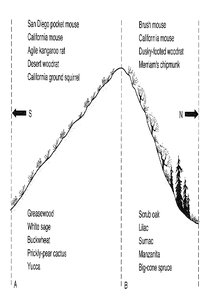
Disturbance and Succession
Disturbances create new environments, leading to ecological succession—a process where one community is replaced by another over time. - Primary Succession: Formation of a new ecosystem in areas not previously occupied (e.g., exposed rock, lava). - Secondary Succession: Recovery of an ecosystem after disturbance, with soil intact (e.g., fire, farming). - Pioneer Species: First organisms to colonize new environments (e.g., lichens, mosses, weeds, grasses). - Climax Community: Mature, stable community with little change in species composition. 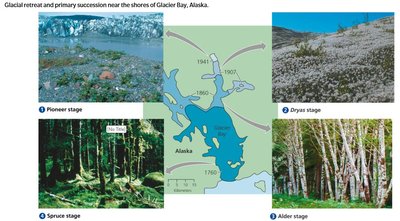
Stable Ecosystems and Climate Change
Stable ecosystems remain relatively constant, but climate change can shift the geographic range of species, altering community structure. 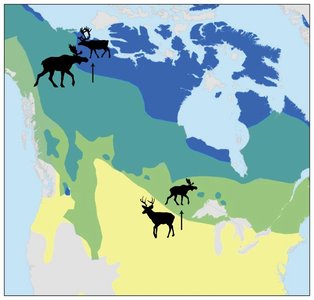
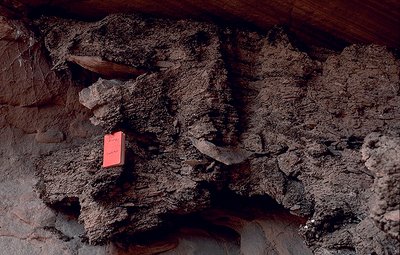
Trophic Interactions and Energy Flow
Niche and Environmental Tolerances
A species' niche is defined by its environmental tolerances, determining where it can live and how it interacts with other species. 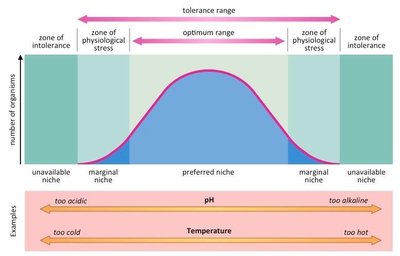
Trophic Cascades and Biological Amplification
Trophic interactions, such as predation and resource consumption, can cause ripple effects across trophic levels, impacting community structure. - Trophic Cascade: Consumer/resource interactions cause changes across trophic levels (e.g., removal of wolves in Yellowstone). - Biological Amplification: Concentration of substances (e.g., mercury) increases at higher trophic levels due to difficulty in degradation.
Species Interactions
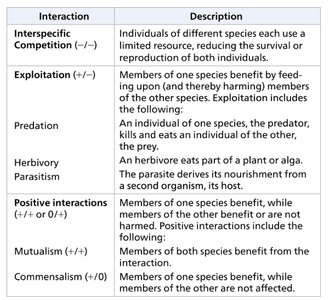
Species interactions are classified as competition, exploitation, and positive interactions.
Interaction | Description |
|---|---|
Interspecific Competition (−/−) | Individuals of different species use a limited resource, reducing survival or reproduction of both. |
Exploitation (+/−) | One species benefits by feeding upon (and harming) another. Includes predation, herbivory, and parasitism. |
Positive Interactions (+/+ or 0/+) | Both species benefit (mutualism) or one benefits without affecting the other (commensalism). |
Biogeographic Factors Affecting Community Diversity
Latitudinal Gradients
Species diversity tends to increase toward the equator due to higher energy input and stable climates.
Area Effects
Larger areas support more species due to greater habitat diversity and lower extinction rates. 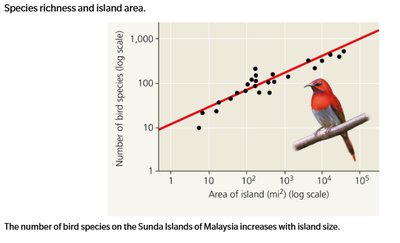
Island Equilibrium Model
The MacArthur and Wilson model explains how immigration and extinction rates determine the equilibrium number of species on an island. 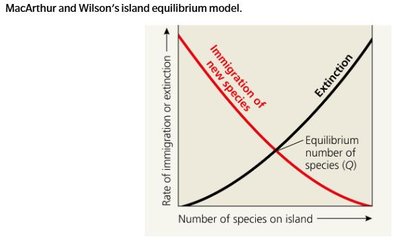
Energy, Water, and Species Richness
Species richness increases with energy and water availability, as measured by indices like evapotranspiration. 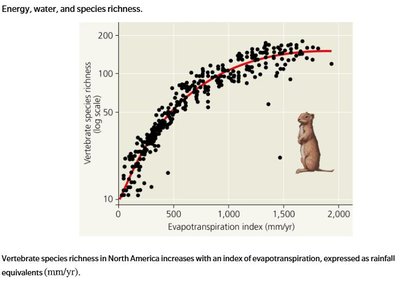
Summary Table: Community Ecology Concepts
Concept | Definition |
|---|---|
Community | Group of species interacting in a geographic area |
Species Composition | Mix and abundance of species |
Succession | Predictable sequence of species replacement |
Disturbance | Sudden environmental change affecting community |
Trophic Cascade | Ripple effects across trophic levels |
Biological Amplification | Concentration of substances at higher trophic levels |
Latitudinal Gradient | Increase in diversity toward equator |
Island Equilibrium | Balance of immigration and extinction |
Key Takeaways
Community structure is shaped by colonization, persistence, environmental gradients, disturbance, and trophic interactions.
Succession and disturbance drive predictable changes in species composition.
Species interactions include competition, exploitation, and positive relationships.
Biogeographic factors such as area, latitude, and energy availability influence community diversity.
