 Back
BackCommunity Ecology: Structure, Interactions, and Dynamics
Study Guide - Smart Notes
 Tailored notes based on your materials, expanded with key definitions, examples, and context.
Community Ecology
Introduction to Community Ecology
Community ecology is the study of how groups of species interact and form functional units within ecosystems. It focuses on the patterns and processes involving multiple species living in the same area and the interactions that shape community structure and dynamics.
Species Interactions
Types of Species Interactions
Species interactions are fundamental to community ecology and can be classified based on the effects on the fitness of the interacting organisms:
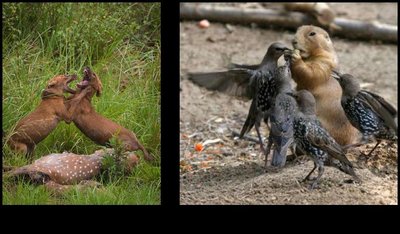
Consumption (+/-): One organism eats or absorbs nutrients from another, benefiting the consumer and harming the resource organism.
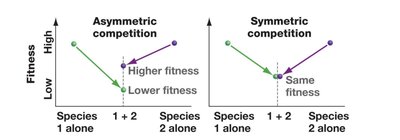
Competition (-/-): Individuals use the same resources, resulting in lower fitness for both due to resource limitation.
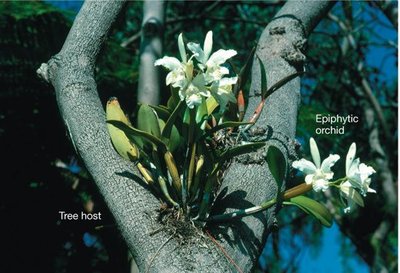
Commensalism (+/0): One species benefits while the other is unaffected.
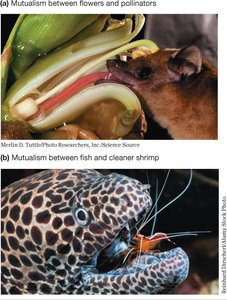
Mutualism (+/+): Both species benefit from the interaction.


Experimental Evidence for Mutualisms
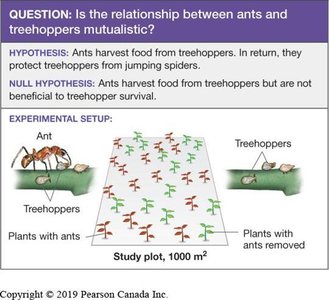
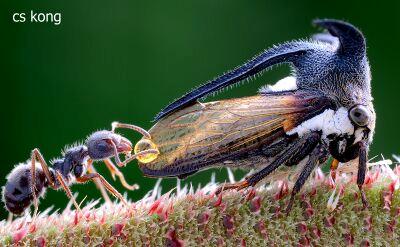
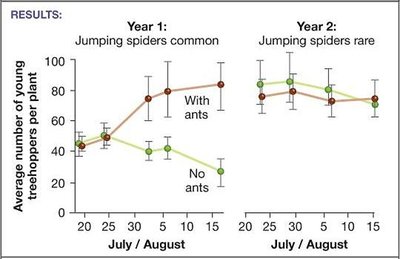
Mutualisms are interactions where both species benefit. For example, treehoppers secrete honeydew that ants harvest for food, and in return, ants protect treehoppers from predators. Experimental setups can test whether these relationships are truly mutualistic.
Dynamics of Mutualism
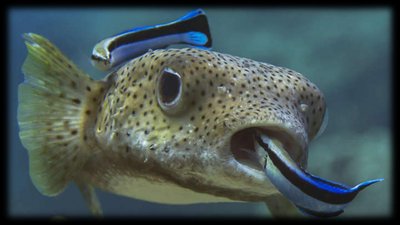
Mutualisms can be dynamic and may shift to parasitism if one partner cheats (e.g., cleaner fish feeding on client tissue instead of parasites). The persistence of cooperation depends on mechanisms that prevent cheating from becoming dominant.
The Niche Concept in Ecology
Definition of Niche
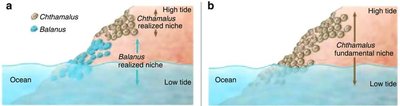
A niche is the range of resources a species utilizes and the range of environmental conditions it can tolerate. The niche concept is central to understanding species interactions and community structure.
Fundamental vs. Realized Niche
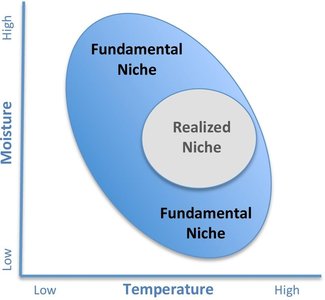
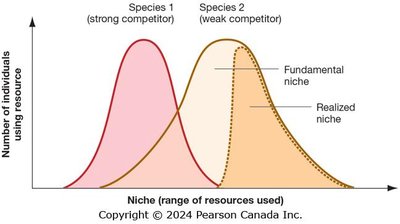
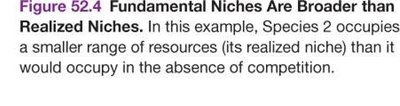
Fundamental niche: The full range of environmental conditions and resources a species could theoretically use, in the absence of competition or other biotic constraints. Realized niche: The actual range occupied by a species, limited by interactions such as competition, predation, or mutualism.
Competitive Exclusion Principle
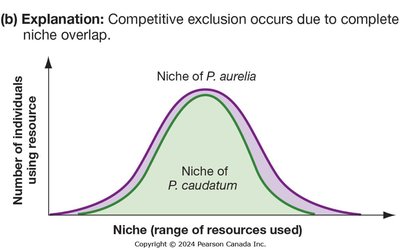
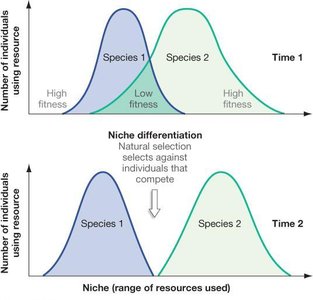
The competitive exclusion principle states that two species competing for the same limited resource cannot coexist indefinitely; one will outcompete the other, leading to local extinction or niche differentiation.
Niche Differentiation
Competition can lead to niche differentiation, where competing species evolve to use different resources or occupy different habitats, reducing direct competition. This process is also known as resource partitioning.
Community Structure
Attributes of Community Structure
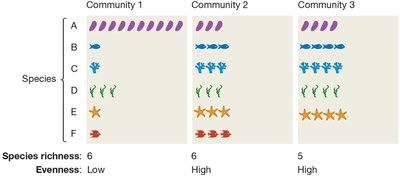
Community structure is defined by several key attributes:
Species richness: The total number of species present in a community.
Species evenness: The relative abundance of each species.
Species interactions: The network of interactions among all species in the community.

Food Chains and Food Webs
Multiple consumption interactions can be linked into a food chain, and multiple food chains can be combined into a food web, which summarizes the feeding relationships and energy flow in a community.
Direct and Indirect Effects
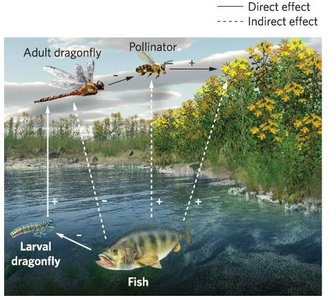
Some species exert a disproportionate influence on community structure through direct and indirect effects. Indirect effects occur when the impact of one species on another is mediated through a third species.
Top-Down and Bottom-Up Controls
Bottom-Up Influences
Bottom-up control occurs when the abundance of primary producers (e.g., plants, algae) is determined by abiotic factors such as light and nutrients, which in turn affect higher trophic levels.
Top-Down Influences
Top-down control occurs when consumers (e.g., predators) regulate the abundance and diversity of species at lower trophic levels. Removal of top predators can cause dramatic changes in community structure, known as trophic cascades.
Trophic cascade: A series of changes in population sizes and community structure caused by the addition or removal of top predators.
Keystone Species
Keystone species have a disproportionately large effect on community structure relative to their abundance or biomass. Their presence or absence can dramatically alter the composition and functioning of the community.
Type of Control | Description | Example |
|---|---|---|
Bottom-Up | Driven by abiotic factors affecting primary producers | Kelp forests |
Top-Down | Driven by consumers affecting lower trophic levels | Sea stars, wolves |
Keystone Species | Disproportionate effect on community structure | Otters, beavers |
Predictability of Community Structure
Clements-Gleason Dichotomy
There are two classic views on the predictability of community structure:
Frederick Clements: Communities are stable, orderly, and predictable, passing through a series of successional stages to a stable climax community.
Henry Gleason: Communities are neither stable nor predictable; their composition is largely a matter of chance, especially after disturbances.
Empirical Evidence
Studies show that identical habitats do not always develop identical communities, supporting the idea that both biotic interactions, climate, and chance historical events play important roles in community assembly.
Summary Table: Key Concepts in Community Ecology
Concept | Definition | Example |
|---|---|---|
Species Interaction | Relationship between two species affecting fitness | Mutualism, competition |
Niche | Range of resources and conditions a species uses/tolerates | Fundamental vs. realized niche |
Competitive Exclusion | One species outcompetes another for the same resource | Paramecium species |
Niche Differentiation | Species evolve to use different resources | Galápagos finches |
Keystone Species | Species with large impact on community structure | Sea otters |
Trophic Cascade | Ripple effect of top predator removal | Wolves in Yellowstone |
