 Back
BackCommunity Ecology: Structure, Interactions, and Succession
Study Guide - Smart Notes
 Tailored notes based on your materials, expanded with key definitions, examples, and context.
Community Ecology
Definition of Community
A community in ecology refers to populations of different species living close enough to interact within a defined area. These interactions shape the structure and dynamics of the community.
Niches and Competition
Ecological Niche
An ecological niche is the sum of a species' use of the biotic and abiotic resources in its environment. It includes how a species meets its needs for food and shelter, how it survives, and how it reproduces.
Can two species occupy the exact same niche? No, according to the Competitive Exclusion Principle.
Competitive Exclusion Principle
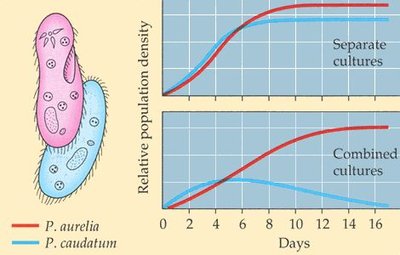
The Competitive Exclusion Principle states that two species competing for the same limiting resources cannot coexist in the same place. One species will outcompete the other, leading to local extinction or niche differentiation.
Resource Partitioning
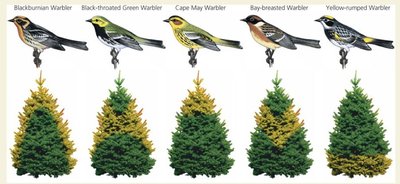
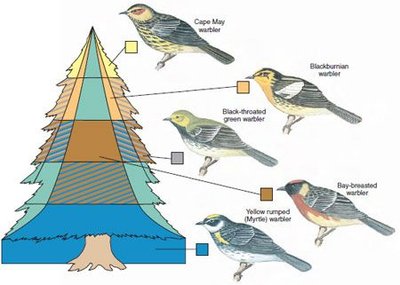
Resource partitioning is the differentiation of niches that enables similar species to coexist in a community. By dividing resources, species reduce direct competition.
Fundamental vs. Realized Niche
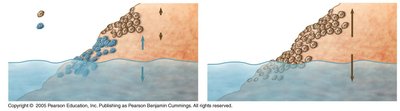
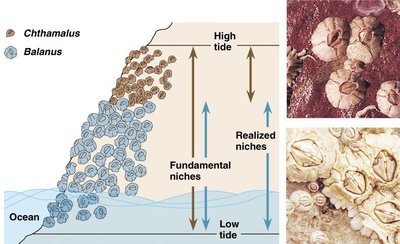
Fundamental niche: The full range of environmental conditions (biotic and abiotic) under which a species can survive and reproduce.
Realized niche: The portion of the fundamental niche that a species actually occupies due to competition and other biotic interactions.
Predation and Defense Mechanisms
Predation
Predation is an interaction in which one species, the predator, kills and eats the other, the prey. This relationship drives the evolution of various defensive adaptations in prey species.
Prey Defenses
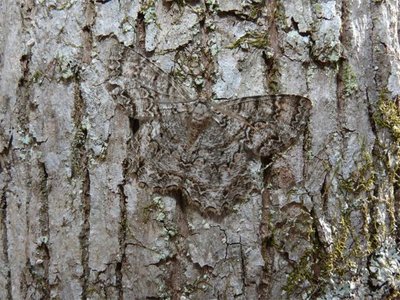
Camouflage (Cryptic Coloration): Allows prey to blend into their environment to avoid detection.
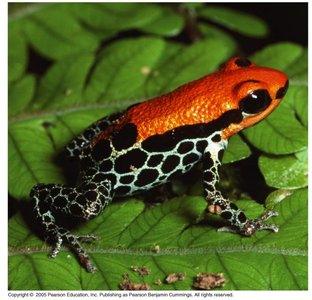
Aposematic (Warning) Coloration: Bright colors warn predators of toxicity or unpalatability.
Physical Defenses: Structures such as thorns, spines, or toxins deter predators.

Mimicry
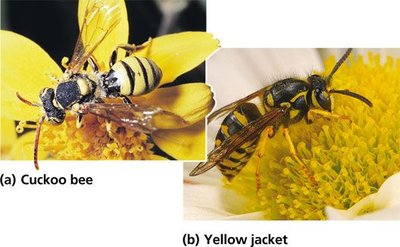
Batesian Mimicry: A harmless species mimics the appearance of a harmful or unpalatable species.
Müllerian Mimicry: Two or more unpalatable species resemble each other, reinforcing avoidance by predators.
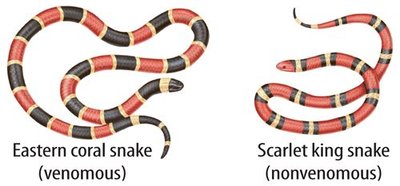
Community Structure: Dominant and Keystone Species
Dominant Species
Dominant species are those that are most abundant or have the highest biomass in a community. They exert a strong influence on community structure due to their large numbers or size.
Keystone Species
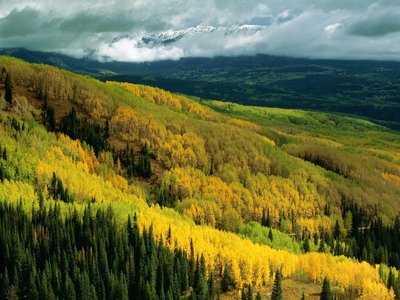
Keystone species have a disproportionately large effect on their environment relative to their abundance. Their removal can cause dramatic changes in community structure and ecosystem function.
Examples: grizzly bear, prairie dog, ‘alala (Hawaiian crow), ohia (tree species)
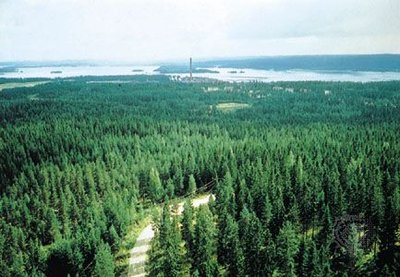
Community Regulation and Trophic Cascades
Top-Down and Bottom-Up Regulation
Top-Down Control: The abundance of organisms at higher trophic levels (e.g., predators) controls the structure and population sizes of lower trophic levels.
Bottom-Up Control: The abundance of primary producers (autotrophs) determines the structure and population sizes of higher trophic levels.
Trophic Cascades
A trophic cascade occurs when predators suppress the abundance or alter the behavior of their prey, thereby releasing the next lower trophic level from predation or herbivory. This can have far-reaching effects on ecosystem structure and nutrient cycling.
Classic examples: Wolves in Yellowstone, sea stars and sea otters in Alaska.
Ecological Succession
Succession Overview
Succession is the process of change in the species structure of an ecological community over time. It occurs after disturbances or the creation of new habitats.
Primary Succession
Primary succession occurs in lifeless areas where soil has not yet formed, such as on new volcanic islands or after glacial retreat. Pioneer species are the first to colonize these areas.
Secondary Succession
Secondary succession occurs in areas where a disturbance has destroyed a community but left the soil intact, such as after fire, flood, or human activity. Recovery is typically faster than in primary succession.
Pioneer and Climax Communities
Pioneer species: The first species to colonize disturbed or new environments.
Climax community: A stable, mature community that undergoes little or no change in species composition over time.
Disturbance and Habitat Variation
Disturbances such as fire, storms, or human activities can create a mosaic of habitats at different successional stages within a landscape, increasing biodiversity and habitat heterogeneity.
Additional info: Succession is not always linear or predictable; disturbances can reset the successional clock, and different areas may be at different stages of recovery at any given time.
