 Back
Community Interactions and Biodiversity: Study Notes for General Biology
Study Guide - Smart Notes
 Tailored notes based on your materials, expanded with key definitions, examples, and context.
Community Interactions and Diversity
Overview of Community Interactions
Communities are composed of multiple species interacting within a shared environment. These interactions shape the structure, diversity, and functioning of ecosystems. The main types of interspecific interactions include competition, mutualism, predation, herbivory, and parasitism.
Interspecific Interaction: Relationships between different species in a community.
Community Diversity: The variety and abundance of species present in a community.
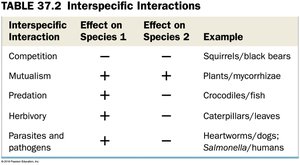
Interspecific Interaction | Effect on Species 1 | Effect on Species 2 | Example |
|---|---|---|---|
Competition | − | − | Squirrels/black bears |
Mutualism | + | + | Plants/mycorrhizae |
Predation | + | − | Crocodiles/fish |
Herbivory | + | − | Caterpillars/leaves |
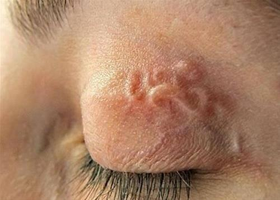
Parasites and pathogens | + | − | Heartworms/dogs; Salmonella/humans |
Competition
Competition occurs when two or more species vie for the same limited resource, such as food, space, or light. This interaction negatively affects all involved species, as resources are divided and less available for each.
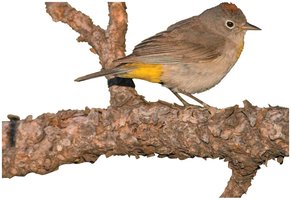
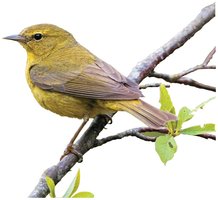
Resource Partitioning: Species may evolve to use different resources or occupy different niches to reduce competition.
Example: Two bird species occupying different parts of a tree to avoid direct competition.
Mutualism
Mutualism is a cooperative interaction where both species benefit. These relationships are often essential for survival and reproduction, such as pollination or nutrient exchange.
Obligate Mutualism: Both species are dependent on the interaction for survival.
Facultative Mutualism: The interaction is beneficial but not essential.
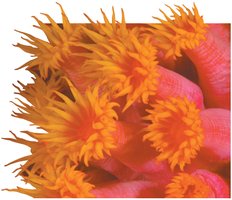
Example: Coral and zooxanthellae, where corals provide shelter and zooxanthellae provide nutrients.
Predation: Crypsis, Aposematism, and Mimicry
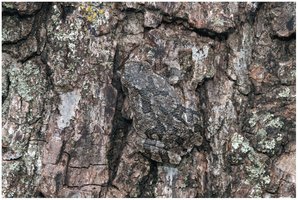
Predation is an interaction where one species (predator) consumes another (prey). Prey species have evolved various adaptations to avoid predation, including crypsis (camouflage), aposematism (warning coloration), and mimicry (resembling another species).
Crypsis: The ability of an organism to avoid detection by blending in with its environment. means hidden
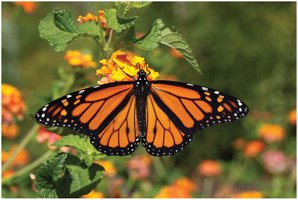
Aposematism: Bright coloration that warns predators of toxicity or unpalatability.
Mimicry: One species evolves to resemble another, often a toxic or dangerous species.
Example: Monarch butterfly's aposematic coloration signals toxicity to predators.
Herbivory and Antiherbivory Adaptations
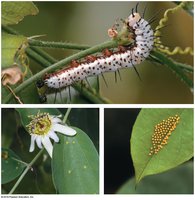
Herbivory is the consumption of plant material by animals. Plants have evolved various defenses against herbivores, including physical barriers (thorns, tough leaves) and chemical deterrents (toxins).
Physical Defenses: Structures like spines, thorns, or tough leaves.
Chemical Defenses: Production of toxic or distasteful compounds.
Example: Passionflower plants produce chemicals to deter caterpillars.
Parasitism: Endoparasites vs. Ectoparasites, Holoparasites vs. Hemiparasites
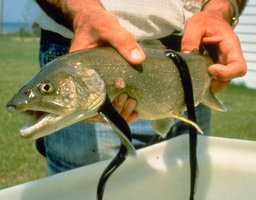
Parasitism is an interaction where one species (parasite) benefits at the expense of another (host). Parasites can be internal (endoparasites) or external (ectoparasites), and plants may be holoparasites (fully dependent) or hemiparasites (partially dependent).
Endoparasites: Live inside the host's body (e.g., tapeworms).
Ectoparasites: Live on the surface of the host (e.g., ticks).
Holoparasites: Plants that rely entirely on their host for nutrients.
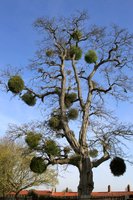
Hemiparasites: Plants that can photosynthesize but also extract nutrients from hosts.
Example: Mistletoe as a hemiparasite on trees.
Invasive Species
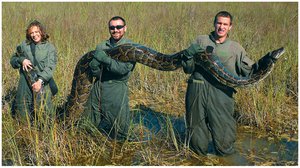
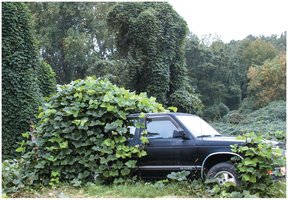
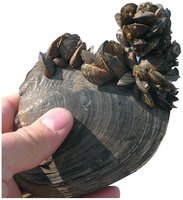
Invasive species are non-native organisms that spread rapidly in a new environment, often outcompeting native species and disrupting ecosystem balance. Their introduction can lead to reduced biodiversity and altered community structure.
Characteristics: High reproductive rate, adaptability, lack of natural predators.
Example: Burmese python in the Florida Everglades.
Biodiversity: Species Richness and Evenness
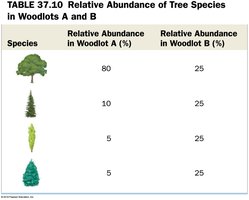
Biodiversity refers to the variety of life in a community. Two key components are species richness (number of species) and species evenness (relative abundance of each species). High biodiversity contributes to ecosystem stability and resilience.
Species Richness: The total number of different species present.
Species Evenness: The distribution of individuals among species.
Example: Comparing two woodlots with different tree species abundances.
Species | Relative Abundance in Woodlot A (%) | Relative Abundance in Woodlot B (%) |
|---|---|---|
Oak | 80 | 25 |
Pine | 10 | 25 |
Willow | 5 | 25 |
Spruce | 5 | 25 |
Keystone Species
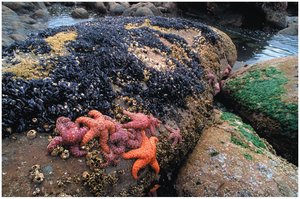
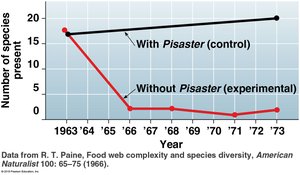
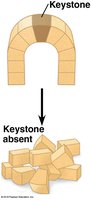
Keystone species are organisms that have a disproportionately large impact on their community relative to their abundance. Their removal can cause dramatic changes in ecosystem structure and function, often leading to loss of biodiversity.
Role: Maintain community structure by controlling populations of other species.
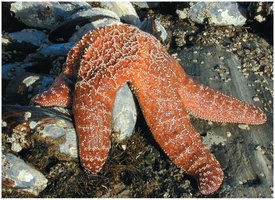
Example: The sea star Pisaster in intertidal communities.
Impact: Removal of keystone species can lead to collapse of community diversity.
Additional info: Community ecology is essential for understanding how species interactions shape biodiversity and ecosystem stability. These concepts are foundational for conservation biology and ecosystem management.
