 Back
BackComprehensive Biology Final Exam Review: Cells, Processes, Genetics, and Molecular Biology
Study Guide - Smart Notes
 Tailored notes based on your materials, expanded with key definitions, examples, and context.
What is Life? Unifying Theories in Biology
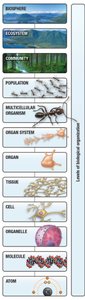
Defining Life and Major Biological Theories
Biologists define life as a self-sustaining chemical system capable of evolution. This definition, while debated, is widely used in astrobiology and modern biology. Three foundational theories underpin the study of biology:
Cell Theory: All living organisms are composed of cells, the basic units of life.
Chromosomal Theory of Inheritance: Genes are located on chromosomes, which are passed from parents to offspring.
Evolution: Populations of organisms change over time through processes such as natural selection.
Unit 1: Cells
Plasma Membrane Structure and Function
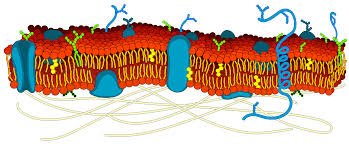
The plasma membrane is a selectively permeable barrier that surrounds all cells. It is composed primarily of a phospholipid bilayer with embedded proteins, glycoproteins, and cholesterol. The membrane's main functions include:
Allowing selective entry and exit of substances
Maintaining internal environment distinct from the external environment
Recognizing and responding to external signals
Facilitating attachment to other cells or structures
Transport Across Membranes
Movement of molecules across the plasma membrane depends on their chemical properties:
Non-polar, small molecules: Diffuse directly through the lipid bilayer.
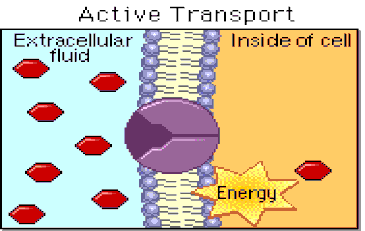
Polar molecules and ions: Require protein channels or carriers to cross the membrane.
Large molecules: Transported via vesicles or protein-mediated mechanisms.
Transport can be classified as:
Passive Transport: Movement down a concentration gradient (no energy required).
Active Transport: Movement against a concentration gradient (requires energy, usually from ATP).
Cellular Compartments and Endosymbiosis
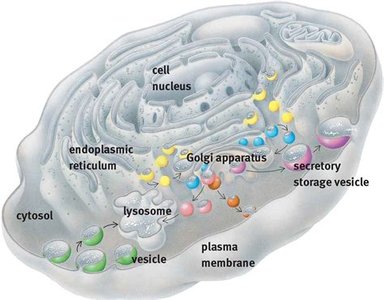
Eukaryotic cells contain membrane-bound organelles, each with specialized functions. The origin of these organelles is explained by the endosymbiotic theory, which proposes that mitochondria and chloroplasts originated from engulfed prokaryotes.
Mitochondria: Site of aerobic respiration; originated from an ancestral proteobacterium.
Chloroplasts: Site of photosynthesis; originated from an ancestral cyanobacterium.
Unit 2: Cell Processes
ATP Hydrolysis and Coupling of Reactions
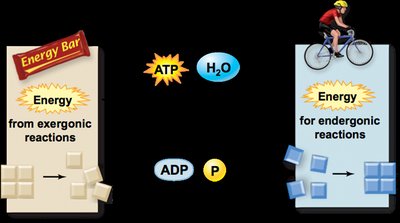
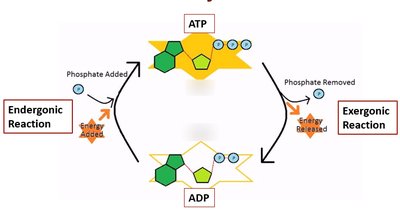
Cells couple exergonic (energy-releasing) and endergonic (energy-requiring) reactions using ATP hydrolysis. ATP (adenosine triphosphate) acts as the cell's energy currency:
Exergonic reactions: Release energy (e.g., breakdown of glucose).
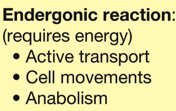
Endergonic reactions: Require energy input (e.g., active transport, biosynthesis).
The hydrolysis of ATP to ADP and inorganic phosphate () releases energy that can drive endergonic processes.
Bioenergetic Organelles: Mitochondria and Chloroplasts
Mitochondria and chloroplasts are specialized for energy conversion:
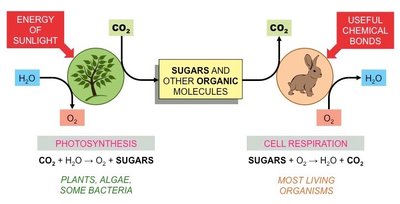
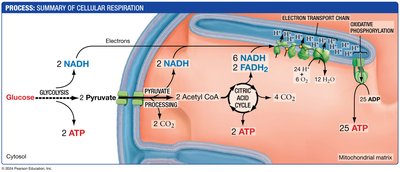
Mitochondria: Perform cellular respiration, converting glucose and oxygen into ATP, CO2, and H2O.
Chloroplasts: Perform photosynthesis, converting light energy, CO2, and H2O into glucose and O2.
Key Enzymes in Bioenergetics
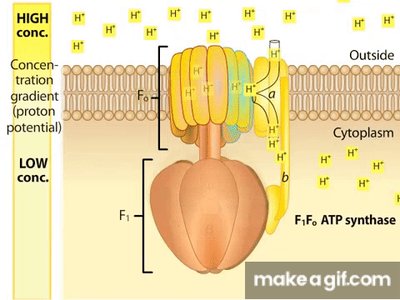
ATP Synthase: Synthesizes ATP from ADP and inorganic phosphate using a proton gradient.
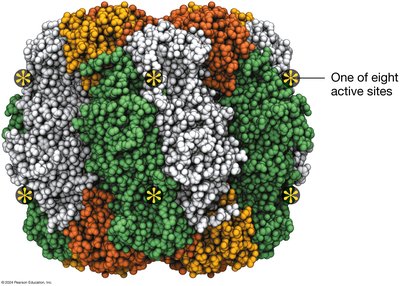
RuBisCO: Catalyzes the fixation of CO2 in the Calvin cycle of photosynthesis.
Photosynthesis and Cellular Respiration Pathways
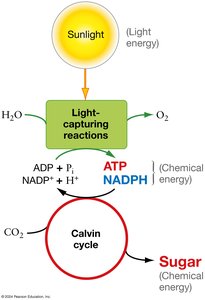
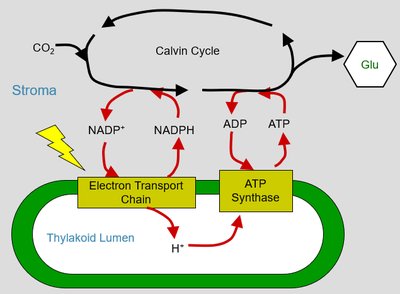
Photosynthesis consists of light-dependent reactions and the Calvin cycle. Cellular respiration includes glycolysis, the citric acid cycle, and oxidative phosphorylation.
Cell Signaling Pathways
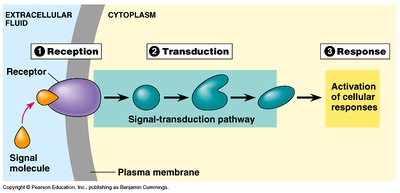
Cells communicate using signaling molecules (ligands) that bind to specific receptors, triggering a cascade of intracellular events (signal transduction) and resulting in a cellular response.
Reception: Ligand binds to receptor protein.
Transduction: Signal is relayed and amplified by intracellular molecules.
Response: Cellular activity is altered (e.g., gene expression, metabolism).
Molecular Switches: Kinases and GPCRs
Protein kinases and G-protein coupled receptors (GPCRs) act as molecular switches, often regulated by phosphorylation (addition of a phosphate group), which alters protein shape and function.
Unit 3: Cell Division and Genetics
The Cell Cycle
The cell cycle consists of interphase (G1, S, G2) and the M phase (mitosis or meiosis). Cells may exit the cycle into G0 to perform specialized functions.
G1: Cell growth and normal function
S: DNA replication
G2: Preparation for division
M phase: Mitosis or meiosis
G0: Non-dividing, differentiated state
DNA Replication
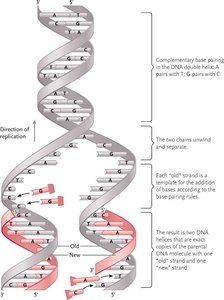
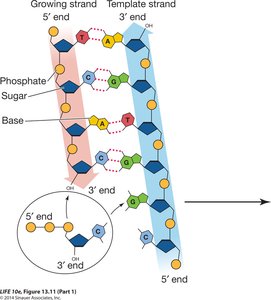
DNA replication is semi-conservative: each new DNA molecule consists of one old (template) strand and one new strand. New nucleotides are added to the 3′ end, following base-pairing rules (A-T, G-C).
Genetics: Mendelian Inheritance and Linkage
Inheritance patterns can be analyzed using crosses (e.g., dihybrid crosses) and by observing phenotypic ratios. Genes may be autosomal or sex-linked, and can exhibit linkage if located close together on the same chromosome.
Dominant vs. Recessive: Dominant alleles mask recessive alleles in heterozygotes.
Autosomal vs. X-linked: X-linked traits show different inheritance patterns in males and females.
Linkage and Recombination: Linked genes do not assort independently; recombination frequency can be used to map gene distance.
Unit 4: Making Proteins and Gene Expression
The Central Dogma of Molecular Biology
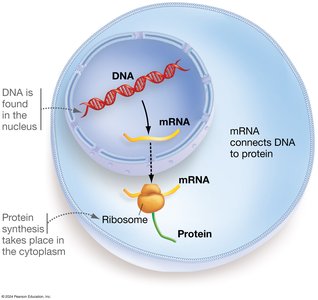
The central dogma describes the flow of genetic information: DNA is transcribed into mRNA, which is then translated into protein.

Transcription and Translation
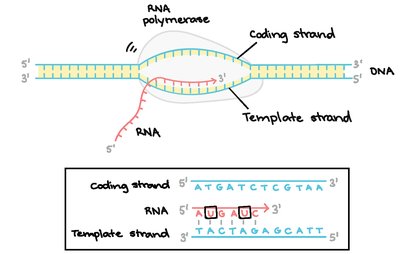
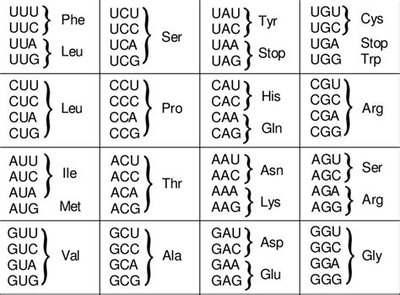
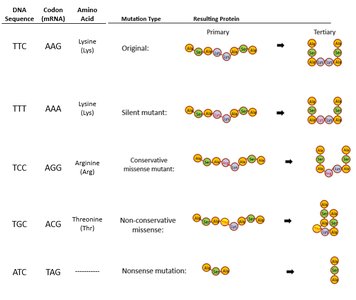
Transcription is the synthesis of RNA from a DNA template. Translation is the synthesis of proteins using mRNA as a template. The genetic code specifies which codons (triplets of nucleotides) correspond to which amino acids.
Gene Expression Regulation in Eukaryotes
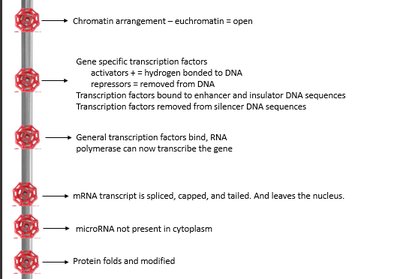
Gene expression is regulated at multiple levels:
Chromatin remodeling (euchromatin vs. heterochromatin)
Transcription factor binding
RNA splicing and processing
mRNA stability
Translation control
Post-translational modifications
Biotechnology Applications
Modern biotechnology tools include:
CRISPR/Cas: Genome editing technology
Gene Therapy: Treating diseases by correcting defective genes
GMO: Genetically modified organisms for agriculture and research
PCR (Polymerase Chain Reaction): Amplifies DNA sequences
Gel Electrophoresis: Separates DNA fragments by size
Restriction Enzyme Digest: Cuts DNA at specific sequences
