 Back
Comprehensive Review of Key Molecular Biology Concepts for Final Exam
Study Guide - Smart Notes
 Tailored notes based on your materials, expanded with key definitions, examples, and context.
Water and Carbon: The Chemical Basis of Life
Hydrogen Bonding in Water
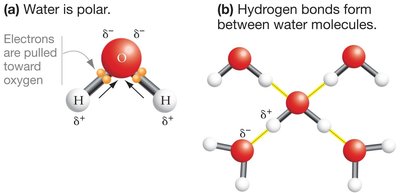
Water is a fundamental molecule in biology, exhibiting unique properties due to its polarity and ability to form hydrogen bonds. These interactions are crucial for the structure and function of biomolecules.
Polarity: Water molecules are polar, with oxygen being more electronegative than hydrogen, resulting in partial charges (δ- on O, δ+ on H).
Hydrogen Bonds: Hydrogen bonds are weak interactions (1/20th the strength of covalent bonds) that form between the hydrogen of one water molecule and the oxygen of another.
Biological Importance: Hydrogen bonds stabilize protein and nucleic acid structures, and are involved in processes like translation, transcription, and DNA structure.
Examples: Water is involved in dehydration reactions, hydrolysis, photosynthesis, and aerobic respiration.
Interactions of Water with Ions and Polar Molecules
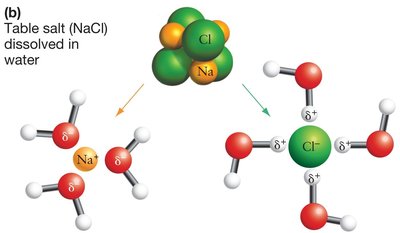
Ions and polar molecules are hydrophilic, meaning they interact readily with water. This property is essential for biological processes such as DNA stability and chromatin remodeling.
Hydrophilic: Water-loving molecules, including ions and polar compounds, dissolve easily in water.
Ionic Interactions: DNA, amino acids, and chromatin remodeling involve ionic interactions.
Formation of Ions: Atoms such as sodium (Na) and chloride (Cl) form ions that interact with water.
Hydrophobic Interactions
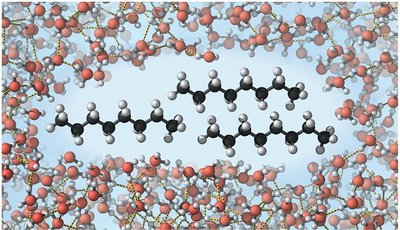
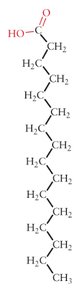
Hydrophobic molecules are non-polar and do not interact favorably with water. These interactions are important for membrane formation and protein folding.
Hydrophobic: Water-fearing, non-polar, uncharged molecules.
Van der Waals Forces: Weakest of all bonds, important for stabilizing hydrophobic regions.
Examples: Fatty acids, membrane proteins, and DNA structure.
Protein Structure and Function
Amino Acid Structure and Ionization
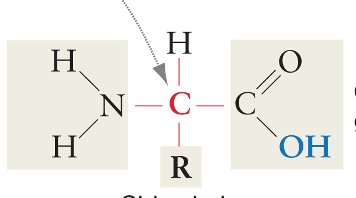
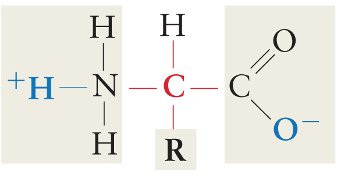
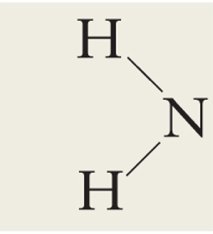
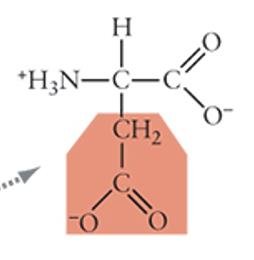
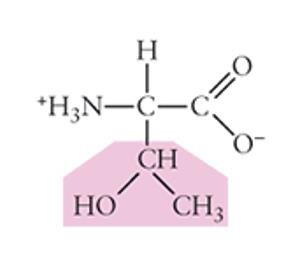
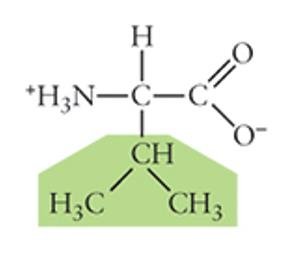
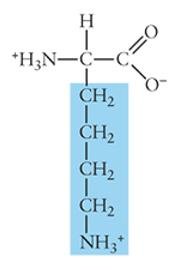
Amino acids are the building blocks of proteins, each with a central carbon, an amino group, a carboxyl group, and a variable R group. Their ionization state depends on pH.
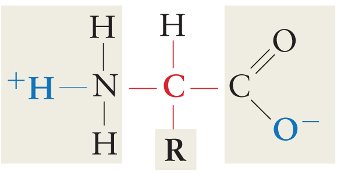
Ionization: At low pH, amino acids are protonated; at high pH, they are deprotonated.
pKa Values: Amino group pKa = 9-10.5; carboxyl group pKa = 1.8-2.8.
Properties of Amino Acids: R Groups
The R group determines the chemical properties of each amino acid, affecting protein structure and function.
Polar (charged): Acidic (negatively charged), basic (positively charged).
Polar (uncharged): Can form hydrogen bonds.
Non-polar: Hydrophobic, often found in membrane proteins.
Nucleic Acids and the RNA World
Building Blocks of Nucleic Acids
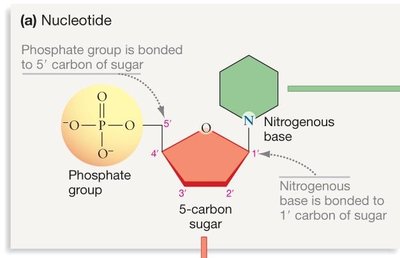
Nucleic acids are composed of nucleotides, each consisting of a phosphate group, a five-carbon sugar, and a nitrogenous base.
Phosphate Group: Attached to the 5' carbon of the sugar.
Five-Carbon Sugar: Ribose in RNA, deoxyribose in DNA (difference at carbon 2).
Nitrogenous Base: Purines (A, G) and pyrimidines (C, T, U).
Differences Between RNA and DNA
RNA and DNA differ in their sugar, base composition, and structure, affecting their function and stability.
RNA: Ribose sugar, uracil base, single-stranded, more reactive.
DNA: Deoxyribose sugar, thymine base, double-stranded, more stable.
Complementary Base Pairing: Essential for replication and transcription.
An Introduction to Carbohydrates
Structure and Function of Carbohydrates
Carbohydrates are energy sources and structural molecules. Their structure determines their function and how they are metabolized.
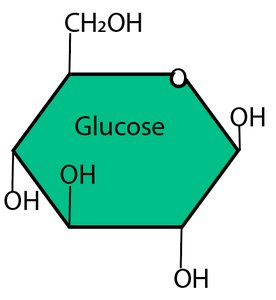
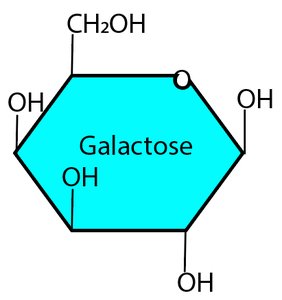
Glucose: Can feed directly into glycolysis for energy production.
Galactose: Must be converted to glucose before entering glycolysis.
Potential Energy: Carbohydrates have high potential energy due to their chemical bonds.
Lipids, Membranes, and the First Cells
Structure and Function of Fats
Fats are composed of glycerol and fatty acids, linked by ester bonds formed via dehydration reactions. They serve as energy storage molecules.
Triglycerides: Three fatty acids linked to glycerol.
Ester Linkage: Formed by dehydration reaction.
High Potential Energy: Fats store more energy than carbohydrates.
Phospholipids and Membrane Structure
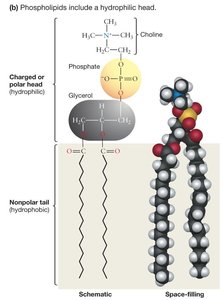
Phospholipids are amphipathic molecules with hydrophilic heads and hydrophobic tails, forming the basis of biological membranes.
Structure: Glycerol backbone, two fatty acid tails (hydrophobic), phosphate head (hydrophilic).
Membrane Formation: Phospholipids orient with heads facing water and tails facing inward, creating a bilayer.
Inside the Cell
Protein Synthesis and Sorting
Proteins are synthesized on ribosomes in the cytosol or rough ER, and their destination is determined by signal sequences.
Rough ER: Synthesizes export, transmembrane, Golgi, and lysosomal proteins.
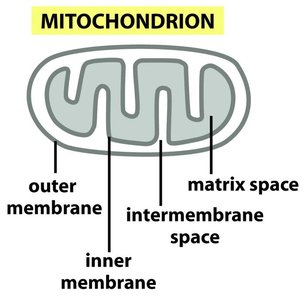
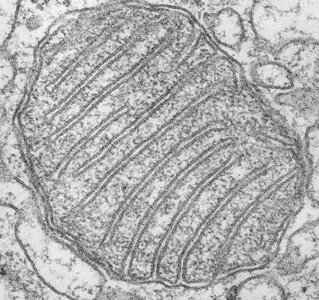
Cytosolic Ribosomes: Make proteins for nucleus, mitochondria, chloroplasts, and peroxisomes.
Protein Sorting: Signal sequences direct proteins to their correct location.
Microtubules and Cell Division
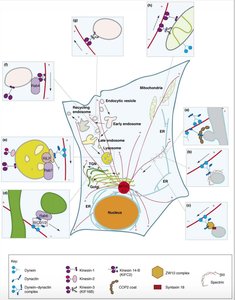
Microtubules are cytoskeletal elements involved in cell division, intracellular transport, and cell structure.
MTOC: Microtubule organizing center, includes centrosomes.
Proteins: Dynein and kinesin move cargo along microtubules using ATP.
Role in Mitosis: Microtubules form the spindle apparatus and separate chromosomes.
The Cell Cycle
Regulation by Cyclins and CDKs
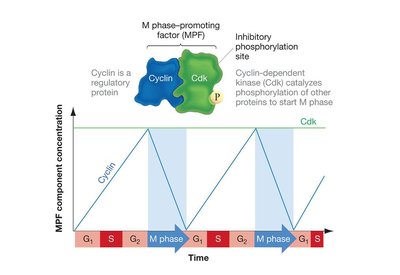
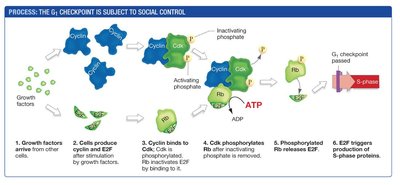
The cell cycle is regulated by cyclins and cyclin-dependent kinases (CDKs), which control progression through different phases.
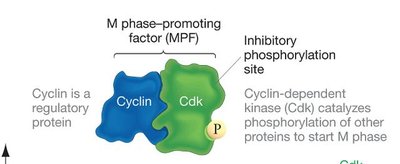
CDK: Serine/threonine kinases, always present but only active when bound to cyclin.
Cyclin: Regulatory protein, levels fluctuate during the cell cycle.
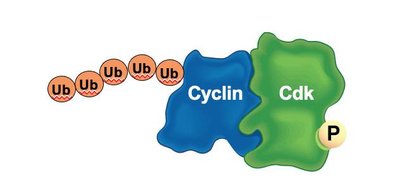
Activation/Deactivation: Cyclin/CDK complexes are activated by phosphorylation and deactivated by ubiquitination and degradation.
Meiosis
Phases and Genetic Variation
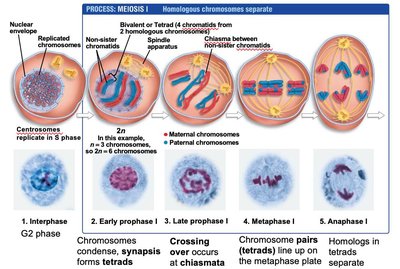
Meiosis is a specialized cell division process that produces haploid gametes and increases genetic diversity through crossing over and independent assortment.
Differences from Mitosis: Meiosis involves two divisions, produces four haploid cells, and includes crossing over.
Synaptonemal Complex: Holds homologous chromosomes together during crossing over.
Genetic Variation: Crossing over and independent assortment create recombinant offspring.
DNA Replication
Properties of DNA Polymerase
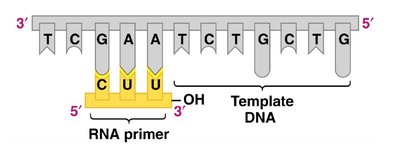
DNA polymerase synthesizes DNA in the 5' to 3' direction and requires a primer to initiate synthesis.
Primer: Short RNA strand made by primase.
Comparison: DNA polymerase cannot start from scratch, unlike RNA polymerase.
Leading and Lagging Strand Synthesis
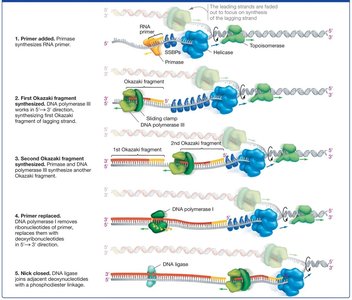
DNA replication involves continuous synthesis on the leading strand and discontinuous synthesis on the lagging strand, requiring ligase to join fragments.
Ligase: Creates phosphodiester bonds between fragments.
Order of Events: Primer addition, fragment synthesis, fragment joining.
Genotype and Phenotype
Linking Genotype to Phenotype
Genotype refers to the genetic makeup, while phenotype is the observable trait. Mutations can affect protein function and lead to different phenotypes.
Genetic Code: Determines how DNA is translated into proteins.
Types of Mutations: Missense, nonsense, frameshift, silent; radical vs conservative.
Example: Sepia mutation (frameshift, premature stop codon), white mutation (point mutation).
Transcription and Translation
Transcription in Bacteria
Transcription is initiated by sigma factor binding to promoter regions, determining the template strand. RNA polymerase synthesizes RNA using NTPs.
Promoter Regions: -10 and -35 regions, orientation determines template strand.
RNA Polymerase: Four grooves for DNA, NTPs, and growing RNA strand.
Transcription and Translation Initiation
Transcription starts near promoter regions, while translation begins at the AUG start codon. Mature mRNA is produced by splicing.
tRNA: Unique structure, about 80 nucleotides, made by RNA polymerase III.
Initiation: IFs dissociate once AUG is found; Met-activated tRNA binds to P site.
Energetic Coupling and Cellular Work
ATP and Electron Carriers
ATP is the cellular energy currency, and NAD+ is an electron carrier. Energetic coupling uses energy from spontaneous reactions to drive nonspontaneous ones.
ATP: Adenosine triphosphate, high potential energy due to clustered negative charges.
NAD+: Accepts electrons and H+, reduced to NADH.
How ATP Drives Endergonic Reactions
ATP phosphorylates substrates, increasing their potential energy and enabling endergonic reactions.
Enzymes and Metabolism
Enzyme Function
Enzymes are biological catalysts that lower activation energy by orienting substrates and stabilizing the transition state.
Transition State: Intermediate state between reactants and products.
Example: Glucokinase couples ATP hydrolysis to glucose phosphorylation.
Cellular Respiration and Fermentation
Overview of Respiration
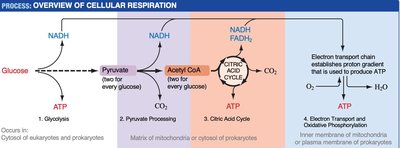
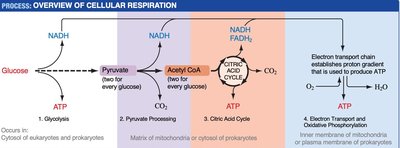
Cellular respiration harvests energy from glucose through glycolysis, pyruvate processing, citric acid cycle, and electron transport chain.
Glycolysis: Occurs in cytosol, yields 2 NADH, 2 ATP, 2 pyruvate.
Pyruvate Processing: Produces Acetyl CoA and CO2.
Citric Acid Cycle: Generates NADH, FADH2, ATP, and CO2.
Electron Transport Chain: Produces most ATP by creating a proton gradient.
Regulation of Glycolysis
Glycolysis is regulated by feedback inhibition, particularly at the enzyme phosphofructokinase (PFK).
Active Site: Higher affinity for ATP than regulatory site.
Regulatory Site: Inhibits glycolysis when ATP levels are high.
Photosynthesis and the Calvin Cycle
Photosynthesis
Photosynthesis converts CO2 and H2O into sugars using sunlight, increasing the chemical energy of the products.
Reactants: CO2 + H2O
Products: (CH2O)n + O2
Energy Comparison: Products have higher chemical energy than reactants.
Calvin Cycle
The Calvin cycle uses ATP and NADPH from the light reactions to fix carbon and produce sugars. The first product is 3-phosphoglycerate (3PG), a three-carbon molecule.
----------------------------------------
