 Back
BackComprehensive Study Guide: Cell Cycle, Meiosis, Genetics, DNA, Gene Expression, and Evolution
Study Guide - Smart Notes
 Tailored notes based on your materials, expanded with key definitions, examples, and context.
Cell Cycle and Mitosis
Overview and Biological Purpose
The cell cycle is the series of events that cells go through as they grow and divide. Mitosis and cytokinesis are essential for growth, repair, and replacement of somatic cells, ensuring that chromosome number is preserved in daughter cells.
G1 phase: Cell grows and performs normal functions; chromosomes are unreplicated chromatin.
S phase: DNA is replicated; each chromosome consists of two sister chromatids.
G2 phase: Cell prepares for division; DNA remains replicated.
Mitosis: Division of the nucleus through prophase, metaphase, anaphase, and telophase.
Cytokinesis: Division of the cytoplasm, producing two daughter cells.
Key Structures
Chromatin: Loose DNA-protein complex present between divisions.
Replicated chromosome: Two identical sister chromatids joined at a centromere.
Kinetochore microtubules: Attach to kinetochores and move chromosomes.
Nonkinetochore microtubules: Overlap and push spindle poles apart.
Cytokinesis Mechanisms
Animals: Cleavage furrow forms.
Plants: Cell plate forms.
Fungi: Septum forms.
Meiosis and Sexual Life Cycles
Purpose and Phases
Meiosis produces haploid gametes and generates genetic variation. It consists of two divisions: Meiosis I (reductional) and Meiosis II (equational).
Prophase I: Homologs pair as tetrads; crossing over occurs.
Metaphase I: Homologous pairs align independently.
Anaphase I: Homologous chromosomes separate.
Telophase I: Two haploid cells may form.
Prophase II: New spindle forms; no DNA replication.
Metaphase II: Chromosomes align individually.
Anaphase II: Sister chromatids separate.
Telophase II: Four haploid cells result.
Genetic Variation Mechanisms
Crossing over: Exchange of DNA between nonsister chromatids during Prophase I.
Independent assortment: Random orientation of homologs during Metaphase I.
Random fertilization: Any sperm can fertilize any egg.
Mutation: Changes in DNA sequence introduce new alleles.
Key Terms
Somatic cell: Diploid body cell.
Gamete: Haploid reproductive cell.
Autosome: Non-sex chromosome.
Sex chromosome: Determines biological sex.
Homologous chromosomes: Maternal and paternal chromosomes with the same genes.
DNA Structure and Replication
DNA Structure
Nucleotide: Phosphate group, deoxyribose sugar, nitrogenous base.
Backbone: Alternating sugar and phosphate groups.
Base pairs: A-T and G-C via hydrogen bonds.
Pyrimidines: Cytosine, thymine (one ring).
Purines: Adenine, guanine (two rings).
Antiparallel strands: One runs 5' to 3', the other 3' to 5'.
DNA Replication
Helicase: Unwinds the double helix.
Single-strand binding proteins: Stabilize unwound DNA.
Primase: Synthesizes RNA primers.
DNA polymerase: Adds nucleotides in the 5' to 3' direction.
Leading strand: Synthesized continuously.
Lagging strand: Synthesized in Okazaki fragments.
DNA ligase: Joins Okazaki fragments.
Semiconservative replication: Each new DNA molecule contains one original and one new strand.
Gene Expression
Central Dogma
Genetic information flows from DNA to RNA to protein.
DNA vs. RNA: DNA has deoxyribose and T; RNA has ribose and U.
mRNA: Carries codon sequence to ribosome.
tRNA: Brings amino acids, matches codons via anticodon.
rRNA: Structural and catalytic core of ribosomes.
Transcription
RNA polymerase synthesizes RNA from DNA template.
Eukaryotic RNA is processed: 5' cap, poly-A tail, intron removal, exon joining.
Translation
Ribosome reads mRNA codons (5' to 3').
tRNAs deliver amino acids; peptide bonds form.
Starts at start codon, ends at stop codon.
DNA to Protein Workflow
Label strand direction (5' to 3').
Transcribe DNA to mRNA using base-pairing rules.
Divide mRNA into codons (three bases each).
Translate codons to amino acids using a codon chart.
Genetics: Core Concepts
Key Terms and Patterns of Inheritance
Dominant allele: Expressed in heterozygotes.
Recessive allele: Only expressed when homozygous.
Homozygous: Two identical alleles.
Heterozygous: Two different alleles.
Genotype: Genetic makeup.
Phenotype: Observable traits.
Gene: Hereditary DNA unit.
Allele: Alternative version of a gene.
Inheritance Patterns
Complete dominance: Dominant phenotype in heterozygotes.
Incomplete dominance: Intermediate phenotype in heterozygotes.
Codominance: Both phenotypes expressed in heterozygotes.
Multiple alleles: More than two alleles exist in the population.
Sex-linked: Genes located on sex chromosomes.
Genetics Problem Solving Workflow
Identify inheritance pattern.
Create allele codes.
Translate parent phenotypes to genotypes.
List possible gametes.
Complete Punnett square.
Count genotypes and phenotypes.
Example: Widow's Peak Inheritance
Widow's peak is a dominant trait in humans. If a homozygous dominant individual (AA) mates with a heterozygous individual (Aa), all offspring will have a widow's peak.
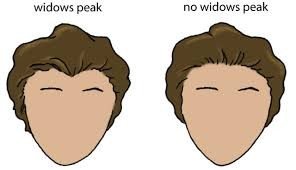
Genotype | Phenotype | Frequency |
|---|---|---|
AA | Widow's peak | 50% |
Aa | Widow's peak | 50% |
Evolution: Mechanisms and Patterns
Mechanisms of Evolution
Mutation: Creates new alleles.
Genetic drift: Random changes, strongest in small populations.
Gene flow: Migration introduces/removes alleles.
Non-random mating: Mate choice alters genotype frequencies.
Natural selection: Differential survival and reproduction based on heritable traits.
Selection Patterns
Type | Favored Phenotype | Effect |
|---|---|---|
Directional | One extreme | Shifts average |
Stabilizing | Intermediate | Reduces variation |
Disruptive | Both extremes | Increases variation |
Genetic Drift Types
Bottleneck effect: Sudden reduction in population size.
Founder effect: Small group establishes new population.
Non-Random Mating
Sexual selection: Traits increase mating success.
Intrasexual selection: Competition within one sex.
Intersexual selection: Mate choice by one sex.
Assortative mating: Mating with similar phenotypes.
Inbreeding: Mating among relatives; increases homozygosity.
Sexual dimorphism: Differences between males and females.
Practice Problems and Application
Sample Genetics Problem: Widow's Peak
Given: Widow's peak (A) is dominant to no widow's peak (a). Parents: AA x Aa.
Possible offspring genotypes: 50% AA, 50% Aa
Possible offspring phenotypes: 100% widow's peak
Example Punnett Square:
A | A | |
|---|---|---|
A | AA | AA |
a | Aa | Aa |
Additional info:
This guide covers all major foundational topics in introductory college biology, including cell division, genetics, molecular biology, and evolution, with workflows and tables to support problem-solving and conceptual understanding.
