 Back
BackComprehensive Study Guide: Cell Division, Genetics, and Molecular Biology
Study Guide - Smart Notes
 Tailored notes based on your materials, expanded with key definitions, examples, and context.
Cell Division: Mitosis and Meiosis
Overview of Cell Division
Cell division is a fundamental process by which cells reproduce and ensure the continuity of genetic information. There are two main types: mitosis (for growth and repair) and meiosis (for sexual reproduction).
Mitosis produces genetically identical diploid cells.
Meiosis produces genetically diverse haploid gametes.
Key Structures in Cell Division
Centrosome: The microtubule-organizing center, crucial for spindle formation.
Microtubules: Protein filaments that form the mitotic spindle, responsible for chromosome movement.
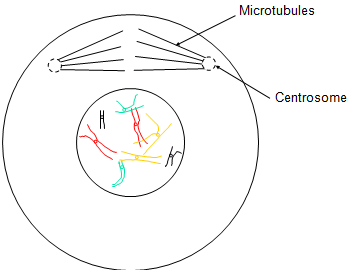
Chromosomes: Structures composed of DNA and proteins, visible during cell division.
Sister chromatids: Identical copies of a chromosome, joined at the centromere.
Phases of Meiosis
Meiosis consists of two sequential divisions: Meiosis I (reductional) and Meiosis II (equational). Key events include:
Prophase I: Homologous chromosomes pair and exchange genetic material (crossing over).
Metaphase I: Homologous pairs align at the metaphase plate.
Anaphase I: Homologous chromosomes separate.
Meiosis II: Similar to mitosis; sister chromatids separate.
Products: Four genetically unique haploid cells (gametes).
Nondisjunction and Aneuploidy
Nondisjunction is the failure of homologous chromosomes or sister chromatids to separate properly during meiosis, leading to gametes with abnormal chromosome numbers.
Trisomy (2n+1): An extra chromosome (e.g., Down syndrome).
Monosomy (2n-1): A missing chromosome (e.g., Turner syndrome).
Example: If nondisjunction occurs in Meiosis I, two gametes will have an extra chromosome and two will be missing one. If in Meiosis II, one gamete will have an extra, one will be missing, and two will be normal.
Genetics: Mendelian and Non-Mendelian Inheritance
Basic Genetic Terminology
Gene: A unit of heredity encoding a trait.
Allele: Different forms of a gene.
Genotype: Genetic makeup (e.g., AA, Aa, aa).
Phenotype: Observable trait (e.g., tall, short).
Homozygous: Two identical alleles (AA or aa).
Heterozygous: Two different alleles (Aa).
Mendelian Inheritance
Law of Segregation: Each individual has two alleles for each gene, which segregate during gamete formation.
Law of Independent Assortment: Genes for different traits assort independently during gamete formation.
Punnett squares are used to predict genotype and phenotype ratios in offspring.
Pedigree Analysis
Pedigrees are diagrams that show inheritance patterns of traits across generations. They help determine whether a trait is dominant, recessive, autosomal, or sex-linked.
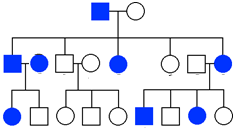
Squares: Males
Circles: Females
Shaded: Individuals expressing the trait
Sex-Linked Inheritance
X-linked traits: Traits determined by genes on the X chromosome (e.g., hemophilia).
Carrier: A female with one normal and one mutant allele (heterozygous).
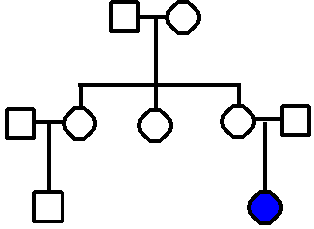
Example: A man with hemophilia (XhY) and a carrier woman (XHXh) can have daughters who are carriers or affected, and sons who are normal or affected, depending on allele segregation.
Non-Mendelian Inheritance
Incomplete dominance: Heterozygotes show an intermediate phenotype.
Codominance: Both alleles are expressed equally (e.g., AB blood type).
Multiple alleles: More than two alleles exist in the population (e.g., ABO blood group).
Pleiotropy: One gene affects multiple traits.
Epistasis: One gene affects the expression of another gene.
Polygenic inheritance: Multiple genes influence a single trait (e.g., skin color).
Molecular Basis of Inheritance
DNA Structure and Replication
DNA: Double helix composed of nucleotides (deoxyribose sugar, phosphate, nitrogenous base).
Base pairing: Adenine (A) pairs with Thymine (T); Guanine (G) pairs with Cytosine (C).
Antiparallel strands: 5' to 3' directionality.
Replication: Semiconservative process where each new DNA molecule consists of one old and one new strand.
Key enzymes: Helicase (unwinds DNA), DNA polymerase (synthesizes new DNA), Ligase (joins fragments).
Gene Expression: From DNA to Protein
Transcription: DNA is transcribed into mRNA in the nucleus.
Translation: mRNA is translated into protein at the ribosome.
Genetic code: Triplet codons specify amino acids.
Mutations: Changes in DNA sequence can be silent, missense, nonsense, or frameshift, affecting protein function and potentially leading to disease or evolution.
Regulation of Gene Expression
Prokaryotes: Operon model (e.g., lac operon) regulates gene clusters.
Eukaryotes: Regulation occurs at multiple levels: chromatin structure, transcription, RNA processing, translation, and post-translational modification.
Epigenetics: Heritable changes in gene expression not due to DNA sequence (e.g., DNA methylation, histone modification).
Summary Table: Comparison of Mitosis and Meiosis
Feature | Mitosis | Meiosis |
|---|---|---|
Number of divisions | 1 | 2 |
Number of daughter cells | 2 | 4 |
Genetic content | Diploid (2n), identical | Haploid (n), unique |
Role | Growth, repair | Gamete production |
Crossing over | No | Yes (Prophase I) |
Key Equations
Probability of independent events:
Probability of mutually exclusive events:
Additional info: This guide covers foundational concepts in cell biology, genetics, and molecular biology, integrating vocabulary, diagrams, and practice questions to reinforce understanding for exam preparation.
