 Back
BackComprehensive Study Guide: Meiosis, Genetics, and Chromosomal Inheritance
Study Guide - Smart Notes
 Tailored notes based on your materials, expanded with key definitions, examples, and context.
Meiosis and Sexual Life Cycles
Asexual vs. Sexual Reproduction
Reproduction is the biological process by which new individual organisms are produced. There are two main modes: asexual reproduction and sexual reproduction.
Asexual reproduction: Involves a single parent and produces genetically identical offspring (clones). No fertilization is required.
Sexual reproduction: Involves two parents, each contributing half of the genetic material to the offspring, resulting in genetic diversity. Fertilization is required to form a zygote.
Genetic diversity: Sexual reproduction increases genetic variation among offspring, while asexual reproduction does not.
Example: Bacteria reproduce asexually by binary fission, while humans reproduce sexually.
Chromosome Number and Structure
Chromosomes carry genetic information. Organisms can be diploid (2n) or haploid (n):
Diploid (2n): Cells with two sets of chromosomes (e.g., human somatic cells, 2n = 46).
Haploid (n): Cells with one set of chromosomes (e.g., human gametes, n = 23).
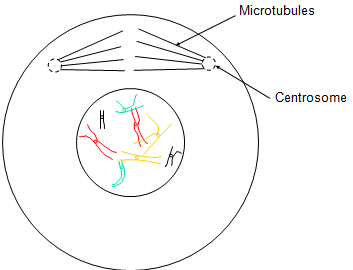
Homologous chromosomes: Pairs of chromosomes with the same genes but possibly different alleles.
Sister chromatids: Identical copies of a chromosome connected at the centromere after DNA replication.
Example: Human sperm and egg cells are haploid; after fertilization, the zygote is diploid.
Phases of Meiosis
Meiosis is a two-part cell division process that produces haploid gametes from diploid cells, ensuring genetic diversity through recombination and independent assortment.
Meiosis I: Homologous chromosomes separate, reducing chromosome number by half (reductive division).
Meiosis II: Sister chromatids separate, similar to mitosis.
Key events: Crossing over (exchange of genetic material), independent assortment, and formation of four genetically unique gametes.
Example: In humans, meiosis produces sperm and eggs with 23 chromosomes each.
Nondisjunction and Aneuploidy
Nondisjunction is the failure of homologous chromosomes or sister chromatids to separate properly during meiosis, leading to aneuploidy (abnormal chromosome number).
Trisomy (2n+1): An extra chromosome (e.g., Down syndrome, trisomy 21).
Monosomy (2n-1): A missing chromosome (e.g., Turner syndrome, monosomy X).
Nondisjunction can occur in Meiosis I or II, affecting the chromosome number in resulting gametes.
Example: Klinefelter syndrome (XXY) results from nondisjunction of sex chromosomes.
Mendelian Genetics
Basic Concepts and Terminology
Genetics is the study of heredity and variation. Key terms include:
Gene: A unit of heredity encoding a trait.
Allele: Different forms of a gene.
Genotype: Genetic makeup (e.g., AA, Aa, aa).
Phenotype: Observable traits (e.g., tall, short).
Homozygous: Two identical alleles (AA or aa).
Heterozygous: Two different alleles (Aa).
Mendelian Crosses and Laws
Mendel's experiments led to two key laws:
Law of Segregation: Each individual has two alleles for each gene, which segregate during gamete formation.
Law of Independent Assortment: Genes for different traits assort independently during gamete formation.
Monohybrid cross: Involves one gene (e.g., Aa x Aa). Dihybrid cross: Involves two genes (e.g., AaBb x AaBb).
Test Crosses
A test cross determines the genotype of an individual with a dominant phenotype by crossing it with a homozygous recessive individual.
Extending Mendelian Genetics
Incomplete dominance: Heterozygotes show an intermediate phenotype.
Codominance: Both alleles are expressed (e.g., AB blood type).
Multiple alleles: More than two alleles exist in the population (e.g., ABO blood group).
Pleiotropy: One gene affects multiple traits.
Epistasis: One gene affects the expression of another gene.
Polygenic inheritance: Multiple genes influence a trait (e.g., skin color).
Pedigree Analysis
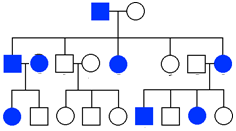
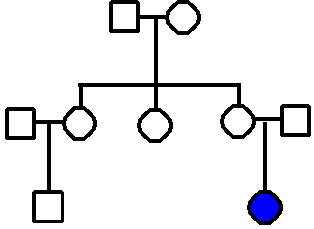
Pedigrees are diagrams that show inheritance patterns of traits across generations. They help determine whether a trait is dominant, recessive, autosomal, or sex-linked.
X-linked and Linked Genes
X-linked genes: Genes located on the X chromosome; often show different inheritance patterns in males and females (e.g., hemophilia).
Linked genes: Genes located close together on the same chromosome tend to be inherited together, unless separated by crossing over.
Genetic recombination: Crossing over during meiosis can produce new combinations of alleles.
Molecular Basis of Inheritance
DNA Structure and Replication
DNA is a double helix composed of nucleotides (deoxyribose sugar, phosphate, nitrogenous base). Replication is semiconservative, producing two identical DNA molecules.
Key enzymes: Helicase, DNA polymerase, primase, ligase.
Leading strand: Synthesized continuously.
Lagging strand: Synthesized in Okazaki fragments.
Gene Expression: From Gene to Protein
Transcription: DNA is transcribed into mRNA in the nucleus.
Translation: mRNA is translated into protein at the ribosome.
mRNA processing: Includes 5' capping, poly-A tail addition, and splicing.
Regulation of Gene Expression
Prokaryotes: Operons (e.g., trp operon) regulate gene clusters.
Eukaryotes: Regulation occurs at multiple levels (chromatin structure, transcription, RNA processing, translation).
Noncoding RNAs: Small RNAs (e.g., miRNA, siRNA) can regulate gene expression post-transcriptionally.
Summary Table: Key Differences Between Mitosis and Meiosis
Feature | Mitosis | Meiosis |
|---|---|---|
Role | Growth, repair, asexual reproduction | Sexual reproduction, gamete formation |
Number of divisions | 1 | 2 |
Number of cells produced | 2 | 4 |
Genetic content | Diploid (2n), identical | Haploid (n), unique |
Crossing over | No | Yes (Prophase I) |
Homologous chromosome separation | No | Yes (Anaphase I) |
Additional info: For exam preparation, focus on understanding concepts, vocabulary, and the ability to apply knowledge to new scenarios, such as predicting outcomes of genetic crosses or explaining the consequences of chromosomal abnormalities.
