Back
BackComprehensive Study Notes: Evolution, Diversity, and Function in Biology
Study Guide - Smart Notes
 Tailored notes based on your materials, expanded with key definitions, examples, and context.
Module 1: Natural Selection, Heritability, and Variation
Darwin’s Contributions and the Theory of Natural Selection
Charles Darwin revolutionized biology by proposing that species are not fixed and that life on Earth is ancient and constantly changing. His observations during the Beagle voyage and his readings on geology and populations led to the formulation of the theory of natural selection.
Unity and Diversity of Life: All living organisms share common features, yet display remarkable diversity due to adaptation through natural selection.
Evidence for Evolution: Includes direct observation, homologies (similarities due to shared ancestry), the fossil record, and biogeography.
Key Mechanisms: Variation exists within populations, and heritable traits that confer advantages become more common over generations.
Key Observations and Inferences
Populations produce more offspring than can survive, leading to competition.
Individuals with advantageous traits are more likely to survive and reproduce (natural selection).
Module 2: Evolution of Populations
Hardy-Weinberg Principle and Population Genetics
The Hardy-Weinberg equilibrium provides a mathematical model to study genetic variation in populations and to determine if evolution is occurring.
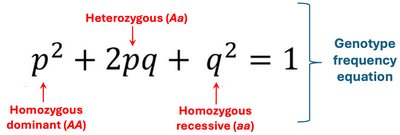
Genotype Frequency Equation: Where p = frequency of dominant allele, q = frequency of recessive allele. p2: Homozygous dominant (AA), 2pq: Heterozygous (Aa), q2: Homozygous recessive (aa).
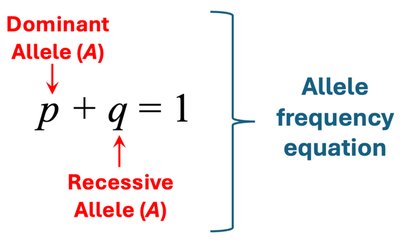
Allele Frequency Equation: Where p = frequency of dominant allele, q = frequency of recessive allele.
Violations of Hardy-Weinberg Equilibrium
Non-random mating
Mutations
Natural selection
Gene flow
Small population size (genetic drift)
Types of Natural Selection
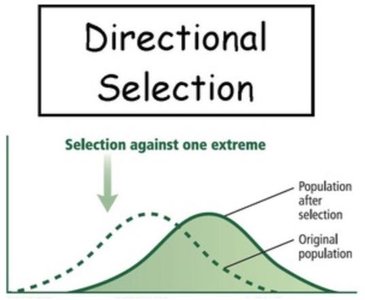
Directional Selection: Favors one extreme phenotype, shifting the population mean.
Disruptive Selection: Favors both extremes over intermediate phenotypes.
Stabilizing Selection: Favors intermediate phenotypes, reducing variation.
Sexual Selection: Can be intersexual (mate choice) or intrasexual (competition within a sex).
Module 3: Origin of Species
Species Concepts and Reproductive Isolation
A species is defined as a group of organisms that can interbreed and produce viable, fertile offspring. Reproductive isolation prevents gene flow between species and can be prezygotic (before fertilization) or postzygotic (after fertilization).
Prezygotic Barriers: Habitat, temporal, behavioral, mechanical, and gametic isolation.
Postzygotic Barriers: Reduced hybrid viability, reduced hybrid fertility, hybrid breakdown.
Modes of Speciation
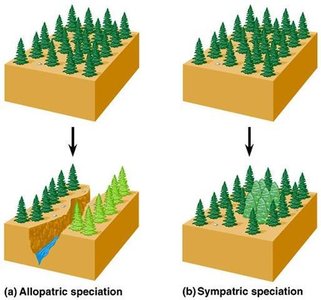
Allopatric Speciation: Occurs when populations are geographically separated.
Sympatric Speciation: Occurs without geographic separation, often via polyploidy, sexual selection, or habitat differentiation.
Evolutionary Tempo: Speciation can be punctuated (rapid bursts) or gradual.
Module 4: History of Life on Earth
Major Events in the Origin of Life
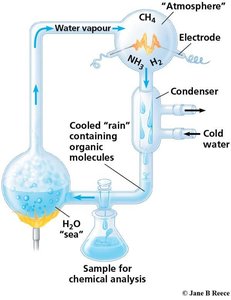
Abiotic synthesis of small organic molecules
Formation of macromolecules (proteins, nucleic acids)
Packaging into protocells
Origin of self-replicating molecules
Endosymbiotic Theory and Eukaryotic Origins
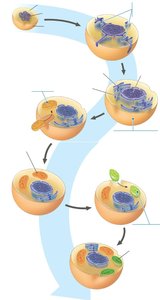
Eukaryotes originated via endosymbiosis, where ancestral prokaryotes engulfed other cells that became mitochondria and chloroplasts.
Mass Extinctions and Adaptive Radiations
Mass extinctions have periodically reshaped life on Earth.
Adaptive radiations follow extinctions, allowing surviving groups to diversify and fill ecological niches.
Module 5: Phylogeny
Phylogenetic Trees and Classification
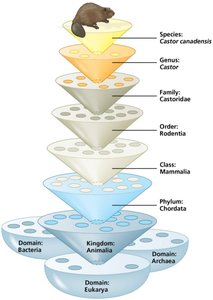
Phylogeny is the evolutionary history of a species or group. Classification organizes species into hierarchical taxa based on shared characteristics.
Homologies: Phenotypic and genetic similarities due to shared ancestry.
Clades: Monophyletic groups include an ancestor and all its descendants. Paraphyletic and polyphyletic groups are less inclusive or combine unrelated lineages.
Module 6: Bacteria & Archaea
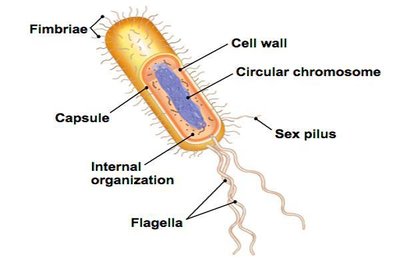
Prokaryotic Diversity and Structure
Prokaryotes are divided into Bacteria and Archaea.
Bacteria have peptidoglycan cell walls (Gram-positive and Gram-negative).
Rapid reproduction, mutations, and genetic recombination (conjugation, transformation, transduction) drive diversity.
Horizontal gene transfer is common.
Prokaryotes are classified by energy and carbon source: photoautotrophs, photoheterotrophs, chemoautotrophs, chemoheterotrophs.
Some Archaea are extremophiles.
Prokaryotes play key roles as symbionts.
Module 7: Protists
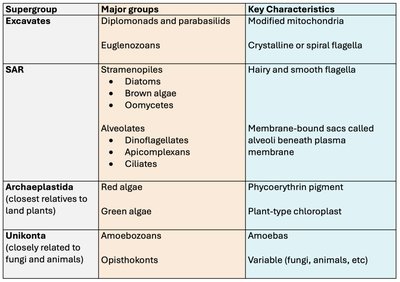
Diversity and Classification of Protists
Protists are eukaryotes, both unicellular and multicellular.
Diversity arises from primary and secondary endosymbiosis.
They are important primary producers and symbionts.
Some protists are more closely related to plants, fungi, or animals than to other protists.
Module 8: Plant Diversity I
Adaptations for Life on Land
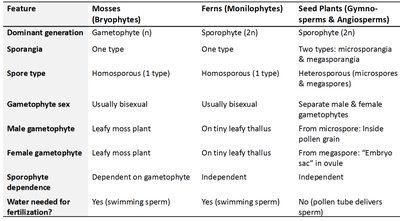
Key derived traits: alternation of generations, multicellular dependent embryos, spores in sporangia, apical meristems.
Plant evolution: non-vascular plants (bryophytes) → vascular seedless plants (ferns) → seed plants (gymnosperms and angiosperms).
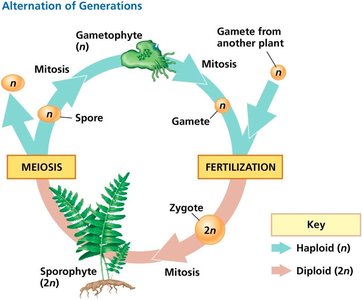
Alternation of generations involves multicellular haploid (gametophyte) and diploid (sporophyte) stages.
Module 9: Plant Diversity II
Seed Plant Innovations
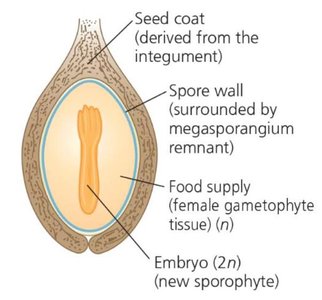
Evolution of reduced gametophytes, heterospory, ovules, and pollen.
Gymnosperms have naked seeds; angiosperms have flowers and fruits.
Angiosperms are divided into monocots and eudicots.
Co-evolution with animal pollinators is significant in angiosperms.
Module 10: Fungi
Fungal Structure, Reproduction, and Roles
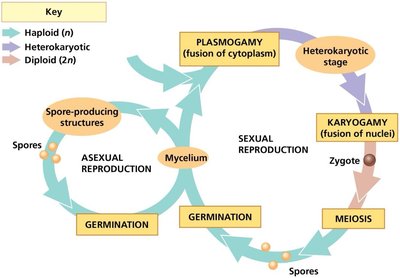
Fungi are heterotrophs with chitinous cell walls, forming hyphae and mycelia.
Mycorrhizae form mutualistic relationships with plants.
Reproduction can be sexual or asexual, involving spores.
Major groups: Mucoromycetes (zygosporangia), Ascomycetes (ascospores), Basidiomycetes (basidiospores).
Fungi can be mutualists (e.g., lichens), pathogens, or decomposers.
Module 11: Animal Diversity & Form
Animal Development and Body Plans
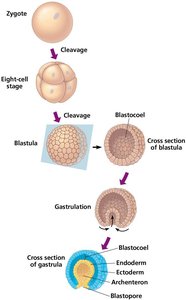
Development: Zygote → cleavage → blastula → gastrulation → embryonic tissue layers (endoderm, ectoderm, mesoderm).
Most animals are triploblastic; cnidarians are diploblastic.
Body plans: radial or bilateral symmetry; presence or absence of body cavities.
Protostomes and deuterostomes differ in cleavage, blastopore fate, and coelom formation.
Module 12: Invertebrates
Major Invertebrate Phyla
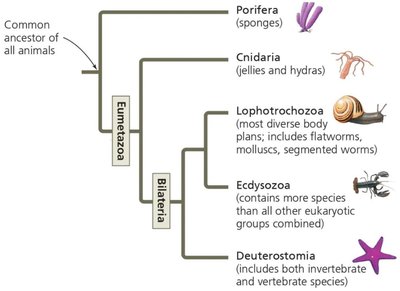
Porifera (sponges): No true tissues; choanocytes for feeding.
Cnidaria (jellies, hydra): Diploblastic, radial symmetry, gastrovascular cavity, cnidocytes.
Molluscs: Foot, mantle, visceral mass; some have shells and radula.
Annelids: Segmented, hermaphroditic, closed circulatory system, cutaneous respiration.
Ecdysozoans (insects, nematodes, crustaceans): Molt cuticle.
Arthropods: Segmented, chitinous exoskeleton, jointed appendages.
Echinoderms: Deuterostomes, water vascular system, tube feet.
Module 13: Vertebrates
Chordate and Vertebrate Evolution
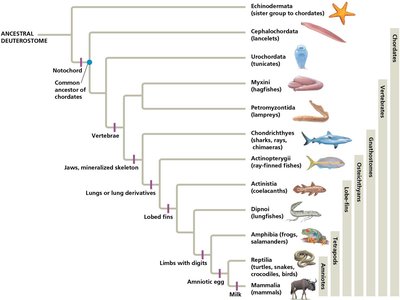
Chordate traits: notochord, dorsal hollow nerve cord, pharyngeal slits, post-anal tail.
Lancelets retain all traits as adults; tunicates lose some.
Hagfishes and lampreys: rudimentary vertebrae, no jaws (cyclostomes).
Gnathostomes: Hinged jaws.
Chondrichthyans: Cartilaginous skeleton, various reproductive modes.
Osteichthyes: Bony skeleton.
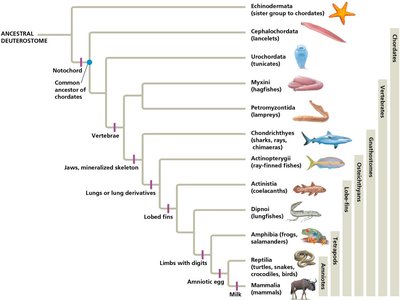
Ray-finned fish: Swim bladder, opercula.
Lobe-fins: Rod-shaped bones, gave rise to tetrapods.
Tetrapods: Four limbs, neck, pelvic girdle fused to backbone, no gills (except amphibians).
Amniotes: All tetrapods except amphibians; adaptations for terrestrial life.
Birds: Endothermic, adaptations for flight.
Mammals: Hair, milk production; monotremes, marsupials, eutherians; primates include hominids (bipeds).
Module 14: Animal Form and Function
Principles of Animal Physiology
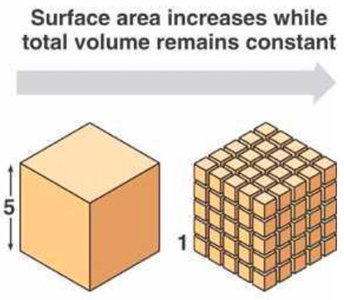
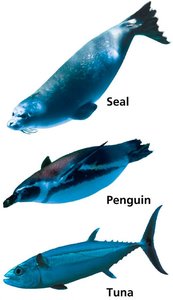
Physical laws constrain animal form and function.
Large animals require specialized systems for exchange of nutrients, gases, and wastes.
Four tissue types: epithelial, connective, muscle, nervous.
Coordination and control: endocrine and nervous systems.
Homeostasis: Maintained by negative feedback; positive feedback in specific cases.
Thermoregulation: Insulation, circulatory adaptations, evaporative cooling, behavioral responses, metabolic adjustments.
Module 15: Animal Nutrition
Digestive Systems and Nutrient Acquisition
Diet provides energy, building blocks, and essential nutrients (amino acids, lipids, vitamins, minerals).
Modes of ingestion: bulk, substrate, suspension, fluid feeding.
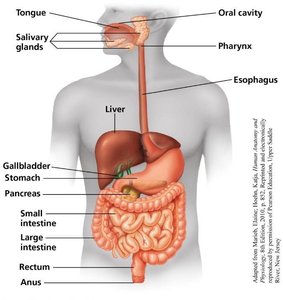
Digestive systems: gastrovascular cavity or alimentary canal.
Mouth: Mechanical digestion, starch breakdown.
Stomach: Mechanical digestion, protein breakdown (gastric juice = HCl + pepsin).
Duodenum: Most digestion; receives enzymes from pancreas and bile from liver.
Small intestine: Nutrient absorption via villi and microvilli.
Colon: Water recovery.
Variation in dentition, digestive tract adaptations, and microbial mutualism.
Blood sugar homeostasis: Insulin and glucagon from pancreas.
Module 16: Circulation & Respiration
Circulatory and Respiratory Systems
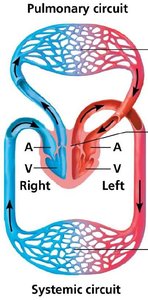
Circulatory system connects cells with organs for gas exchange, nutrient absorption, and waste disposal.
Open vs. closed systems; single vs. double circulation; 2-, 3-, or 4-chambered hearts.
Blood flow: Heart → arteries → arterioles → capillaries → venules → veins → heart.
Blood: Plasma and cellular elements; pressure and velocity change throughout circulation.
Gas exchange: O2 and CO2 diffuse down concentration gradients.
Gills: Countercurrent exchange maximizes gas diffusion.
Lungs: Trachea → bronchi → bronchioles → alveoli.
Diverse respiratory systems in insects, amphibians, birds, and mammals; respiratory pigments (hemoglobin, myoglobin).