Back
BackComprehensive Study Notes: Genetics, Evolution, Reproduction, and Ecology
Study Guide - Smart Notes
 Tailored notes based on your materials, expanded with key definitions, examples, and context.
Chapter 27: Reproduction
Haploid and Diploid Cells
In sexually reproducing organisms, cells can exist in two main states: haploid and diploid. These states are crucial for understanding inheritance and the life cycle of eukaryotes.
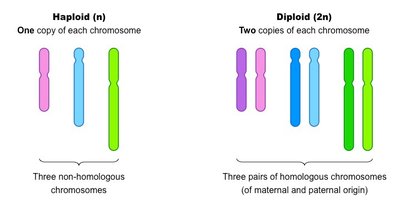
Haploid (n): Cells with one set of chromosomes (e.g., gametes such as sperm and eggs in humans).
Diploid (2n): Cells with two sets of chromosomes, one from each parent (e.g., somatic cells in humans).
Zygote: The fertilized egg, formed by the fusion of two haploid gametes, restoring the diploid state.
Somatic cells: Body cells that undergo mitosis and are diploid.
Gametes: Sex cells (sperm and eggs) that are haploid and produced via meiosis.
Locus: The specific location of a gene on a chromosome.
Homologous chromosomes: Chromosome pairs, one from each parent, that are similar in shape, size, and gene content.
Meiosis
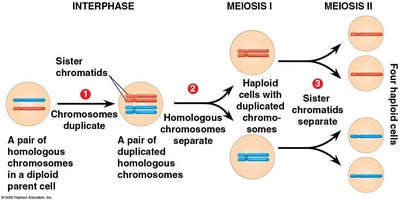
Meiosis is the process by which haploid gametes are produced from diploid cells. It consists of two sequential divisions: Meiosis I and Meiosis II.
Meiosis I: Homologous chromosomes separate, and crossing over occurs, increasing genetic diversity.
Meiosis II: Sister chromatids separate, resulting in four haploid cells.
Crossing over: Exchange of genetic material between homologous chromosomes during Prophase I, leading to genetic variation.
Gametogenesis
Gametogenesis is the process of forming gametes (sperm and eggs) through meiosis.
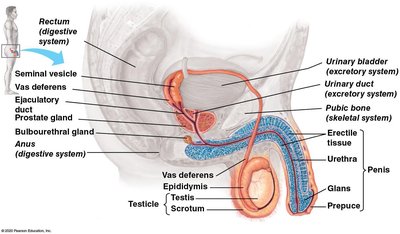
Spermatogenesis: Continuous production of sperm in the testes, fueled by hormones such as testosterone and nutrients like glucose.
Oogenesis: Production of eggs in the ovaries, with eggs released periodically for potential fertilization.
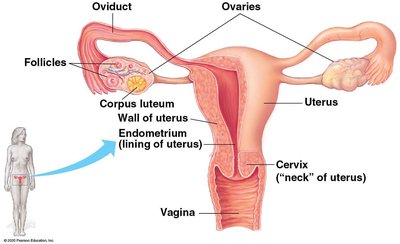
Hormonal Regulation of the Reproductive Cycle
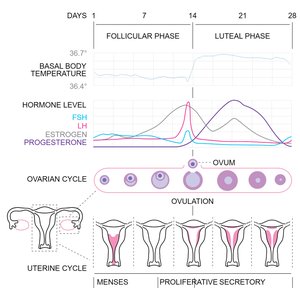
Hormones coordinate the reproductive cycles in females, regulating ovulation and preparation for potential pregnancy.
FSH (Follicle Stimulating Hormone): Stimulates follicle growth in the ovary.
LH (Luteinizing Hormone): Triggers ovulation and stimulates progesterone production.
Progesterone: Prepares and maintains the endometrium for implantation.
Estrogen: Stimulates growth of the uterine lining and supports ovulation.
Corpus luteum: Temporary endocrine structure producing progesterone after ovulation.
Chapter 9: Patterns of Inheritance
Genotype and Phenotype
Inheritance patterns describe how traits are passed from parents to offspring.
Genotype: The genetic makeup (alleles) of an organism.
Phenotype: The observable characteristics determined by the genotype.
Allele: Alternative versions of a gene found at the same locus.
Locus: The specific location of a gene on a chromosome.
Probability of inheritance: Determined using Punnett squares and the rules of probability to predict the likelihood of specific genotypes and phenotypes in offspring.
Chapter 10: Molecular Biology of the Gene
DNA Replication and Enzymes
DNA replication is a semiconservative process, ensuring genetic information is accurately passed to daughter cells.
Helicase: Unwinds the DNA double helix by breaking hydrogen bonds.
Primase: Synthesizes short RNA primers to provide a starting point for DNA polymerase.
DNA polymerase: Synthesizes new DNA strands in the 5' to 3' direction.
Ligase: Joins Okazaki fragments on the lagging strand.
Leading strand: Synthesized continuously toward the replication fork. Lagging strand: Synthesized discontinuously, forming Okazaki fragments.
Central Dogma of Molecular Biology
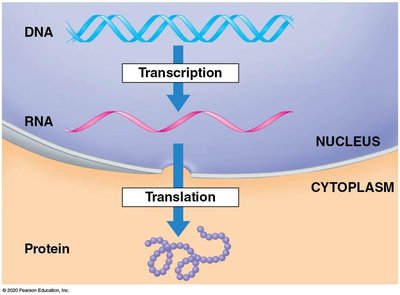
The central dogma describes the flow of genetic information from DNA to RNA to protein.
Transcription: Synthesis of RNA from a DNA template (in the nucleus).
Translation: Synthesis of proteins from mRNA (in the cytoplasm/ribosome).
RNA polymerase: Enzyme that synthesizes mRNA from DNA.
Promoter: DNA sequence where RNA polymerase binds to initiate transcription.
Codon: Triplet of nucleotides in mRNA that codes for a specific amino acid.
tRNA: Transfer RNA that brings amino acids to the ribosome during translation.
PCR and Gel Electrophoresis
PCR (Polymerase Chain Reaction): Technique to amplify DNA sequences.
Denaturation: DNA strands are separated by heat.
Annealing: Primers bind to target sequences.
Extension: Taq polymerase synthesizes new DNA strands.
Gel electrophoresis: Separates DNA fragments by size using an electric field; smaller fragments move faster through the gel.
Chapter 13: How Populations Evolve
Evolution and Genetic Variation
Evolution is the change in allele frequencies in a population over time, driven by various mechanisms.
Evolution: Descent with modification; changes occur at the population level.
Adaptations: Random traits that enhance survival and reproduction.
Fossils: Provide evidence for evolutionary change by showing transitional forms.
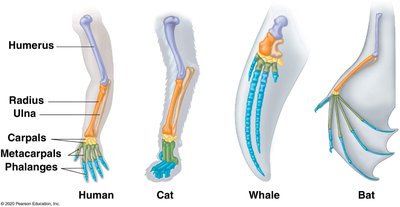
Homology: Similar structures due to shared ancestry (e.g., human arm, bat wing).
Divergence: When populations split and evolve into new species.
Artificial selection: Human-driven selection for desirable traits.
Sources of Genetic Variation
Mutations: Ultimate source of new alleles.
Sexual reproduction: Random fertilization, independent assortment, and crossing over increase genetic diversity.
Population Genetics
Population: Group of individuals of the same species in a given area.
Gene pool: All alleles present in a population.
Microevolution: Small-scale changes in allele frequencies.
Allele frequency: Proportion of a specific allele in the population ().
Genotype frequencies: (Hardy-Weinberg equilibrium).
Hardy-Weinberg equilibrium: Describes a non-evolving population under specific conditions (large population, random mating, no mutation, migration, or selection).
Mechanisms of Evolution
Gene flow: Movement of alleles between populations (migration).
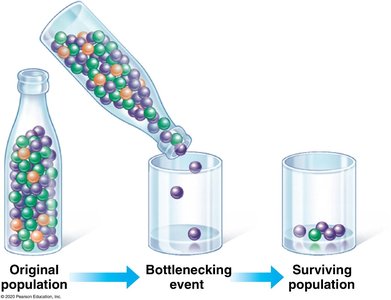
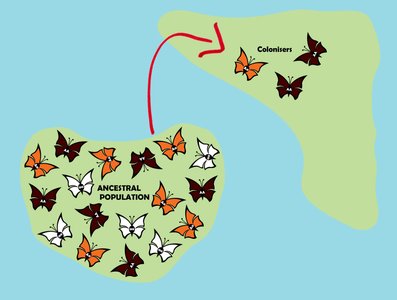
Genetic drift: Random changes in allele frequencies, especially in small populations (e.g., bottleneck and founder effects).
Natural Selection and Fitness
Relative fitness: Contribution of an individual to the next generation compared to others.
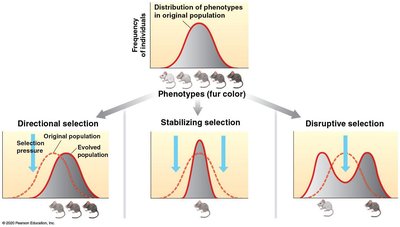
Stabilizing selection: Favors intermediate phenotypes.
Directional selection: Favors one extreme phenotype.
Disruptive selection: Favors both extreme phenotypes over intermediates.
Evidence for Evolution
Fossils: Show changes in organisms over time.
Homologous structures: Indicate common ancestry.
Antibiotic Resistance
Bacteria mutate randomly; antibiotics select for resistant individuals, leading to populations that are harder to treat.
To prevent resistance, always complete prescribed antibiotic courses.
Chapter 14: The Origin of Species
Speciation
Speciation is the process by which one species splits into two or more distinct species.
Allopatric speciation: Occurs due to geographic isolation.
Sympatric speciation: Occurs without geographic separation, often through ecological or behavioral differences.
Species Concepts
Biological species concept: Groups that can interbreed and produce fertile offspring.
Morphological species concept: Based on physical traits.
Ecological species concept: Based on ecological niche.
Phylogenetic species concept: Based on evolutionary history.
Reproductive Barriers
Prezygotic barriers: Prevent fertilization (habitat, temporal, behavioral, mechanical, gametic isolation).
Postzygotic barriers: Affect hybrid viability or fertility.
Patterns of Speciation
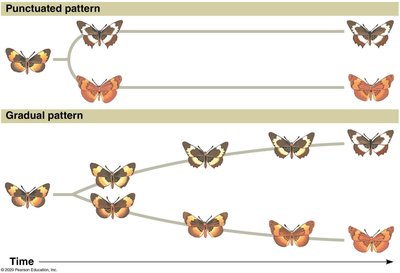
Punctuated equilibrium: Rapid bursts of change followed by stability.
Gradualism: Slow, steady accumulation of differences.
Chapter 36: Population Ecology
Population Structure and Dynamics
Population ecology studies how populations change over time and the factors that regulate these changes.
Population: Group of individuals of the same species in an area.
Population density: Number of individuals per unit area or volume.
Dispersion patterns: Clumped, uniform, or random distribution of individuals.
Life Tables and Survivorship Curves
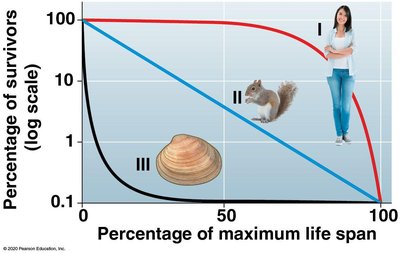
Type I: High survival in early/middle life, rapid decline in old age (e.g., humans).
Type II: Constant death rate (e.g., squirrels).
Type III: High mortality early in life (e.g., oysters).
Population Growth Models
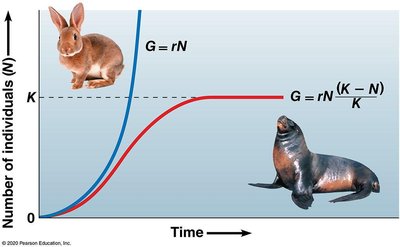
Exponential growth: Unlimited resources, J-shaped curve ().
Logistic growth: Limited by carrying capacity, S-shaped curve ().
Regulation of Population Size
Density-dependent factors: Competition, predation, disease (effects increase with population density).
Density-independent factors: Natural disasters, climate (effects not related to density).
Life History Strategies
r-selected species: Many offspring, little care, thrive in unstable environments.
K-selected species: Few offspring, high parental care, stable environments.
Human Population Growth
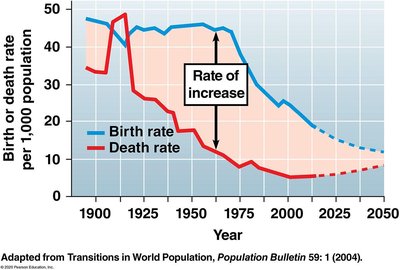
Demographic transition: Shift from high birth/death rates to low birth/death rates as a country develops.
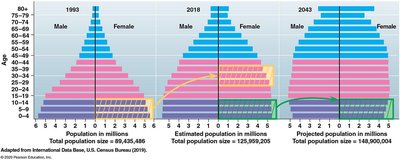
Age structure diagrams: Show distribution of age groups in a population, useful for predicting growth trends.
Chapter 37: Communities and Ecosystems
Community Interactions
Competition: Both species are harmed by shared resource use.
Mutualism: Both species benefit.
Commensalism: One benefits, the other is unaffected.
Predation: One species (predator) eats another (prey).
Herbivory: Animals eat plants.
Parasitism/Pathogens: One organism lives on/in another, causing harm.
Trophic Structure and Energy Flow
Trophic levels: Primary producers, primary consumers, secondary consumers, etc.
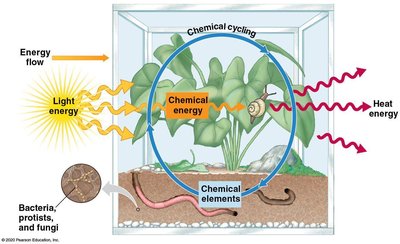
Energy transfer is inefficient; about 10% is passed to the next level.
Species Diversity and Keystone Species
Species richness: Number of different species.
Relative abundance: Proportion of each species.
Keystone species: Have a disproportionate effect on community structure.
Ecological Succession
Primary succession: Occurs in lifeless areas (no soil).
Secondary succession: Occurs where soil remains after disturbance.
Invasive Species and Biological Magnification
Invasive species: Non-native species that disrupt ecosystems.
Biological magnification: Accumulation of toxins in higher trophic levels.
Chapter 38: Conservation Biology
Biodiversity and Conservation
Biodiversity: Variety of life at genetic, species, and ecosystem levels.
Extinction: Loss of species from Earth.
Phenotypic plasticity: Ability of an organism to change phenotype in response to environment.
Biodiversity hotspot: Area with high numbers of endemic species.
Endemic species: Species found only in a specific location.
Threats to Biodiversity
Habitat destruction, introduction of invasive species, overexploitation, pollution, and climate change.
Climate Change and Global Warming
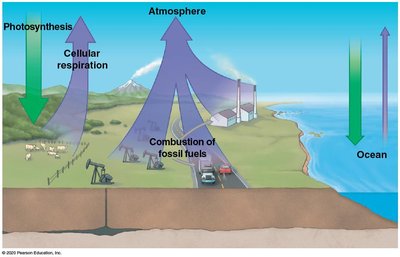
Driven by increased greenhouse gas emissions from human activities such as burning fossil fuels and deforestation.