 Back
Conservation Biology and Ecological Restoration: Study Notes
Study Guide - Smart Notes
 Tailored notes based on your materials, expanded with key definitions, examples, and context.
Conservation Biology and Ecological Restoration
Ecological Restoration
Ecological restoration is the scientific process of assisting the recovery of ecosystems that have been degraded, damaged, or destroyed. The goal is to return the ecosystem as closely as possible to its pre-disturbance state, ensuring self-sustainability and resilience.
Reference Ecosystems: Serve as models for restoration, providing benchmarks for structure, function, and species composition.
Self-Sustainability: Restored ecosystems should be able to maintain themselves without ongoing human intervention.
Adaptive Management: Restoration strategies are adjusted based on monitoring and feedback.
Practical Techniques: Include structural remediation (repairing physical features), biotic interventions (reintroducing species), and process recovery (restoring ecological functions).
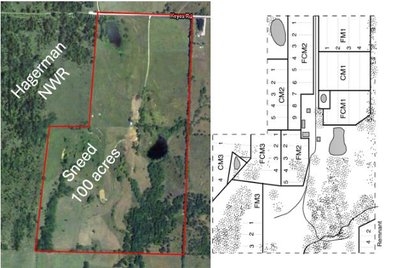
Examples of Restoration Projects
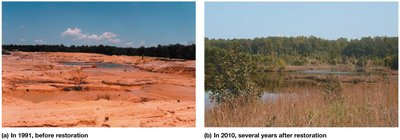
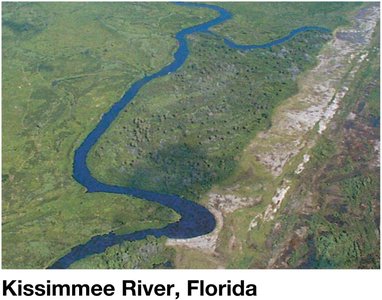
Structural Remediation: Rebuilding soil, recontouring land, or restoring water flow.
Biotic Interventions: Planting native species, removing invasive species, or reintroducing animals.
Process Recovery: Restoring nutrient cycling, pollination, or hydrological processes.
Key Strategies in Restoration Ecology
Bioremediation
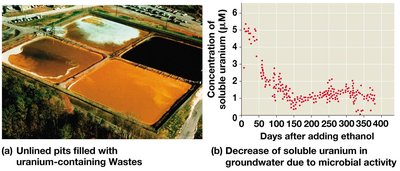
Bioremediation uses living organisms, such as plants, fungi, or prokaryotes, to detoxify polluted ecosystems. These organisms can absorb, metabolize, or immobilize toxic substances.
Example: Shewanella oneidensis bacteria metabolize uranium, converting it to an insoluble form that is less likely to contaminate water sources.
Biological Augmentation
Biological augmentation involves adding essential materials or organisms to a degraded ecosystem to enhance recovery.
Nitrogen-fixing plants: Increase soil nitrogen, supporting plant growth.
Mycorrhizal fungi: Improve nutrient uptake for plants.
Animal reintroduction: Ecologists may release animals, establish wildlife corridors, or add features to encourage colonization.
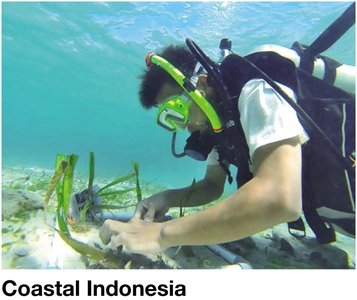
Conservation Biology
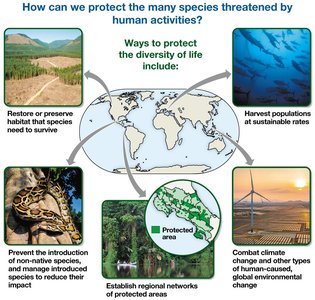
Conservation biology focuses on the protection, preservation, management, and restoration of natural environments and wildlife. It addresses the threats to biodiversity and develops strategies to mitigate them.
In-Situ Conservation: Protecting species in their natural habitats (e.g., national parks, wildlife sanctuaries).
Ex-Situ Conservation: Preserving species outside their natural habitats (e.g., zoos, gene banks).
Landscape-Scale Conservation: Connecting fragmented habitats with wildlife corridors to promote genetic exchange and migration.
Levels of Biodiversity
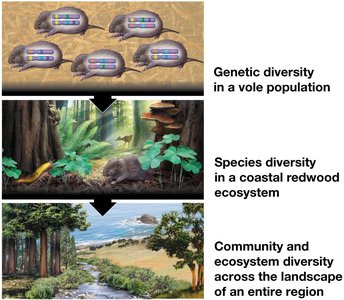
Biodiversity is considered at three main levels, each crucial for ecosystem health and resilience.
Genetic Diversity: Variation within a species, important for adaptability.
Species Diversity: Variety of species within an ecosystem.
Ecosystem Diversity: Diversity of habitats and ecological processes across landscapes.
Major Threats to Biodiversity
Habitat Loss/Fragmentation: Destruction or division of habitats reduces species populations.
Invasive Species: Non-native species disrupt local ecosystems.
Overharvesting: Unsustainable exploitation of resources.
Global Change: Climate change, pollution, and other large-scale environmental alterations.
Global Change and Its Effects
Global change encompasses alterations in climate, atmospheric and ocean chemistry, and ecological systems, reducing Earth's capacity to support life.
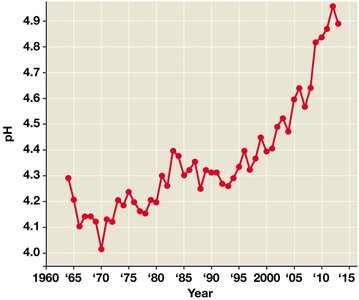
Acid Precipitation: Rain, snow, or fog with pH < 5.2, caused by sulfur and nitrogen emissions from burning wood and fossil fuels.
Effects: Decreases soil nutrients, increases toxic metals, harms organisms, and can take decades for recovery.
Regulations: Environmental policies have reduced sulfur dioxide emissions, but nitrogen oxides remain a concern.
Resurrecting Extinct Species
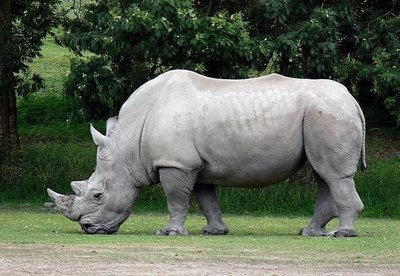
Advances in biotechnology have enabled scientists to attempt the resurrection of extinct species through cloning and hybridization.
Example: Hybrid embryos created using sperm from the near-extinct northern white rhinoceros and eggs from the southern subpopulation.
Landscape and Regional Conservation
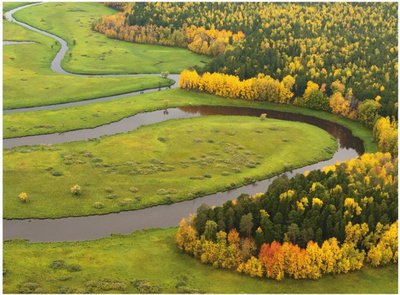
Modern conservation efforts focus on sustaining biodiversity at the community, ecosystem, and landscape levels, rather than just individual species.
Landscape Structure: Physical features and boundaries influence biodiversity.
Edge Communities: Species may thrive at ecosystem boundaries, accessing resources from both sides.
Movement Corridors: Narrow strips or clumps of habitat connect isolated patches, promoting dispersal and reducing inbreeding.
Corridor Risks: Can facilitate the spread of disease between populations.
Urban Ecology
Urban ecology studies organisms and their environments in urban settings, focusing on water quality, habitat restoration, and the impact of human activities.
Restoration Projects: Stabilizing stream banks, removing invasive plants, and planting native species.
Challenges: Rapid environmental changes due to human actions may render current reserves unsuitable in the future.
Nutrient Enrichment
Human activities often redistribute nutrients, leading to enrichment in some areas and depletion in others.
Critical Load: The maximum amount of added nutrient that can be absorbed without harming ecosystem integrity.
Consequences: Excess nutrients cause phytoplankton blooms, oxygen depletion, and aquatic animal deaths (e.g., Gulf of Mexico "dead zone").
Toxins in the Environment
Humans release synthetic and natural toxins that can persist and accumulate in ecosystems.
Biological Magnification: Toxins concentrate at higher trophic levels as organisms consume contaminated biomass.
Emerging Frontiers & Solutions
Community-Based Conservation: Integrates indigenous knowledge and local economies.
Rewilding: Reintroduces apex predators or keystone species to restore ecosystem functions.
Technology: Drones, environmental DNA (eDNA), and GIS mapping enhance monitoring and planning.
Summary Table: Conservation Strategies
Strategy | Description | Example |
|---|---|---|
In-Situ Conservation | Protecting species in their natural habitats | National parks, wildlife sanctuaries |
Ex-Situ Conservation | Preserving species outside their natural habitats | Zoos, gene banks |
Landscape Conservation | Connecting habitats for gene flow | Wildlife corridors |
Community-Based Conservation | Local and indigenous involvement | Traditional ecological knowledge |
Rewilding | Restoring ecosystem functions | Wolves in Yellowstone |
Technology | Monitoring and planning | Drones, eDNA, GIS |
Key Equations
Critical Load Equation:
Biological Magnification:
Additional info:
Restoration and conservation are essential for maintaining biodiversity and ecosystem services.
Adaptive management ensures restoration projects remain effective as conditions change.
Emerging technologies and community involvement are increasingly important in conservation efforts.
