 Back
Conservation Biology and Global Change: Biodiversity, Threats, and Strategies
Study Guide - Smart Notes
 Tailored notes based on your materials, expanded with key definitions, examples, and context.
Conservation Biology and Global Change
Introduction to Conservation Biology
Conservation biology is a multidisciplinary field that aims to conserve, preserve, and restore biodiversity at all levels, including species, communities, and ecosystems. Biodiversity is essential for ecosystem stability, resilience, and the provision of ecosystem services that support human well-being.
Biodiversity refers to the variety of life at genetic, species, and ecosystem levels.
Conservation biologists identify species, communities, and ecosystems that are in danger and prioritize them for protection.

Benefits of Biodiversity
Biodiversity provides numerous direct and indirect benefits to humans and the environment. These include food resources, medicinal products, recreational opportunities, and essential ecosystem services.
Food: There are approximately 80,000 edible wild plant species that could be utilized by humans.
Drugs and Medicines: About 40% of all prescriptions contain some natural product. Pharmaceutical companies actively search tropical countries for new medicinal compounds (e.g., the rosy periwinkle).
Ecotourism: Wildlife-related recreation, such as ecotourism, generates significant economic value (e.g., Americans spend ~$104 billion annually).
Ecosystem Services: Ecosystems provide services valued at $33 trillion globally per year, including water purification, pollination, climate regulation, and nutrient cycling.
Threats to Biodiversity
Biodiversity is threatened by several human-induced factors, which can lead to species extinction and ecosystem degradation.
Habitat Loss: The destruction, fragmentation, or degradation of habitats is the primary cause of biodiversity loss.
Invasive/Introduced Species: Non-native species can outcompete, prey on, or bring diseases to native species, disrupting ecosystems.
Overharvesting: Unsustainable hunting, fishing, and harvesting of species can lead to population declines and extinction.
Global Change: Climate change, pollution, and other large-scale environmental changes threaten biodiversity worldwide.
Global Change and Its Effects
Global change, particularly climate change, is altering physical and biological systems on Earth. Key drivers include rising atmospheric CO2 levels, habitat alteration, and pollution.
Rising CO2 Levels: Driven by fossil fuel combustion and deforestation, atmospheric CO2 reached 423 ppm in 2024, with a global average temperature of 14.98°C.
Climate Change Impacts: Includes more severe storms, increased drought frequency, coral bleaching, and loss of polar sea ice affecting species like polar bears.
Acid Rain: Acid precipitation can decrease the pH of soils and water bodies, harming plants and aquatic life.
Hypoxia: Excess nitrogen runoff causes hypoxic (low oxygen) zones, such as in the Gulf of Mexico, leading to dead zones where aquatic life cannot survive.
Mass Extinctions
Earth has experienced several mass extinction events, each resulting in the loss of a significant proportion of species. The current biodiversity crisis is sometimes referred to as the "sixth mass extinction."
Historic Period | Time (Before Present) | Percent of Species Extinct |
|---|---|---|
Ordovician | 444 million | 85 |
Devonian | 370 million | 83 |
Permian | 250 million | 95 |
Triassic | 210 million | 80 |
Cretaceous | 65 million | 76 |
Quaternary | Present | 33–66 |

Endangered Species
Many species are currently endangered or critically endangered due to the threats outlined above. Conservation efforts focus on identifying and protecting these species to prevent extinction.
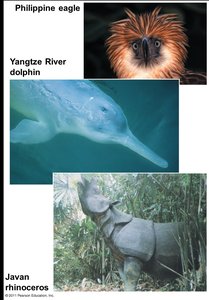
Examples of Endangered Species: The Philippine eagle, Yangtze River dolphin, and Javan rhinoceros are all critically endangered and require urgent conservation action.
Conservation Strategies
Effective conservation strategies are essential to halt biodiversity loss and restore ecosystems. These strategies include both in situ (on-site) and ex situ (off-site) approaches.
Identifying Areas for Protection: Prioritizing biodiversity hotspots and critical habitats for conservation.
Restoring Ecosystems/Habitat Management: Rehabilitating degraded habitats and managing them for long-term sustainability.
Providing Connectivity: Establishing wildlife corridors to connect fragmented habitats and allow gene flow between populations.
Creating Preserves: Setting aside protected areas to safeguard species and ecosystems.
Increasing Genetic Diversity: Managing populations to reduce inbreeding and maintain genetic health.
Summary Table: Major Threats and Conservation Strategies
Threat | Conservation Strategy |
|---|---|
Habitat Loss | Habitat protection, restoration, and management |
Invasive Species | Prevention, early detection, and eradication programs |
Overharvesting | Sustainable resource management, legal protection |
Global Change | Mitigation of climate change, pollution control |
Conclusion
Conservation biology is critical for maintaining the planet's biodiversity and the ecosystem services upon which all life depends. Addressing threats such as habitat loss, invasive species, overharvesting, and global change requires coordinated global action and the implementation of effective conservation strategies.
