 Back
Conservation Biology and Human Impacts on the Biosphere
Study Guide - Smart Notes
 Tailored notes based on your materials, expanded with key definitions, examples, and context.
Conservation Biology and Global Environmental Change
Introduction to Conservation Biology
Conservation biology is the scientific study of the preservation, protection, and restoration of biodiversity. It addresses the impacts of human activities on the biosphere and seeks solutions to mitigate these effects. The stability of Earth's ecosystems is increasingly threatened by anthropogenic (human-caused) changes, making conservation biology a critical field for sustaining life on Earth.
Global Climate Change
Definition and Causes
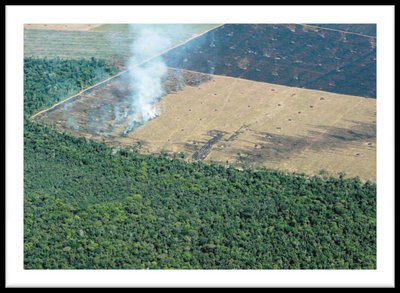
Global climate change refers to the long-term alteration of temperature and typical weather patterns in a place. While climate change has occurred naturally throughout Earth's history, the current accelerated rate is largely attributed to human activities such as burning fossil fuels, deforestation, industrialization, urbanization, and agriculture.
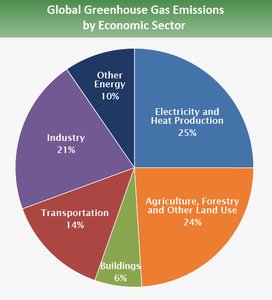
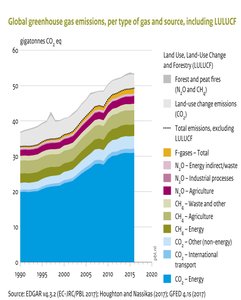
Burning fossil fuels (coal, oil, natural gas) releases large amounts of carbon dioxide (CO2) and other greenhouse gases into the atmosphere.
Deforestation reduces the planet's capacity to absorb CO2, further increasing atmospheric concentrations.
Agriculture and waste management contribute methane (CH4) and nitrous oxide (N2O).
Major Greenhouse Gases
Carbon Dioxide (CO2): Released from fossil fuel combustion and deforestation. Dissolves in water to form carbonic acid, lowering pH.
Methane (CH4): Produced by livestock, landfills, and rice paddies.
Nitrous Oxide (N2O): Emitted from fertilizers and fossil fuel burning.
Chlorofluorocarbons (CFCs): Man-made gases used as coolants and propellants, also contribute to ozone depletion.
Ozone (O3): Important in the upper atmosphere but a pollutant at ground level.
Water Vapor (H2O): Naturally occurring, amplifies the greenhouse effect.
The Greenhouse Effect
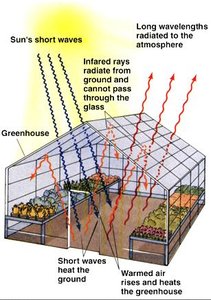
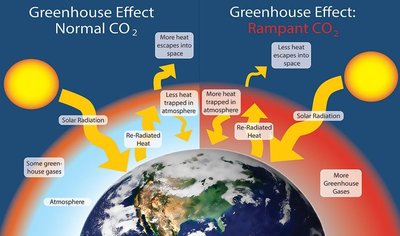
The greenhouse effect is a natural process where certain gases in Earth's atmosphere trap heat, keeping the planet warm enough to support life. Human activities have increased the concentration of these gases, enhancing the effect and causing global warming.
Solar radiation passes through the atmosphere and warms Earth's surface.
Infrared radiation is emitted from the surface and is partially trapped by greenhouse gases, warming the atmosphere.
Consequences of Climate Change
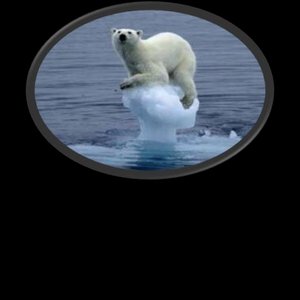
Melting polar ice caps and glaciers
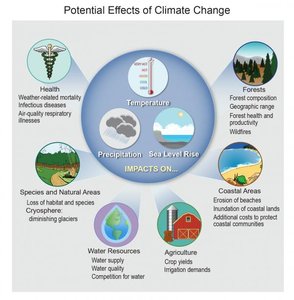
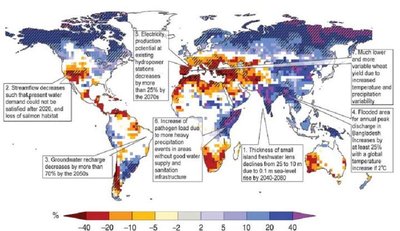
Sea level rise, threatening coastal communitie0 s
Increased frequency and severity of extreme weather events (storms, droughts, floods)
Loss of biodiversity and mass extinction events
Disruption of water supplies and agriculture
Mitigation and Adaptation Strategies
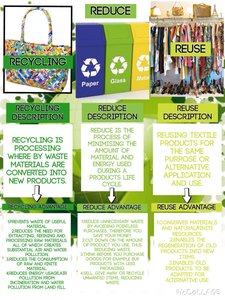
Reduce, reuse, recycle to minimize waste and resource consumption
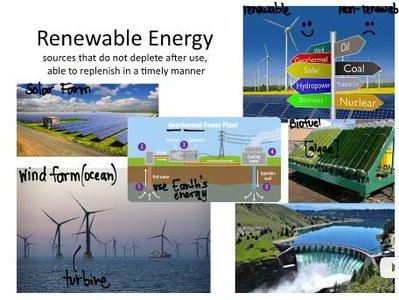
Transition to renewable energy sources (solar, wind, hydroelectric, geothermal, biofuels)
Promote energy efficiency and conservation
Support policies and regulations that limit greenhouse gas emissions
Raise public awareness and engage in advocacy
Ozone Depletion
Causes and Effects
The ozone layer in the stratosphere protects life on Earth by absorbing harmful ultraviolet (UV) radiation. Certain man-made chemicals, especially CFCs, break down ozone molecules, thinning the ozone layer.
Cause: Release of CFCs and other ozone-depleting substances from coolants, refrigerants, and aerosols.
Effect: Increased UV radiation reaching Earth's surface.
Impact: Higher rates of skin cancer, cataracts, and damage to plants and aquatic ecosystems.
Solutions
Banning or regulating the use of ozone-depleting substances (e.g., Montreal Protocol)
Promoting alternatives to CFCs
Acid Rain
Causes and Effects
Acid rain is precipitation with a lower pH, caused by the reaction of sulfur dioxide (SO2) and nitrogen oxides (NOx) with water vapor in the atmosphere. These pollutants are primarily released by burning fossil fuels.
Effect: Acidification of lakes and streams, soil degradation, and damage to buildings and monuments (especially those made of limestone and marble).
Impact: Harm to aquatic life, reduced plant growth, and loss of biodiversity.
Solutions
Regulating industrial emissions
Using cleaner energy sources
Restoring affected ecosystems (e.g., liming lakes)
Pollution
Types and Impacts
Pollution is the introduction of harmful substances or products into the environment, causing adverse effects on ecosystems and human health.
Air Pollution: Emissions from vehicles, industry, and burning fossil fuels.
Water Pollution: Runoff from agriculture, improper waste disposal, and industrial discharges.
Noise and Light Pollution: Disrupts animal behavior, migration, and circadian rhythms.
Impacts: Disease, acid rain, climate change, loss of biodiversity, and biomagnification of toxins in food chains.
Solutions: Reduce, reuse, recycle; clean energy initiatives; better waste management; environmental regulations.
Invasive Species
Definition and Effects
Invasive species are organisms introduced to areas outside their native range, where they often outcompete native species, disrupt ecosystems, and cause economic damage.
Can lead to biodiversity loss and collapse of food chains due to lack of natural predators.
May introduce new pathogens or diseases.
Control Methods
Biological control (introducing natural predators or diseases)
Sterilization of invasive populations
Prevention of introduction and spread
Summary Table: Human Impacts on the Environment
Problem | Cause | Effect | Impact | Solution |
|---|---|---|---|---|
Global Climate Change | Burning fossil fuels, deforestation, agriculture | Increased greenhouse gases, warming | Sea level rise, extreme weather, biodiversity loss | Renewable energy, conservation, policy change |
Ozone Depletion | CFCs, halons | Thinning ozone layer, more UV | Skin cancer, cataracts, ecosystem damage | Ban CFCs, use alternatives |
Acid Rain | SO2, NOx from fossil fuels | Acidic precipitation | Aquatic/plant damage, building erosion | Emission controls, clean energy |
Pollution | Industrial, agricultural, urban sources | Contaminated air, water, soil | Disease, habitat loss, biomagnification | Reduce, reuse, recycle, regulations |
Invasive Species | Introduction by humans | Outcompete natives, disrupt food webs | Biodiversity loss, economic cost | Biological control, prevention |
Additional info: Conservation biology integrates ecology, genetics, and policy to address complex environmental challenges. Students should be familiar with the scientific principles underlying these issues and the societal actions required for sustainable solutions.
