 Back
Back9.3 Conservation Biology: Principles, Threats, and Global Responses
Study Guide - Smart Notes
 Tailored notes based on your materials, expanded with key definitions, examples, and context.
Conservation Biology
Definition and Scope
Conservation biology is a scientific discipline focused on understanding and mitigating threats to biodiversity at all levels, including genes, populations, species, habitats, communities, ecosystems, and landscapes. The field is inherently interdisciplinary, integrating biological, physical, social sciences, economics, and natural-resource management techniques to address complex environmental challenges.
Goal: Maintain the diversity and integrity of life and the processes that sustain it.
Disciplines involved: Population biology, taxonomy, ecology, genetics, law, policy, ethics, economics, and resource management.
Institutions: Zoos, aquaria, botanical gardens, and ecosystem management organizations.
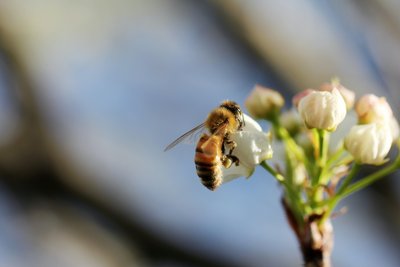
Additional info: Pollinators like bees are critical for ecosystem function and food production, exemplifying the importance of conserving biodiversity.
Characteristics of Conservation Biology
Multi-disciplinary: Draws from various scientific and social fields.
Applied: Focuses on practical solutions to real-world problems.
Mission-driven: Oriented toward preserving biodiversity.
Crisis-oriented: Responds to urgent threats to species and ecosystems.
Policy-connected: Informs and is influenced by environmental policy.
Continually ongoing: Requires adaptive management as new challenges arise.
Why Conservation Biology is Prevalent
Increasing Human Demands and Environmental Pressure
Human activities have dramatically increased pressure on the world’s ecosystems, leading to habitat loss, overexploitation, pollution, and other threats to biodiversity.
Population growth: The human population has grown exponentially, intensifying resource use and environmental impact.
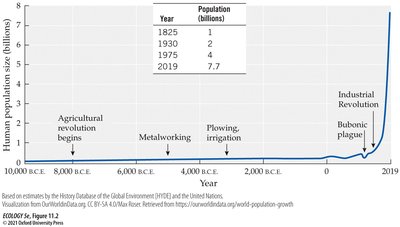
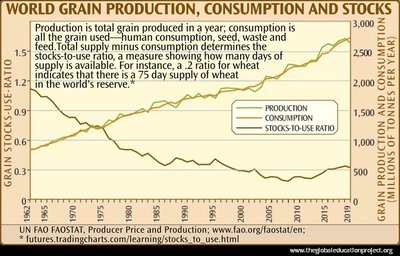
Resource consumption: Increased demand for food, water, and materials has led to habitat conversion and overuse of natural resources.
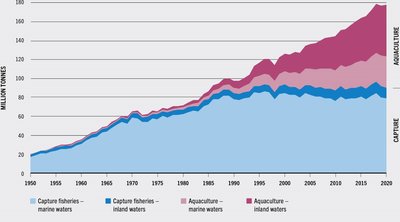
Fisheries and aquaculture: Global fish production has risen, with both capture fisheries and aquaculture contributing to ecosystem pressures.
Causes of Biodiversity Loss
Major Direct Drivers (IPBES Assessment)
The Intergovernmental Science-Policy Platform on Biodiversity and Ecosystem Services (IPBES) identifies five primary direct drivers of biodiversity loss:
Changes in land and sea use: Conversion of natural habitats for agriculture, urbanization, and infrastructure.
Direct exploitation of organisms: Overharvesting, hunting, fishing, and logging.
Climate change: Alteration of habitats and species distributions due to global warming.
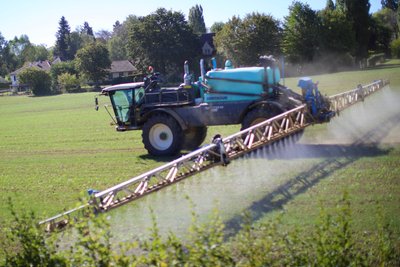
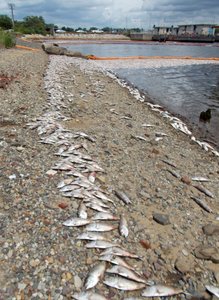
Pollution: Introduction of harmful substances into ecosystems, affecting species health and survival.
Invasive alien species: Non-native species that disrupt native ecosystems and outcompete local species.
Assessment of Threatened Species
Global Extinction Risk
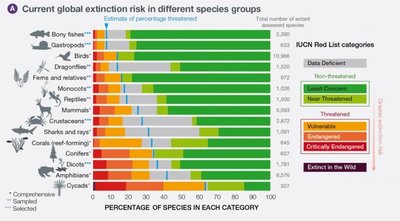
Biodiversity is declining at an unprecedented rate, with significant proportions of species threatened with extinction. The International Union for Conservation of Nature (IUCN) Red List categorizes species based on their risk of extinction.
Birds: 16% threatened
Mammals: 23% threatened
Amphibians: 32% threatened
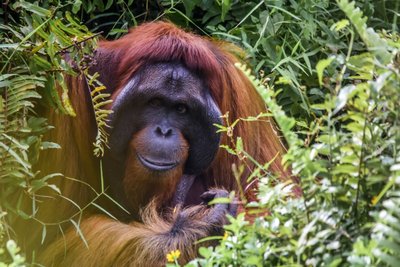
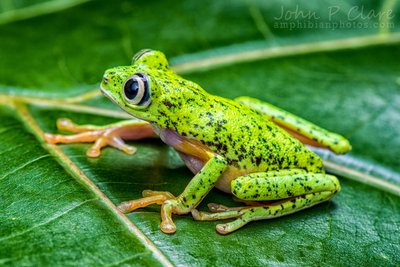
Examples of threatened species include:
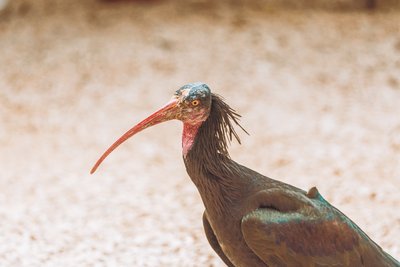
Northern bald ibis (Geronticus eremita)
Bornean orangutan (Pongo pygmaeus)
Lemur leaf frog (Agalychnis lemur)
Extinction Trends
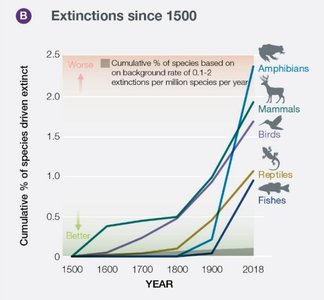
Extinction rates have accelerated in recent centuries, particularly for amphibians, mammals, and birds. This trend is illustrated by cumulative extinction graphs.
Global Responses and Conservation Targets
International Agreements and Targets
In response to the biodiversity crisis, international agreements such as the United Nations Convention on Biological Diversity have set ambitious targets. One key target is the "30 x 30" goal:
Target 3 ("30 x 30"): By 2030, at least 30% of terrestrial, inland water, and coastal and marine areas should be effectively conserved and managed through ecologically representative, well-connected, and equitably governed systems of protected areas and other effective area-based conservation measures, recognizing indigenous and traditional territories.
Additional info: Achieving these targets requires collaboration among governments, local communities, scientists, and stakeholders to ensure the protection and sustainable use of biodiversity.
Summary Table: Major Drivers of Biodiversity Loss
Driver | Description | Example |
|---|---|---|
Land/Sea Use Change | Conversion of natural habitats for agriculture, urbanization, etc. | Deforestation for cropland |
Direct Exploitation | Overharvesting of species for food, materials, or trade | Overfishing, poaching |
Climate Change | Alteration of temperature and weather patterns affecting species | Coral bleaching due to warming oceans |
Pollution | Introduction of harmful chemicals or waste into ecosystems | Pesticide runoff causing fish kills |
Invasive Species | Non-native species outcompeting or preying on natives | Zebra mussels in North American lakes |
