 Back
BackControl of Gene Expression in Bacteria: The lac Operon Model
Study Guide - Smart Notes
 Tailored notes based on your materials, expanded with key definitions, examples, and context.
Control of Gene Expression in Bacteria
Introduction to Gene Expression Regulation
Gene expression in bacteria is a tightly regulated process that allows cells to adapt to changing environments. Not all genes are expressed at all times; instead, cells selectively express genes as needed. This regulation ensures efficient use of resources and proper cellular function.
Gene Expression: The process by which information from a gene is used to synthesize a functional gene product, such as a protein or RNA.
Regulated Genes: Genes whose expression can be turned on or off in response to environmental or cellular signals.
Constitutive Genes: Genes that are continuously expressed, such as those encoding ribosomal proteins and core RNA polymerase subunits.
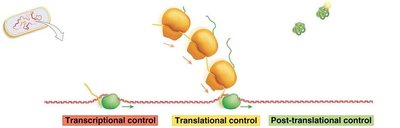
Levels of Gene Expression Control
Gene expression in bacteria can be regulated at multiple levels, each with distinct mechanisms and response times:
Transcriptional Control: Regulation of the initiation of transcription, determining whether a gene is transcribed into mRNA. This is the most energy-efficient but slowest form of regulation.
Translational Control: Regulation of the translation of mRNA into protein, often by affecting mRNA stability or translation initiation rates. This allows for more rapid changes than transcriptional control.
Post-Translational Control: Regulation of protein activity after synthesis, such as by chemical modification. This provides the fastest response, as existing proteins are activated or inactivated directly.
Mechanisms of Transcriptional Control
Transcriptional control involves regulatory proteins that interact with DNA to influence the initiation of transcription. There are two main types:
Negative Control: A repressor protein binds to DNA and blocks transcription.
Positive Control: An activator protein binds to DNA and stimulates transcription.
The lac Operon: A Model for Negative Regulation
Lactose Metabolism in E. coli
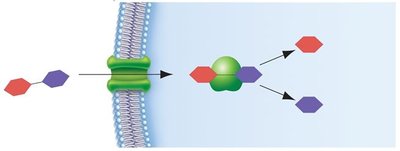
Escherichia coli can metabolize lactose when it is available in the environment. The enzymes required for lactose metabolism are encoded by the lac operon, which is regulated based on the presence or absence of lactose.
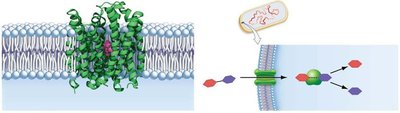
Galactoside Permease: Imports lactose into the cell.
β-Galactosidase: Cleaves lactose into glucose and galactose.
Genetic Analysis of the lac Operon
Jacob and Monod identified three classes of mutants affecting lactose metabolism:
Phenotype | Interpretation | Genotype |
|---|---|---|
Cannot cleave lactose | Defective β-Galactosidase | lacZ- |
Cannot import lactose | Defective permease | lacY- |
Constitutive expression of lacZ, lacY | Defective regulatory protein (repressor) | lacI- |
Organization of the lac Operon
The lac operon consists of three structural genes (lacZ, lacY, lacA) under the control of a single promoter and operator. The regulatory gene lacI encodes the repressor protein and has its own promoter.
lacZ: Encodes β-galactosidase
lacY: Encodes galactoside permease
lacA: Encodes transacetylase (function in lactose metabolism less clear)
Operator (lacO): DNA sequence where the repressor binds
lacI: Encodes the repressor protein

Negative Regulation of the lac Operon
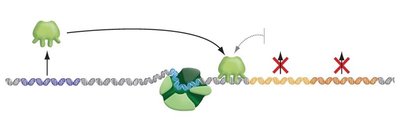
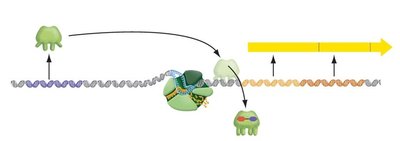
The lac operon is negatively regulated by the LacI repressor protein:
Lactose Absent: The repressor binds to the operator, blocking transcription of lacZ and lacY.
Lactose Present: Lactose (the inducer) binds to the repressor, causing it to release from the operator, allowing transcription.
Mutations Affecting lac Operon Regulation
Mutations in the operator (lacOc) or repressor gene (lacI-) can lead to constitutive expression of the lac operon, regardless of lactose presence.
lacOc Mutation: The operator sequence is altered so the repressor cannot bind, resulting in continuous transcription.
lacI- Mutation: The repressor protein is nonfunctional, so transcription is not repressed.
cis and trans Regulation
Jacob and Monod used partial diploids (merodiploids) to distinguish between cis-acting and trans-acting elements:
cis-acting: Regulatory sequences (like the operator) affect only genes on the same DNA molecule.
trans-acting: Diffusible products (like the LacI repressor protein) can regulate genes on different DNA molecules.
Global Gene Regulation in Bacteria
Global gene regulation allows bacteria to coordinate the expression of multiple genes or operons in response to environmental changes. A regulon is a set of separate genes or operons controlled by the same regulatory protein, which can act as either a repressor or activator.
Regulons enable rapid and coordinated responses to stress or nutrient availability.
Summary Table: Key Features of the lac Operon
Component | Function |
|---|---|
lacZ | Encodes β-galactosidase (lactose cleavage) |
lacY | Encodes galactoside permease (lactose import) |
lacA | Encodes transacetylase (sugar export) |
lacI | Encodes repressor protein (regulation) |
Operator (lacO) | Repressor binding site |
Promoter | RNA polymerase binding site |
Key Equations and Concepts
Gene Expression Regulation:
Transcriptional control:
Translational control:
Post-translational control:
Additional info: The lac operon model has been foundational in understanding gene regulation, not only in bacteria but also as a paradigm for regulatory mechanisms in all domains of life.
