 Back
BackControl of Gene Expression in Eukaryotes
Study Guide - Smart Notes
 Tailored notes based on your materials, expanded with key definitions, examples, and context.
Control of Gene Expression in Eukaryotes
Introduction to Eukaryotic Gene Regulation
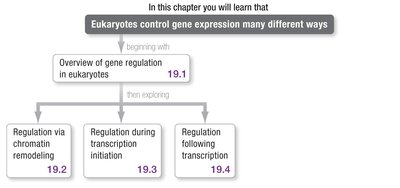
Gene expression in eukaryotes is regulated through multiple, complex mechanisms that allow for the creation of diverse cell types, tissue organization, and coordinated cellular activity. This regulation is more intricate than in prokaryotes due to the presence of chromatin and compartmentalization of cellular processes.
Differential gene expression is the process by which cells with the same genome express different sets of genes, leading to cell specialization.
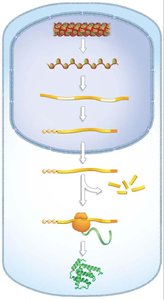
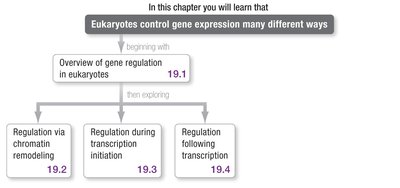
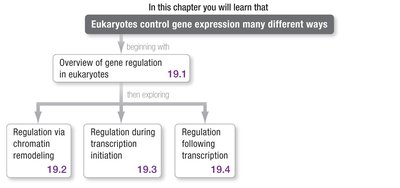
Gene expression can be regulated at several stages: chromatin remodeling, transcription, RNA processing, mRNA stability, translation, and post-translational modification.
Chromatin Structure and Remodeling
Nucleosome Structure and Chromatin Organization
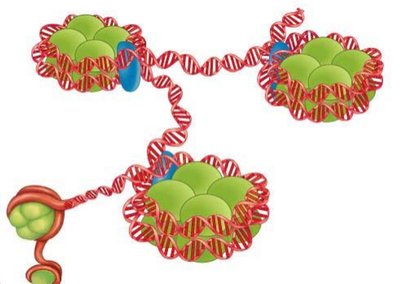
The nucleosome is the fundamental unit of chromatin, consisting of DNA wrapped around a histone octamer. Chromatin structure plays a critical role in regulating gene accessibility and expression.
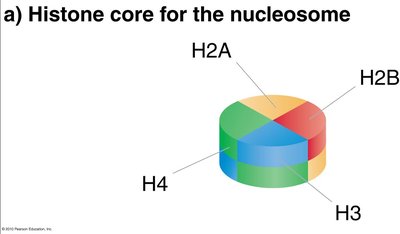
Nucleosome: Composed of an octamer of histone proteins (two each of H2A, H2B, H3, and H4) with ~150 base pairs of DNA wrapped around it in 1.65 turns.
Histone H1 binds to the linker DNA between nucleosomes, facilitating higher-order chromatin condensation.
Chromatin can exist in a condensed (inaccessible) or decondensed (accessible) state, affecting transcriptional activity.
Chromatin Remodeling and Transcription
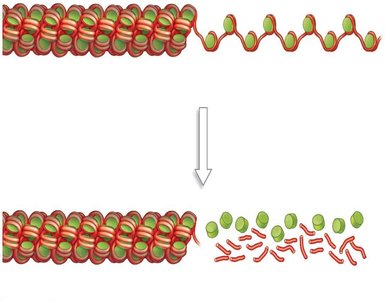
For transcription to occur, chromatin must be remodeled to expose DNA regions to the transcriptional machinery. Chromatin remodeling complexes and covalent modifications of DNA and histones regulate this process.
Chromatin remodeling complexes use energy to reposition or evict nucleosomes, making DNA accessible for transcription.
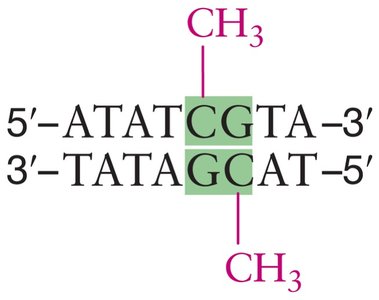
DNA methylation (addition of –CH3 groups to cytosines) typically leads to chromatin condensation and gene silencing.
Histone modifications such as acetylation (by histone acetyltransferases, HATs) lead to chromatin decondensation and increased transcription, while deacetylation (by histone deacetylases, HDACs) promotes condensation and repression.
Epigenetic Inheritance
Epigenetic mechanisms involve heritable changes in gene expression that do not alter the DNA sequence. These include DNA methylation and histone modification patterns, which can be passed to daughter cells during cell division.
Epigenetic inheritance allows cells to maintain gene expression patterns across generations, contributing to cellular memory and development.
Environmental factors can influence epigenetic marks, affecting phenotypes in offspring.
Transcriptional Control in Eukaryotes
Promoters and Regulatory Elements
Transcription initiation in eukaryotes is regulated by a combination of core promoters, promoter-proximal elements, enhancers, and silencers. These DNA sequences interact with various transcription factors to control gene expression.
Core promoter: Contains essential elements such as the TATA box or INR element, which are binding sites for general transcription factors (e.g., TATA-binding protein, TBP). These are required for transcription initiation but are not regulated.
Promoter-proximal elements: Located within ~250 bp upstream of the transcription start site, these sequences bind regulatory transcription factors that modulate the rate of transcription initiation.
Enhancers and silencers: Can be located far from the core promoter (up to 100,000 bp upstream, downstream, or within introns). Enhancers bind activators to increase transcription, while silencers bind repressors to decrease transcription. These elements are orientation-independent.


Transcription Factors and Differential Gene Expression
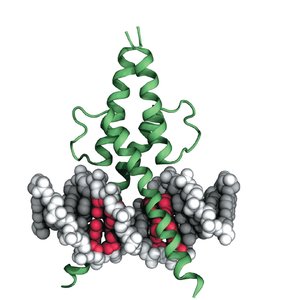
Regulatory transcription factors (TFs) are proteins that bind specific DNA sequences to activate or repress gene expression. The unique combination of TFs in each cell type determines which genes are expressed, enabling cell differentiation and specialized functions.
Activators bind enhancers to increase transcription.
Repressors bind silencers to decrease transcription.
TFs recognize specific DNA sequences through their DNA-binding domains, ensuring precise regulation.
Expression of TF genes is often regulated by signals from other cells, allowing for coordinated development and response to environmental cues.
Model of Transcription Initiation
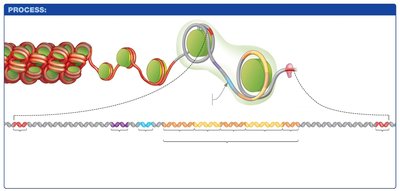
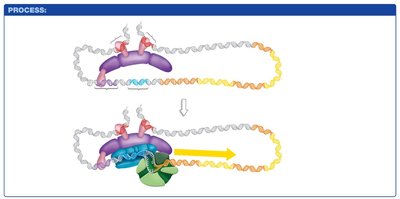
Transcription initiation in eukaryotes involves a coordinated sequence of events, including chromatin remodeling, exposure of regulatory DNA sequences, assembly of transcription factors, and recruitment of RNA polymerase II.
Chromatin remodeling exposes the promoter and regulatory elements.
Regulatory and general transcription factors assemble at the promoter.
The mediator complex facilitates interactions between activators, repressors, and RNA polymerase II, leading to transcription initiation.
Post-Transcriptional Control
Alternative Splicing
Alternative splicing allows a single gene to produce multiple mRNA variants, and thus different protein isoforms, by including or excluding specific exons during RNA processing. This increases proteomic diversity without increasing genome size.
Different tissues or developmental stages can express distinct splice variants of the same gene.
Alternative splicing is regulated by splicing factors that recognize specific RNA sequences.
RNA Interference (RNAi)
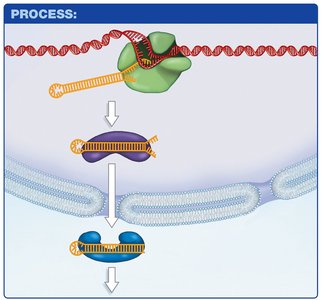
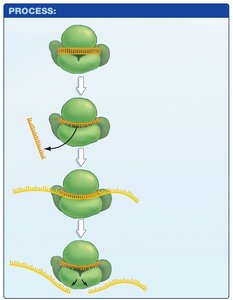
RNA interference is a post-transcriptional regulatory mechanism in which small non-coding RNAs (such as microRNAs, miRNAs) guide protein complexes to target mRNAs for degradation or translational repression.
miRNAs are transcribed as precursors, processed in the nucleus and cytoplasm, and incorporated into the RNA-induced silencing complex (RISC).
RISC uses the miRNA as a guide to bind complementary mRNA sequences, leading to mRNA cleavage or inhibition of translation.
Summary Table: Levels of Gene Regulation in Eukaryotes
Level of Regulation | Mechanism | Effect |
|---|---|---|
Chromatin Remodeling | DNA methylation, histone modification, chromatin remodeling complexes | Controls DNA accessibility for transcription |
Transcriptional Control | Promoters, enhancers, silencers, transcription factors | Regulates initiation and rate of transcription |
Post-Transcriptional Control | Alternative splicing, RNA interference | Determines mRNA stability and translation |
Translational Control | Regulation of translation initiation, mRNA lifespan | Controls amount of protein produced |
Post-Translational Control | Protein folding, modification, transport, degradation | Determines protein activity and lifespan |
