 Back
BackCore Concepts in Ecosystem Dynamics, Evolution, and Molecular Biology
Study Guide - Smart Notes
 Tailored notes based on your materials, expanded with key definitions, examples, and context.
Energy Transfer and Ecosystem Dynamics
The 10% Rule
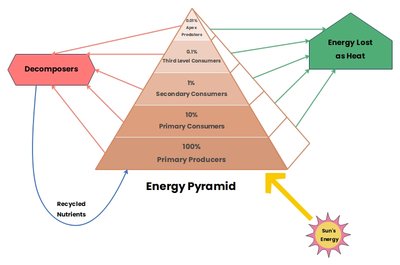
The 10% Rule is a fundamental principle in ecology describing the inefficiency of energy transfer between trophic levels in an ecosystem. Only about 10% of the energy from one trophic level is stored as usable biomass in the next level, while the remaining 90% is lost as metabolic heat, respiration, and waste.
Energy Transfer: Energy moves from producers to consumers, with significant losses at each step.
Population Impact: Limits the number of trophic levels and affects population sizes.
Example: If a plant captures 1000 calories, only 100 calories are available to the herbivore that eats it.
Importance: Highlights the role of primary producers in sustaining ecosystems.
Energy Flow in Ecosystems
Energy flow is the unidirectional transfer of energy through an ecosystem, starting from the sun and moving through producers, consumers, and decomposers. Most energy is lost as heat at each trophic level, as illustrated by the energy pyramid.
Energy Pyramid: Graphical model showing energy retention at each trophic level.
Decomposers: Recycle nutrients, supporting new plant growth.
Food Chains vs. Food Webs: Food chains show linear transfer; food webs illustrate complex interconnections.
Biogeochemical Cycles
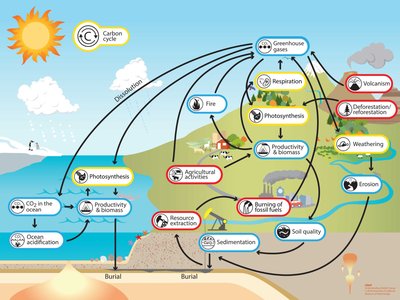
Biogeochemical cycles describe the pathways through which essential elements and nutrients circulate through Earth's biotic and abiotic systems. These cycles are vital for maintaining ecosystem health and ensuring the recycling of matter.
Key Cycles: Carbon, nitrogen, and phosphorus cycles.
Carbon Cycle: Involves photosynthesis, respiration, decomposition, and human activities.
Interconnectedness: Demonstrates the link between living organisms and their environment.
Ecological Impact: Disruptions can lead to pollution, deforestation, and other consequences.
Genetic Variation and Evolutionary Processes
Alleles and Genetic Inheritance
Alleles are alternative forms of a gene located at specific loci on chromosomes. Organisms inherit two alleles for each gene, one from each parent, leading to variations in traits.
Codominance: Both alleles are expressed equally (e.g., AB blood type).
Genetic Variation: Foundation for diversity and evolution.
Population Genetics: Study of allele distribution and evolutionary mechanisms.
Speciation and Evolutionary Mechanisms
Speciation and evolutionary mechanisms explain how new species arise and how populations adapt to their environments.
Allopatric Speciation: Geographic separation leads to independent evolution and reproductive isolation.
Adaptive Radiation: Rapid diversification of a single ancestral species into multiple forms.
Divergent Evolution: Related species become increasingly distinct.
Convergent Evolution: Unrelated species develop similar traits due to similar environmental pressures.
Example: Darwin's finches exhibit adaptive radiation and divergent evolution.
Ecological Interactions and Organismal Biology
Types of Ecological Interactions
Ecological interactions shape the structure and function of ecosystems, influencing the balance of life.
Commensalism: One species benefits, the other is unaffected (e.g., barnacles on whales).
Behavioral Isolation: Prezygotic barrier due to distinct mating rituals.
Consumers (Heterotrophs): Obtain energy by consuming other organisms.
Decomposers: Break down dead matter, recycling nutrients.
Molecular Biology and Genetic Processes
Alternate Splicing
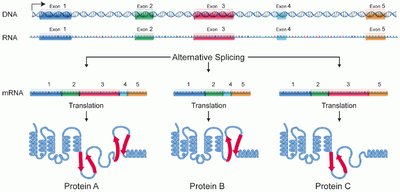
Alternate splicing is a genetic process where different combinations of exons from a single gene are joined during RNA processing, allowing one gene to produce multiple distinct mRNA transcripts and protein variants.
Protein Diversity: Enables production of proteins with varying functions from a single gene.
Regulation: Critical for cellular function and adaptation.
Anticodons and Protein Synthesis
Anticodons are sequences of three nucleotides on tRNA that pair with codons on mRNA during translation, ensuring the correct amino acids are incorporated into proteins.
Translation: Process of synthesizing proteins from mRNA templates.
Genetic Code: Codons and anticodons determine amino acid sequence.
DNA Bending Proteins
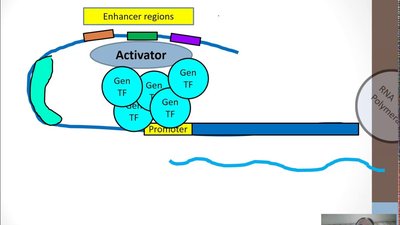
DNA bending proteins physically alter the shape of the DNA double helix, creating twists, kinks, or loops. This structural deformation is essential for regulating gene expression, DNA packaging, and recombination.
Gene Regulation: Facilitates access to DNA for transcription.
Chromatin Structure: Influences DNA packing in the nucleus.
Genetic Mutations and Mechanisms
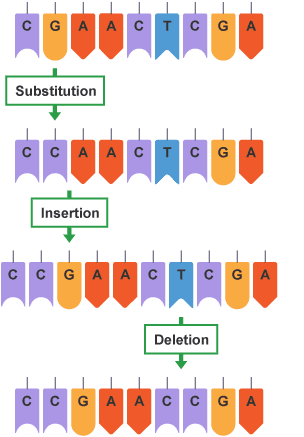
Mutations are permanent, heritable changes in the nucleotide sequence of DNA. They are the ultimate source of genetic diversity and can impact traits and evolutionary outcomes.
Types of Mutations: Substitution, insertion, deletion, and frameshift.
Frameshift: Caused by insertions or deletions not in multiples of three, altering protein structure.
Impact: Can lead to genetic disorders or new traits.
Gene Expression Regulation: Operons
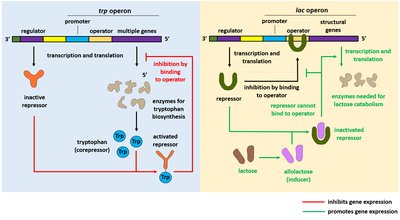
Operons are clusters of genes under the control of a single promoter, allowing coordinated expression. The lac operon is inducible, activated by lactose, while the trp operon is repressible, turned off by tryptophan.
Lac Operon: Allows bacteria to adapt to the presence of lactose.
Trp Operon: Regulates tryptophan synthesis based on environmental availability.
Evolutionary Mechanisms
Natural Selection Types
Natural selection drives evolutionary change by favoring traits that enhance survival and reproduction.
Directional Selection: Favors extreme phenotypes, shifting trait distribution.
Disruptive Selection: Favors extreme traits over intermediates, potentially leading to speciation.
Stabilizing Selection: Favors intermediate traits, reducing variation.
Divergent Evolution
Divergent evolution occurs when related species become increasingly distinct as they adapt to different environments, often leading to adaptive radiation.
Example: Darwin's finches adapted to various ecological niches.
Accumulation of Differences: Results in significant morphological and behavioral changes.
Gene Flow and Genetic Drift
Gene flow is the transfer of genetic material between populations, increasing diversity. Genetic drift is a random change in allele frequencies, often significant in small populations.
Bottleneck Effect: Drastic reduction in population size leads to loss of genetic diversity.
Migration: Introduces new alleles to populations.
Genetic Diversity and Population Genetics
Hardy-Weinberg Equilibrium
The Hardy-Weinberg Equilibrium states that allele and genotype frequencies remain constant in a non-evolving population, providing a baseline for measuring evolutionary changes.
Equation:
Application: Used to detect evolutionary forces in populations.
Reproductive Isolation Mechanisms
Prezygotic and Postzygotic Barriers
Reproductive isolation mechanisms prevent species from interbreeding, maintaining genetic boundaries.
Prezygotic Barriers: Occur before fertilization (e.g., habitat, temporal, behavioral, mechanical, gametic isolation).
Postzygotic Barriers: Occur after fertilization (e.g., reduced hybrid viability, fertility, hybrid breakdown).
Fundamental Laws of Nature
Law of Conservation of Energy
The Law of Conservation of Energy states that energy cannot be created or destroyed, only transformed. This principle is crucial in understanding biological processes such as cellular respiration and photosynthesis.
Example: Light energy is converted to chemical energy in photosynthesis.
Historical Context: Formulated in the 19th century, foundational for thermodynamics in biology.
Law of Conservation of Matter
The Law of Conservation of Matter states that matter cannot be created or destroyed; atoms are recycled and rearranged in biological systems.
Example: Glucose is broken down into carbon dioxide and water in cellular respiration.
Historical Context: Established by Antoine Lavoisier in the late 18th century.
