 Back
BackCRISPR/Cas9 and Gene Therapy: Mechanisms and Applications
Study Guide - Smart Notes
 Tailored notes based on your materials, expanded with key definitions, examples, and context.
CRISPR/Cas9 for Genetic Therapies
Introduction to Gene Therapy
Gene therapy is a biomedical technique that aims to treat or prevent disease by directly modifying the genetic material of cells. The advent of CRISPR/Cas9 technology has revolutionized gene therapy by enabling precise, efficient, and targeted genome editing.
Gene Therapy: The process of introducing, removing, or altering genetic material within a patient's cells to treat disease.
CRISPR/Cas9: A genome editing tool derived from a bacterial immune system, allowing for targeted DNA modification.
Foundational Criteria for Gene Therapy
Successful gene therapy requires several foundational criteria to ensure efficacy and safety.
Monogenic Root: The target condition should be caused by a single, well-defined genetic mutation with a clear genotype-phenotype relationship.
Tissue Access & Tropism:
Ex Vivo: Cells are isolated, edited outside the body, and then reintroduced.
In Vivo: Delivery vehicles (such as viral vectors or lipid nanoparticles) are used to target and penetrate specific tissues within the body.
Phenotypic Correction Threshold: Understanding the minimum proportion of corrected cells required to reverse disease symptoms.
Strategic Mechanism Match:
Augmentation: Adding a functional gene copy.
Disruption: Silencing a harmful gain-of-function gene.
In-Situ Correction: Direct repair of the mutation via base editing.
Genomic Integrity: Ensuring minimal off-target effects and preventing chromosomal abnormalities.
Durability of Effect: The genetic modification must remain stable and active throughout the lifespan of the target cell population.
CRISPR/Cas9 Mechanism and Pathway
Natural CRISPR Pathway in Prokaryotes
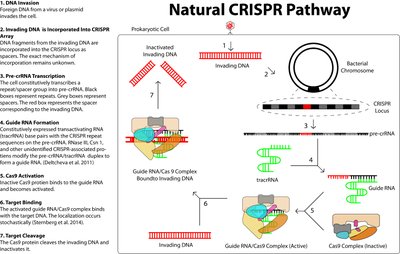
The CRISPR/Cas system is a natural defense mechanism in bacteria and archaea, protecting against invading genetic elements such as viruses.
DNA Invasion: Foreign DNA from viruses or plasmids enters the cell.
CRISPR Array Incorporation: Invading DNA is integrated into the CRISPR locus as new spacers.
Pre-crRNA Transcription: The CRISPR locus is transcribed into precursor CRISPR RNA (pre-crRNA).
Guide RNA Formation: Pre-crRNA is processed into guide RNAs, which direct the Cas proteins to target DNA.
Cas9 Activation: Guide RNA and Cas9 protein form an active complex.
Target Binding: The complex binds to the target DNA sequence.
Target Cleavage: Cas9 cleaves the invading DNA, neutralizing the threat.
CRISPR/Cas9 Genome Editing Steps
In biotechnology, the CRISPR/Cas9 system is adapted for targeted genome editing in eukaryotic cells. The process involves several key steps:
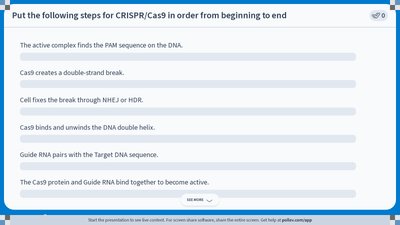
Targeting: The guide RNA directs Cas9 to a specific DNA sequence adjacent to a PAM (Protospacer Adjacent Motif) site.
Binding and Unwinding: Cas9 binds and unwinds the DNA double helix.
Guide RNA Pairing: Guide RNA pairs with the target DNA sequence.
Activation: Cas9 protein and guide RNA bind together to form an active complex.
Cleavage: Cas9 creates a double-strand break at the target site.
Repair: The cell repairs the break via Non-Homologous End Joining (NHEJ) or Homology-Directed Repair (HDR), allowing for gene disruption or correction.
Structural Overview of CRISPR/Cas9 Complex
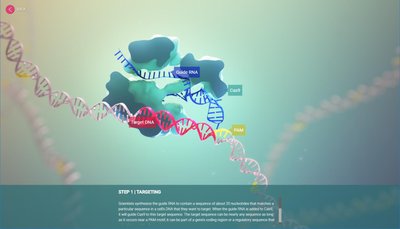
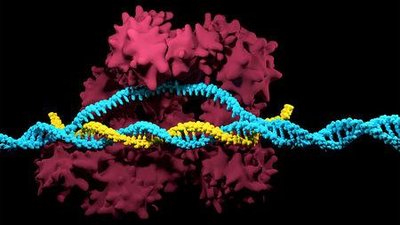
The CRISPR/Cas9 complex consists of the Cas9 protein and a guide RNA, which together recognize and cleave specific DNA sequences.
Cas9 Protein: An endonuclease that cuts DNA at targeted locations.
Guide RNA: A synthetic RNA molecule that directs Cas9 to the desired DNA sequence.
PAM Sequence: A short DNA motif required for Cas9 binding and activity.
Applications and Safety Considerations
Applications of CRISPR/Cas9 in Gene Therapy
CRISPR/Cas9 is used to treat monogenic diseases, disrupt harmful genes, and correct mutations.
Monogenic Disorders: Diseases caused by single gene mutations, such as sickle cell anemia and cystic fibrosis.
Gene Disruption: Silencing genes responsible for disease.
Gene Correction: Repairing mutations at their source.
Safety and Genomic Integrity
Ensuring the safety of CRISPR/Cas9-based therapies is critical.
Off-Target Effects: Unintended DNA modifications can lead to adverse outcomes.
Chromosomal Translocations: Incorrect repair may cause chromosomal rearrangements.
Durability: Long-term stability of genetic modifications is essential for lasting therapeutic effects.
Summary Table: CRISPR/Cas9 Gene Editing Steps
Step | Description |
|---|---|
1. Targeting | Guide RNA directs Cas9 to specific DNA sequence |
2. Binding | Cas9 binds and unwinds DNA |
3. Pairing | Guide RNA pairs with target DNA |
4. Activation | Cas9 and guide RNA form active complex |
5. Cleavage | Cas9 creates double-strand break |
6. Repair | Cell repairs break via NHEJ or HDR |
Key Equations and Concepts
Homology-Directed Repair (HDR)
HDR is a precise DNA repair mechanism used in CRISPR/Cas9 editing.
Equation:
Non-Homologous End Joining (NHEJ)
NHEJ is an error-prone repair mechanism that can result in gene disruption.
Equation:
Conclusion
CRISPR/Cas9 technology has transformed gene therapy, offering unprecedented precision and versatility. Understanding its mechanisms, applications, and safety considerations is essential for advancing genetic medicine. Additional info: The notes expand on brief points from the original materials to provide a comprehensive overview suitable for college-level biology students.
