 Back
Darwinian Evolution: Foundations, Evidence, and Mechanisms
Study Guide - Smart Notes
 Tailored notes based on your materials, expanded with key definitions, examples, and context.
Introduction to Darwinian Evolution
Overview of Evolution
Evolution is a fundamental concept in biology, describing the accumulation of genetic changes within populations over time. These changes can eventually lead to the formation of new species, as populations diverge genetically and morphologically.
Population: A group of individuals of one species living in the same geographic area at the same time.
Species: A group of similar organisms capable of interbreeding and producing fertile offspring.
Speciation: The process by which populations diverge to become distinct species.
Microevolution vs. Macroevolution
Evolutionary changes can be viewed from two perspectives: microevolution and macroevolution.
Microevolution: Minor evolutionary changes within populations, typically observed over a few generations.
Macroevolution: Major evolutionary events, such as the formation of new species from common ancestors, occurring over long periods.
Evolution of Antibiotic Resistance
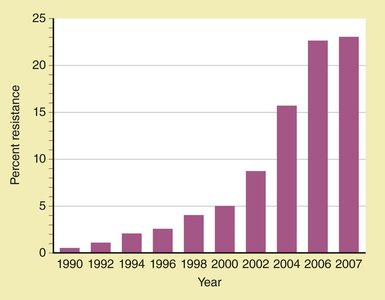
One of the most direct examples of microevolution is the evolution of antibiotic resistance in bacteria, such as E. coli developing resistance to ciprofloxacin.
Resistance increases over time due to selection for mutations that confer survival advantage in the presence of antibiotics.
Historical Foundations of Evolutionary Theory
Early Thinkers
Several early scientists contributed to the development of evolutionary theory:
Aristotle: Visualized organisms as moving toward a more perfect state.
Leonardo da Vinci: Correctly interpreted fossils as remains of extinct animals.
Jean Baptiste de Lamarck: Suggested that acquired traits could be passed to offspring (now known to be incorrect).
Charles Darwin and the HMS Beagle
Charles Darwin's voyage aboard the HMS Beagle was pivotal in the development of his theory of evolution by natural selection. He observed variations among species, especially in the Galápagos Islands.
Darwin collected and cataloged thousands of specimens.
He noted similarities and differences among island species, particularly finches.
Development of Darwin's Theory
Darwin was influenced by Thomas Malthus's essay on population, which suggested that inherited variations favorable to survival are preserved, while unfavorable ones are eliminated. This led to the concept of adaptation.
Adaptation: Evolutionary modification that improves survival and reproductive success.
Accumulation of adaptations can eventually result in new species.
Natural Selection
Darwin's explanation for evolution, natural selection, posits that organisms better adapted to their environment are more likely to survive and reproduce.
Favorable traits increase in frequency over generations.
Less favorable traits become scarce.
Island Populations and Speciation
Geographically separated populations, such as Galápagos finches, accumulate changes and may evolve into new species due to isolation and varying environmental conditions.

Mendelian Genetics and the Modern Synthesis
Darwin could not explain how traits were transmitted or why individuals varied. Gregor Mendel's work on inheritance provided the missing link, and the modern synthesis combined Mendelian genetics with Darwinian natural selection.
Mutation: Changes in DNA that produce variation among offspring.
Evidence for Evolution
The Fossil Record
Fossils provide direct evidence of past life and document evolutionary transitions.
Fossils: Remains or traces left in sedimentary rock by previously existing organisms.
Sedimentary rock forms distinct layers, with the oldest at the bottom.
The fossil record shows a progression from unicellular organisms to modern life.
Determining the Age of Fossils
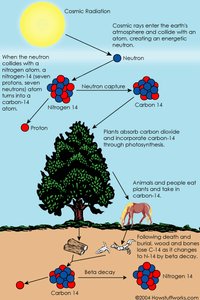
Fossils are dated by their position in sedimentary rock and by radiometric methods such as carbon dating.
Carbon-14 dating: Measures the decline of carbon-14 in remains to estimate age.
Whale Evolution
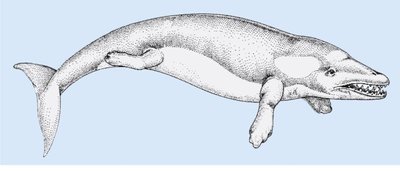
Fossil intermediates document the transition of whales from land to water.
Ambulocetus natans (50 mya): Had hind limbs and feet.
Rodhocetus: More flexible vertebrae, possibly fully aquatic.
Basilosaurus (40 mya): Streamlined body and front flippers.
Modern whales have vestigial pelvis and femur bones.
Biogeography and Continental Drift
Biogeography
Biogeography is the study of the geographic distribution of organisms, past and present. Darwin observed that island species often resemble those of the nearest mainland, supporting the idea of common ancestry.
Species distribution is related to genetic relationships, not just environmental similarity.
Continental Drift
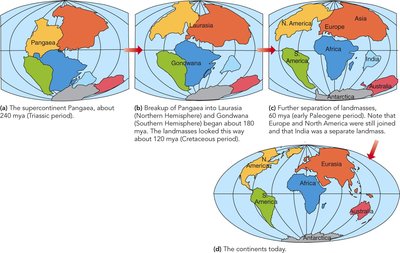
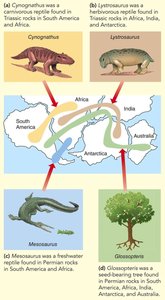
Alfred Wegener proposed that all landmasses were once joined as Pangaea, which later broke apart. Continental drift explains the distribution of certain fossil plants and animals and played a major role in evolution by isolating populations.
Geographic isolation leads to divergent evolutionary pathways.
Comparative Anatomy
Homologous Features
Homologous features are structural similarities derived from a common ancestor. Comparative anatomy provides evidence for evolution.
Example: Limb bones of mammals (human arm, cat forelimb, whale flipper, bat wing) have similar arrangements of bones, muscles, and nerves.
Convergent Evolution
Similar environmental conditions can result in the independent evolution of similar structures in distantly related organisms (convergent evolution).
Example: Aardvarks, anteaters, and pangolins evolved similar lifestyles and structural features despite being from different mammalian orders.
Molecular Evidence and Cladistics
Molecular Similarities
Molecular evidence for evolution includes conserved sequences of amino acids in proteins and nucleotides in DNA. For example, cytochrome c is highly conserved among aerobic organisms.
Cladograms
A cladogram is a diagram showing lines of descent (phylogenetic tree), which can be derived from differences in DNA nucleotide sequences.
Summary Table: Types of Evolutionary Evidence
Type of Evidence | Description | Example |
|---|---|---|
Fossil Record | Remains/traces in sedimentary rock | Whale evolution |
Biogeography | Distribution of organisms | Galápagos finches |
Comparative Anatomy | Homologous/convergent features | Mammalian limb bones |
Molecular Evidence | Conserved DNA/protein sequences | Cytochrome c |
Key Equations
Carbon-14 Dating Formula
The decay of carbon-14 is used to estimate the age of fossils:
N(t): Amount of carbon-14 at time t
N_0: Initial amount of carbon-14
\lambda: Decay constant
t: Time elapsed
Conclusion
Darwinian evolution is supported by multiple lines of evidence, including the fossil record, biogeography, comparative anatomy, and molecular biology. The modern synthesis integrates genetics with natural selection, providing a comprehensive framework for understanding the diversity of life.
