 Back
BackCh.22 Descent with Modification: A Darwinian View of Life
Study Guide - Smart Notes
 Tailored notes based on your materials, expanded with key definitions, examples, and context.
History of Evolutionary Thought
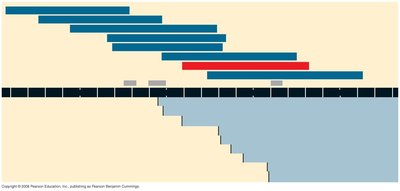
Key Contributors and Their Ideas
The development of evolutionary theory involved contributions from many scientists and thinkers. Their collective work laid the foundation for Darwin's theory of evolution by natural selection.
Aristotle: Early classification of organisms; believed species were fixed and unchanging.
Linnaeus: Developed a binomial classification system for organisms.
Hutton & Lyell: Proposed gradual geological changes (gradualism and uniformitarianism).
Lamarck: Suggested species can change over time through use and disuse of traits.
Malthus: Proposed that populations are limited by resources, leading to competition.
Cuvier: Studied fossils and extinction events.
Darwin & Wallace: Independently proposed evolution by natural selection.
Darwin's Voyage and Observations
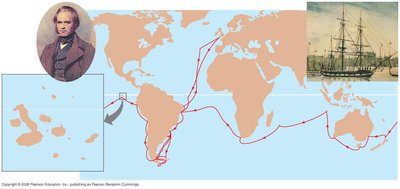
The Voyage of the HMS Beagle
Charles Darwin's journey on the HMS Beagle (1831–1836) was pivotal in shaping his ideas about evolution. He observed diverse species and geological formations, especially in the Galápagos Islands, which influenced his theory of natural selection.
Galápagos Finches: Adaptive Radiation
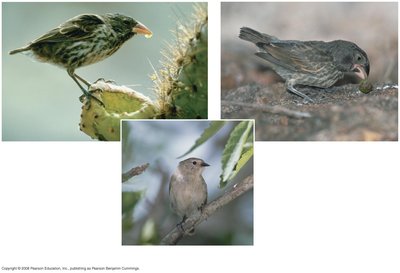
Darwin noted that finches on different Galápagos Islands had distinct beak shapes adapted to their specific diets. This observation supported the idea of descent with modification and adaptive radiation.
Cactus-eater: Long, sharp beak for eating cactus parts.
Insect-eater: Narrow, pointed beak for catching insects.
Seed-eater: Thick, strong beak for cracking seeds.
Darwin's Theory: Descent with Modification
Key Observations and Inferences
Darwin's theory is based on several key observations and logical inferences:
Observation 1: Members of a population vary in their traits.
Observation 2: More offspring are produced than the environment can support, leading to a struggle for existence.
Inference 1: Individuals with advantageous traits are more likely to survive and reproduce.
Inference 2: Favorable traits accumulate in the population over generations.
Natural selection acts on individuals, but only populations evolve. The favorability of traits depends on the environment, and evolution requires heritable variation.
Evidence for Evolution
1. Direct Observation of Evolutionary Change
Evolution can be observed directly in populations with rapid generation times or strong selective pressures.
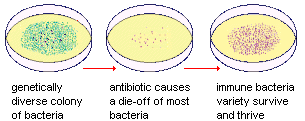
Antibiotic-resistant bacteria: Bacteria evolve resistance to antibiotics through natural selection.
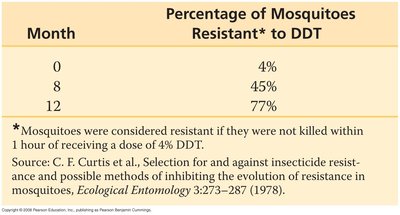
DDT-resistant mosquitoes: Mosquito populations rapidly evolved resistance to the insecticide DDT.
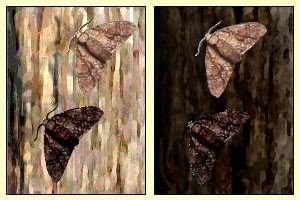
Peppered moths: Industrial melanism in moths is a classic example of natural selection in response to environmental change.
2. Artificial Selection
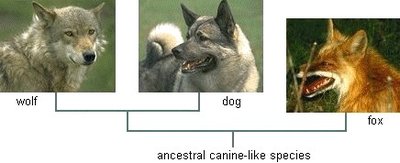
Humans have modified species through selective breeding, demonstrating the power of selection to shape traits over generations.
Example: Domestication of dogs from wolves, and selective breeding of crops and livestock.
3. Anatomical Evidence
Homologous Structures
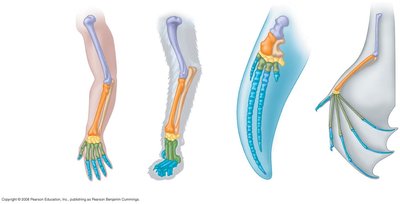
Homologous structures are anatomical features in different species that share a common ancestry but may serve different functions.
Example: The forelimbs of humans, whales, cats, and bats have similar bone structures but different functions.
Analogous Structures and Convergent Evolution
Analogous structures serve similar functions but evolved independently in different lineages, illustrating convergent evolution.
Example: Wings of birds and insects.
Embryological Evidence
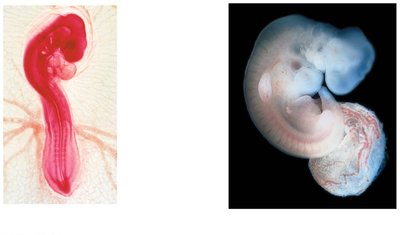
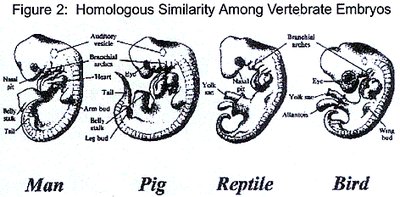
Similarities in embryonic development among vertebrates suggest common ancestry.
Example: Pharyngeal arches and post-anal tails in vertebrate embryos.
4. Fossil Record
The fossil record provides evidence of the succession of life forms and transitional species, documenting evolutionary change over time.
Types of fossils: Mineralized bones, molds and casts, footprints, frozen remains, amber, coprolites (fossilized excrement).
Dating methods: Radiometric dating (e.g., Carbon-14, Potassium-Argon, Uranium series).
5. Biogeographical Evidence
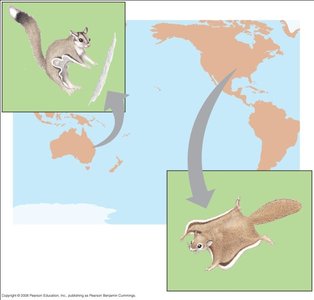
The geographic distribution of species supports evolutionary theory. Closely related species are often found in the same region, while similar environments in different regions can lead to convergent evolution.
Example: Unique species on the Galápagos Islands; polar bears in the Arctic but not the Antarctic.
6. Molecular Evidence
Comparisons of DNA, RNA, and protein sequences reveal evolutionary relationships. All living organisms share a universal genetic code, and many proteins (e.g., cytochrome c) are highly conserved across species.
Example: Homologous genes and proteins found in diverse organisms.
Summary Table: Types of Evolutionary Evidence
Type of Evidence | Description | Example |
|---|---|---|
Direct Observation | Evolution observed in real time | Antibiotic resistance in bacteria |
Artificial Selection | Human-driven selection of traits | Dog breeds, crop varieties |
Anatomical Structures | Homologous and analogous features | Forelimbs of mammals, wings of birds and insects |
Fossil Record | Transitional forms and succession of life | Archaeopteryx, horse evolution |
Biogeography | Distribution of species | Galápagos finches, marsupials in Australia |
Molecular Biology | Genetic and protein similarities | Cytochrome c, universal genetic code |
Key Terms and Concepts
Natural Selection: The process by which individuals with advantageous traits survive and reproduce more successfully.
Adaptation: A heritable trait that increases an organism's fitness in a particular environment.
Homologous Structures: Anatomical features derived from a common ancestor.
Analogous Structures: Features with similar functions but independent evolutionary origins.
Convergent Evolution: Independent evolution of similar traits in different lineages.
Vestigial Organs: Structures with reduced or no function, inherited from ancestors.
