 Back
BackDescent with Modification: A Darwinian View of Life
Study Guide - Smart Notes
 Tailored notes based on your materials, expanded with key definitions, examples, and context.
Descent with Modification: A Darwinian View of Life
Introduction to Evolutionary Thought
Evolution is the central unifying concept in biology, explaining the diversity of life through descent with modification. This chapter explores the historical development of evolutionary theory, the mechanisms of natural selection, and the evidence supporting evolution.
History of Evolutionary Thought
Pre-Darwinian Theories
Before Darwin, several naturalists contributed to the study of life's diversity, though many opposed the idea of evolution.
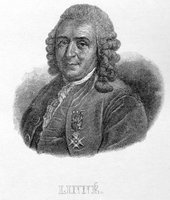
Carolus Linnaeus: Developed the binomial naming system and a nested classification system, but did not attribute these patterns to evolutionary relationships.
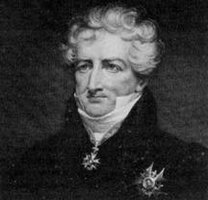
Georges Cuvier: Founder of paleontology, first to accept extinction as a real phenomenon, but opposed evolution.
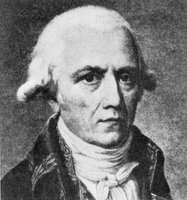
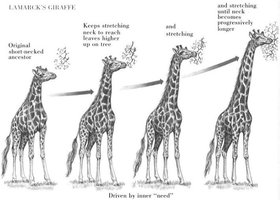
Jean Baptiste Lamarck: Proposed the first mechanism for evolution, suggesting organisms have an innate drive toward increasing complexity and that acquired traits could be inherited.
Darwin and the Voyage of the Beagle
Darwin's Journey and Observations
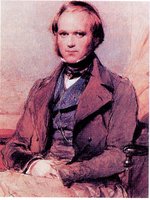
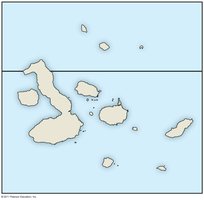
Charles Darwin's five-year voyage on the HMS Beagle was pivotal in shaping his ideas about evolution. He observed unique species on the Galápagos Islands, noting their similarities and differences with mainland forms.
Purpose of Voyage: Chart South American coastlines; Darwin collected and observed plants, animals, and fossils.
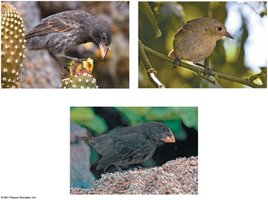
Galápagos Islands: Home to unique organisms, such as finches with diverse beak shapes adapted to different diets.
Adaptations: Inherited characteristics that enhance survival and reproduction in specific environments.
Mechanisms of Evolution: Natural Selection
Darwin's Key Observations and Inferences
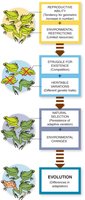
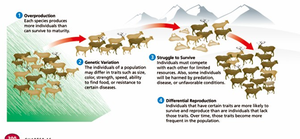
Darwin formulated his theory of natural selection based on five key observations and three inferences:
Variation: Individuals in a population vary in their traits.
Inheritance: Some traits are heritable.
Overproduction: More offspring are produced than can survive.
Struggle for Existence: Competition for limited resources.
Differential Survival and Reproduction: Individuals with advantageous traits survive and reproduce more successfully.
Population as the Unit of Evolution
Evolution acts on populations, not individuals. Natural selection can only amplify or diminish heritable variations over generations.
Population: A group of interbreeding individuals of the same species in a geographic area.
Individuals do not evolve; populations evolve as the frequency of traits changes over time.
Acquired characteristics (traits gained during an organism's lifetime) are not inherited.
Evidence for Evolution
Evolution and Medicine: Antibiotic Resistance
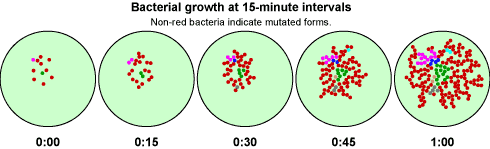
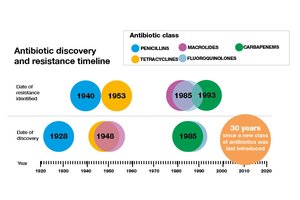
Evolutionary principles explain why disease-causing bacteria are not eliminated by antibiotics. Bacterial populations evolve resistance through natural selection acting on random mutations.
Antibiotic resistance arises when bacteria with mutations survive antibiotic treatment and reproduce.
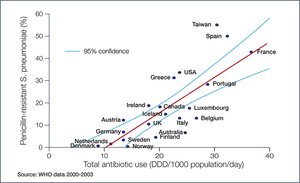
Overuse of antibiotics accelerates the evolution of resistant strains.
Evolution in Modern Times
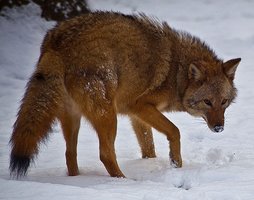
Evolution is observable in contemporary species, such as the Eastern coyote (a hybrid of coyote and wolf).
Artificial Selection
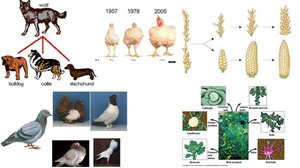
Humans have shaped the evolution of species through artificial selection, demonstrating that significant changes can occur over relatively short periods.
Examples: Dog breeds, crop plants, and domesticated animals.
Implication: Natural selection can cause substantial change in populations over many generations.
Homology and Vestigial Structures
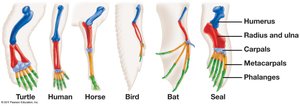
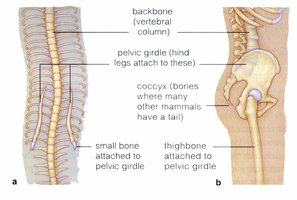
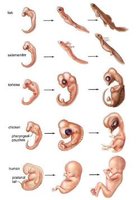
Homologous structures are anatomical similarities resulting from common ancestry. Vestigial structures are remnants of features that served important functions in ancestors.
Homology: Similar genetic, developmental, or structural features among related species.
Vestigial structures: Reduced or nonfunctional features inherited from ancestors.
Convergent Evolution and Analogy
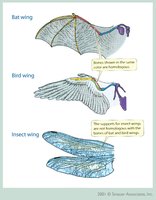
Convergent evolution produces analogous (homoplastic) structures—similar features in unrelated lineages due to adaptation to similar environments, not common ancestry.
Fossil Record
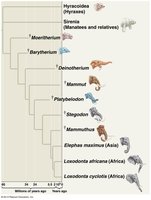
The fossil record documents important evolutionary transitions, such as the transition from land to sea in cetacean ancestry and the existence of extinct lineages.
Biogeography
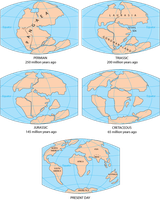
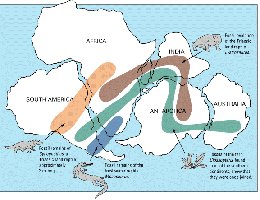
The geographic distribution of species provides evidence for evolution. Understanding continental drift and the history of supercontinents like Pangaea helps explain patterns of endemism and speciation.
Endemic species: Species found only in a specific geographic location.
Traits, Adaptation, and Fitness
Nature of Adaptation
Adaptations are not always perfect; evolutionary history and trade-offs constrain the traits that can evolve. Not all traits are adaptive, and selection acts on many traits simultaneously, leading to fitness trade-offs.
Fitness: The ability of an organism to survive and reproduce in its environment.
Trade-offs: Adaptations that improve fitness in one context may reduce it in another.
Review and Important Concepts
Define fitness and explain its significance in evolution.
Identify and describe the main lines of evidence supporting evolution: homology, fossil record, biogeography, and direct observation.
Understand how natural selection shapes population dynamics and leads to adaptation and speciation.
