 Back
BackDescent with Modification: A Darwinian View of Life – Study Notes
Study Guide - Smart Notes
 Tailored notes based on your materials, expanded with key definitions, examples, and context.
Descent with Modification: A Darwinian View of Life
The Darwinian Revolution
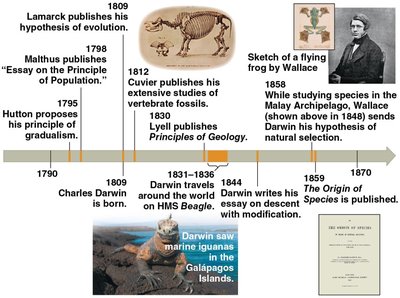
The Darwinian Revolution marked a fundamental shift in biological science, introducing the concepts of evolution and natural selection. Prior to Darwin, most scientists believed that species were fixed and unchanging, and that Earth was relatively young. Darwin, inspired by his travels and the work of other scientists, collected evidence from fossils and geology, leading to his groundbreaking publication, The Origin of Species in 1859. This work launched the scientific revolution in biology and established the foundation for evolutionary biology.
Fixed Species Concept: Early belief that species did not change over time.
Fossil Evidence: Fossils provided proof that life forms had changed across geological eras.
Natural Selection: Darwin introduced the mechanism by which species adapt and evolve.
Evolutionary Biology: The study of how species change and diversify over time.
Mantises: A Case Study in Evolutionary Patterns
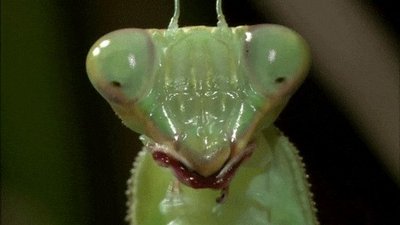
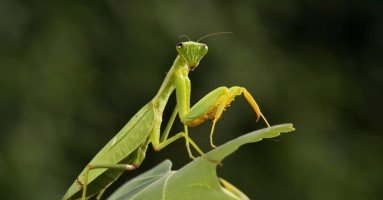
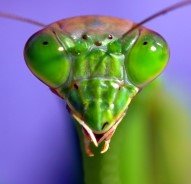
Mantises (order Mantodea) illustrate both the unity and diversity of life. All mantises share certain traits, such as bulging eyes and a flexible neck, but they differ in size, color, and shape. These differences are adaptations to their biotic (living) and abiotic (non-living) environments, demonstrating how organisms evolve to fit their ecological niches.
Unity of Life: Shared traits among mantises indicate common ancestry.
Diversity of Life: Variation in traits shows adaptation to different environments.
Adaptation: Organisms adjust to their surroundings, leading to evolutionary change.

Evolution: Descent with Modification
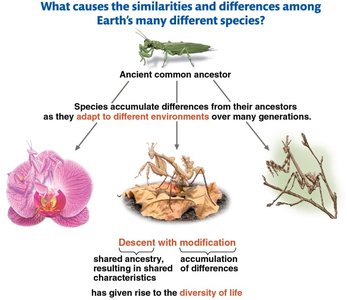
Evolution is defined as the change in species over generations, with traits accumulating as populations adapt to their environments. Darwin described this process as "descent with modification." Evolution can be viewed in two ways: as a pattern (evidence that life has changed over time) and as a process (mechanisms such as natural selection, genetic drift, and gene flow).
Pattern: Fossil records, homologous structures, molecular similarities, and biogeography provide evidence for evolution.
Process: Mechanisms like natural selection, genetic drift, and gene flow drive evolutionary change.
Adaptation Example: Stick insects and mantises adapt their appearance to their environments.
Early Ideas About Evolution
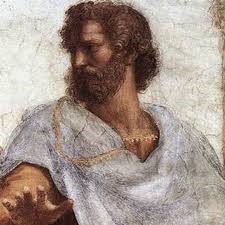
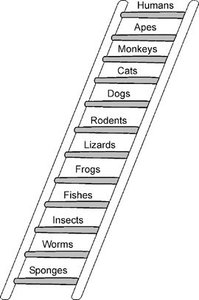
Before Darwin, philosophers and scientists such as Aristotle and Linnaeus contributed to the classification and understanding of life. Aristotle believed species were fixed and created the scala naturae, ranking organisms from simple to complex. Linnaeus developed binomial nomenclature and hierarchical classification, grouping species by similarities but not proposing evolutionary change.
Aristotle: Proposed the scala naturae, a "ladder" of life from simple to complex.
Linnaeus: Developed the two-part naming system and classification hierarchy.
Classification Example: Homo sapiens is the scientific name for humans.
Fossils as Evidence for Evolution
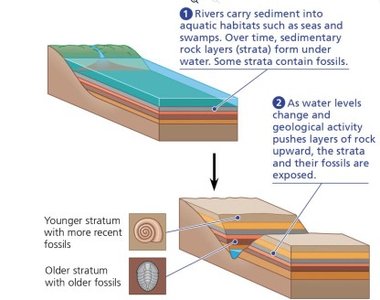
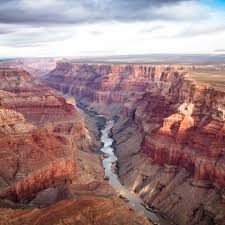
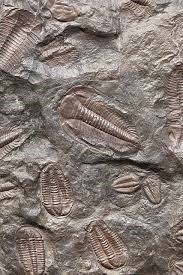
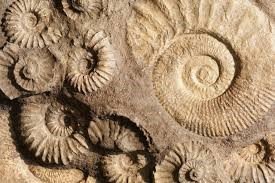
Fossils are the remains or traces of ancient organisms, often found in sedimentary rock layers (strata). The position of fossils in different strata indicates their age, with deeper layers containing older fossils. Fossils provide evidence for the gradual change of life forms over time.
Fossil Types: Bones, footprints, shells.
Strata: Layers of sedimentary rock represent different time periods.
Dating Fossils: Deeper strata contain older fossils, allowing scientists to reconstruct evolutionary history.
Fossils, Catastrophes, and Deep Time
George Cuvier, founder of paleontology, observed that fossils in older strata were less like modern organisms and proposed catastrophism—sudden events causing mass extinctions. Other scientists, such as Hutton and Lyell, suggested gradualism and uniformitarianism, leading Darwin to realize that Earth was much older than previously thought, allowing for gradual biological change.
Catastrophism: Sudden events cause mass extinctions.
Gradualism: Slow, continuous processes shape Earth's surface.
Deep Time: Earth's age allows for gradual evolutionary change.
Lamarck’s Hypothesis of Evolution
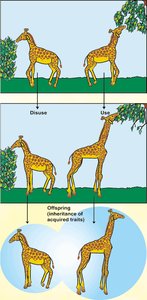
Lamarck proposed that organisms change during their lifetime through use or disuse of body parts, and that these acquired traits are passed on to offspring. Although this hypothesis was later disproved, it was the first major theory proposing a mechanism for evolution and influenced Darwin’s thinking.
Use and Disuse: Traits used become stronger; unused traits diminish.
Inheritance of Acquired Traits: Offspring inherit modifications acquired by parents.
Example: Giraffes stretching their necks to reach leaves.
Darwin’s Research and Voyage on the HMS Beagle
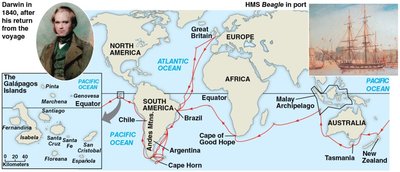
Charles Darwin’s five-year voyage on the HMS Beagle provided crucial observations. He collected plants and animals across South America, noting that fossils resembled living species from the same regions and that living species resembled those from nearby areas. Geological events, such as earthquake uplift, reinforced the idea that Earth is dynamic and changing.
Key Observations: Similar but distinct bird species, unique to islands.
Geological Insight: Andes mountains rose gradually; marine fossils found in mountains.
Adaptive Radiation: Species diversify to fill different ecological niches.
Darwin’s Finches – Adaptive Radiation
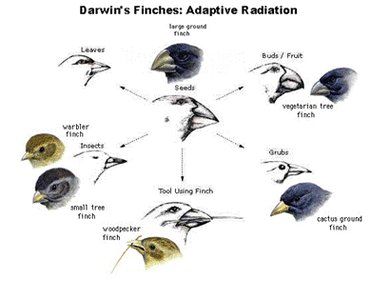
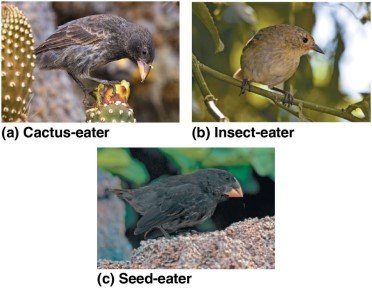
Darwin observed finches on the Galápagos Islands, noting that beak shapes were adapted to different food sources. This is an example of adaptive radiation, where species diversify to fill different ecological niches, providing crucial evidence for natural selection.
Beak Adaptations: Different shapes suited for seeds, insects, cactus, etc.
Adaptive Radiation: Rapid diversification of species to exploit different resources.
Natural Selection – Darwin & Wallace
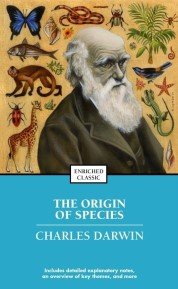
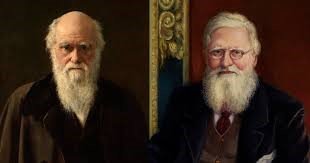
Natural selection is the process by which individuals with advantageous traits survive and reproduce more, leading to the accumulation of favorable traits in populations over generations. Alfred Russel Wallace independently described natural selection, and both he and Darwin presented their ideas together in 1858. Darwin published On the Origin of Species in 1859, marking the foundation of modern evolutionary biology.
Advantageous Traits: Traits that increase survival and reproduction become more common.
Wallace’s Contribution: Independently described natural selection.
Birth of Evolutionary Biology: Foundation for the study of how species evolve.
Descent with Modification by Natural Selection
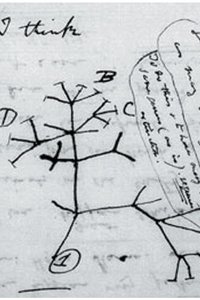
Descent with modification explains three major observations: unity of life (shared traits link all organisms to a common ancestor), diversity of life (species adapt differently to various environments), and organisms suited to their environment (traits increase survival and reproduction).
Unity of Life: Common ancestry links all organisms.
Diversity of Life: Adaptation to different environments leads to diversity.
Adaptations: Traits that match specific environmental conditions.
Artificial Selection
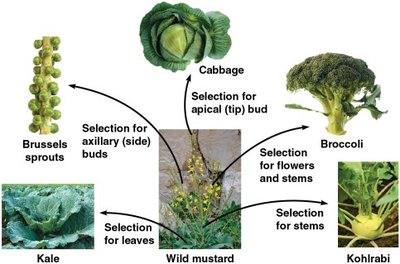
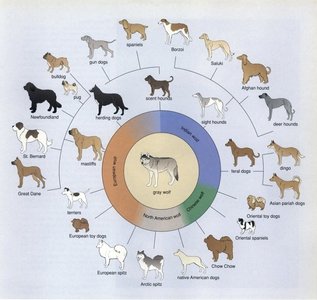
Artificial selection is the process by which humans intentionally breed organisms with desirable traits. Over generations, these traits become more pronounced. Examples include crops bred for yield and taste, livestock bred for food production, and pets bred for companionship. Artificial selection demonstrates how traits can change rapidly under selective pressure and provided Darwin with an analogy for natural selection.
Crops: Corn, broccoli, wheat bred for specific traits.
Livestock: Cows, chickens, sheep bred for food production.
Pets: Dogs and cats bred for size, behavior, and companionship.
Darwin’s Key Observations and Inferences
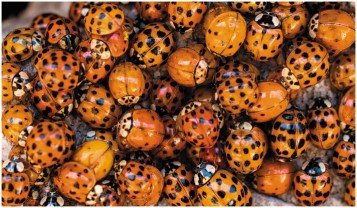
Darwin made two key observations: variation exists within populations, and species can produce more offspring than the environment can support. From these, he inferred that individuals with favorable traits survive and reproduce, leading to the accumulation of those traits in the population over generations.
Variation: Members of a population show variation in inherited traits.
Overproduction: Many offspring fail to survive or reproduce.
Accumulation of Favorable Traits: Unequal survival and reproduction leads to evolution.
Key Features of Natural Selection
Natural selection increases the frequency of adaptations that are favorable in an environment. If the environment changes, natural selection may drive adaptation to new conditions, giving rise to new species. Importantly, individuals do not evolve; populations evolve over time. Natural selection can only act on heritable traits that are variable in a population, and the environment determines which traits are favorable.
Heritable Traits: Only traits that can be passed to offspring are affected.
Population Evolution: Evolution occurs at the population level, not the individual.
Environmental Variation: Favorable traits depend on environmental conditions.
Scientific Evidence for Evolution
Evolution is supported by an overwhelming amount of scientific evidence, including direct observations, homology, the fossil record, and biogeography. Direct observations include natural selection in response to introduced species and the evolution of drug-resistant bacteria. Homology refers to similarity resulting from common ancestry, with homologous structures representing variations on a structural theme present in a common ancestor.
Direct Observations: Evolutionary change documented in scientific studies.
Homology: Anatomical similarities due to common ancestry.
Fossil Record: Evidence of extinction, origin of new groups, and changes within groups.
Biogeography: Geographic distribution of species supports evolution.
Convergent Evolution and Analogous Traits
Convergent evolution is the independent evolution of similar features in distantly related groups. Analogous traits arise not through common ancestry, but through adaptation to similar environments. For example, the sugar glider (Australian marsupial) and the flying squirrel (North American eutherian) have similar adaptations but are not closely related.
Convergent Evolution: Similar traits evolve independently in unrelated groups.
Analogous Traits: Traits with similar function but different evolutionary origins.
Biogeography and Continental Drift
Biogeography is the scientific study of the geographic distribution of species. Continental drift, the gradual movement of Earth's landmasses, has influenced species distributions. For example, freshwater fish in the family Galaxiidae live in South America and Australia, separated by wide stretches of ocean, but share an ancestor dating back to the time these continents broke away from Pangea.
Continental Drift: Movement of landmasses affects species distribution.
Pangea: Ancient supercontinent that broke apart to form modern continents.
Predicting Evolution: Understanding continental drift helps predict when and where groups evolved.
Important Definitions
Evolution: The gradual change of organisms over time from primitive forms through adaptation.
Microevolution: Small-scale changes in the gene pool.
Macroevolution: Large-scale changes observable through comparisons and the fossil record.
Adaptation: Genetically determined traits or behaviors that increase fitness.
Fitness: The probable genetic contribution of an individual to succeeding generations.
Niche: The role an organism plays in its environment.
Environment: All external factors affecting an organism's life.
Environmental Pressure: Limitations of environmental factors affecting fitness.
Population: All individuals in a local area able to interact and reproduce.
Species: All individuals able to interbreed and produce viable offspring.
Gene Pool: All alleles of all genes in a population.
Key Principle: The gene pool evolves, not individuals.
