 Back
BackDescent with Modification: A Darwinian View of Life
Study Guide - Smart Notes
 Tailored notes based on your materials, expanded with key definitions, examples, and context.
Descent with Modification
Introduction to Evolutionary Biology
Evolutionary biology began with the publication of Charles Darwin's The Origin of Species in 1859, marking a scientific revolution. Darwin's ideas developed gradually, influenced by prior works and his own extensive travels.
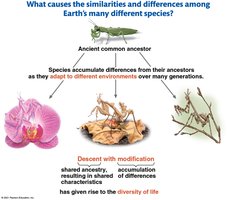
Evolution is the process by which species accumulate differences from their ancestors as they adapt to different environments over time.
Darwin summarized this process as descent with modification.
Evolution can be viewed as both a pattern (revealed by scientific data) and a process (mechanisms causing change).
Unity and Diversity of Life
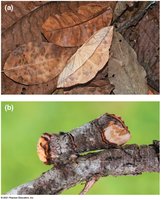
The unity and diversity of life are illustrated by shared and differing characteristics among species. For example, mantises in the order Mantodea share traits like bulging eyes and flexible necks, but differ in size, shape, and color.
Organisms are adapted to their biotic and abiotic environments.
Life exhibits both unity (shared characteristics) and diversity (differing traits).

Historical Perspectives on Evolution
Early philosophers and scientists had varying views on the nature of species and adaptation.
Aristotle believed species were fixed and arranged them on a scale of increasing complexity (scala naturae).
Carolus Linnaeus developed a nested classification system and binomial nomenclature, still used today.
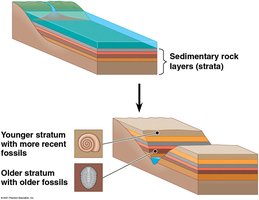
Fossils found in sedimentary rock layers (strata) provided evidence for change over time.
Contributions of Early Scientists
Georges Cuvier developed paleontology, noting that older strata contain fossils less similar to current organisms.
James Hutton and Charles Lyell proposed that Earth's geologic features formed gradually and that the same processes operate today.
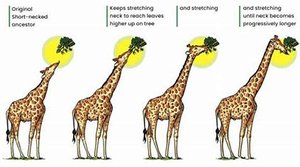
Jean-Baptiste de Lamarck proposed the principles of use and disuse and inheritance of acquired characteristics, though these are not supported by experimental evidence (except for some epigenetic cases).
Charles Darwin's Voyage and Observations
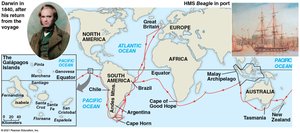
Darwin's five-year voyage on the HMS Beagle was pivotal in developing his theory.
He collected specimens and observed that fossils resembled living species from the same area.
On the Galápagos Islands, he noted unique species that resembled mainland species, hypothesizing colonization and diversification.
Adaptations and Natural Selection
Darwin observed adaptations—heritable traits enhancing survival and reproduction. He proposed that new species arise from ancestral forms through gradual accumulation of adaptations.
Natural selection is the process where individuals with certain inherited traits survive and reproduce at higher rates.
Darwin and Alfred Russel Wallace independently developed the theory of natural selection.
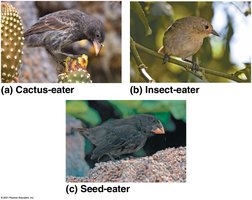
Descent with Modification Explained
Descent with modification by natural selection explains:
The unity of life
The diversity of life
The ways organisms are suited to their environments
All organisms are related by descent from a common ancestor, with modifications accumulating to fit specific ways of life.
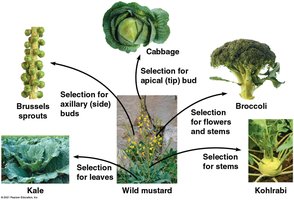
Artificial Selection
Humans modify species through artificial selection, breeding individuals with desired traits.
Crops, livestock, and pets often differ greatly from their wild ancestors.
Darwin's Observations and Inferences
Darwin drew two key observations and inferences:
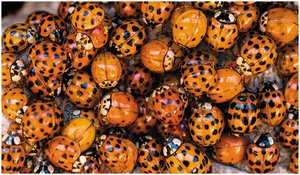
Observation 1: Members of a population vary in their inherited traits.
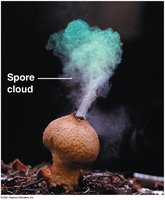
Observation 2: All species can produce more offspring than the environment can support.
Inference 1: Individuals with traits increasing survival and reproduction produce more offspring.
Inference 2: Favorable traits accumulate in the population over generations.
Key Features of Natural Selection
Individuals with certain heritable traits survive and reproduce at higher rates.
Natural selection increases the frequency of favorable adaptations.
If the environment changes, new adaptations may arise, leading to new species.
Populations, not individuals, evolve over time.
Natural selection acts only on heritable, variable traits.
Process of Evolution by Natural Selection
Overproduction of offspring
Variation among offspring
Some variations confer survival advantages (adaptations)
Individuals with advantageous traits survive to reproduce
Descendants are modified
Evidence for Evolution
Types of Evidence
Four main types of data document the pattern of evolution:
Direct observations
Homology
The fossil record
Biogeography
Direct Observation
Natural selection in response to introduced species (e.g., soapberry bugs evolving beak length to match fruit size).
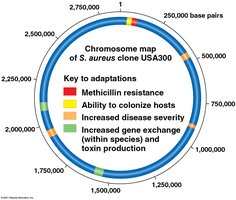
Evolution of drug-resistant bacteria (e.g., MRSA strains of Staphylococcus aureus).
Homology
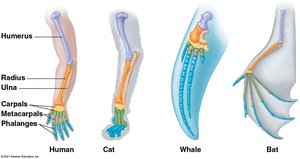
Homology is similarity resulting from common ancestry.
Homologous structures are anatomical resemblances representing variations on a structural theme.
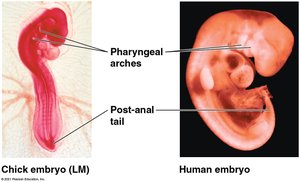
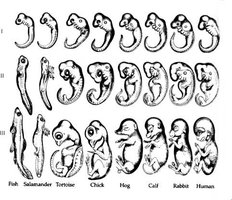
Comparative embryology reveals homologies not visible in adults (e.g., post-anal tail and pharyngeal arches in vertebrate embryos).
Vestigial structures are remnants of features that served functions in ancestors.
Molecular homologies include shared genetic code and genes.
Analogies and Convergent Evolution
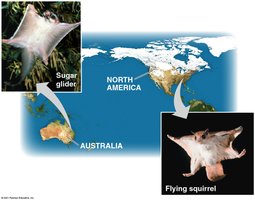
Convergent evolution produces analogous features in distantly related groups, not due to common ancestry but similar environmental pressures.
Example: Sugar glider (Australia) and flying squirrel (North America) have similar adaptations for gliding.
The Fossil Record
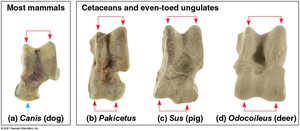
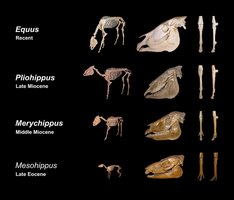
The fossil record provides evidence for extinction, origin of new groups, and changes within groups.
Supports DNA-based hypotheses about relationships (e.g., cetaceans and even-toed ungulates).
Biogeography
Biogeography is the study of the geographic distribution of species.
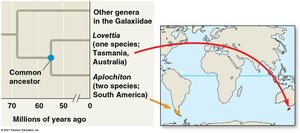
Species distributions are influenced by continental drift.
Understanding continental drift helps predict when and where groups evolved.
Example: Galaxiidae fish in South America and Australia share an ancestor from the time these continents separated.
Summary Table: Types of Evidence for Evolution
Type of Evidence | Description | Example |
|---|---|---|
Direct Observation | Evolution observed in real time | Soapberry bug beak length, MRSA resistance |
Homology | Similarity due to common ancestry | Forelimb bones in mammals, embryonic structures |
Fossil Record | Extinction, origin, and change over time | Horse evolution, cetacean ancestry |
Biogeography | Distribution of species and continental drift | Galaxiidae fish in South America and Australia |
Key Terms and Definitions
Evolution: Change in the genetic composition of a population over generations.
Descent with modification: Darwin's phrase describing the process of evolution.
Natural selection: Differential survival and reproduction of individuals due to differences in phenotype.
Homology: Similarity due to shared ancestry.
Analogy: Similarity due to convergent evolution, not common ancestry.
Artificial selection: Human-directed breeding for desired traits.
Adaptation: Inherited characteristic that enhances survival and reproduction.
Equations and Concepts
Population Genetics Equation
The Hardy-Weinberg equation describes allele and genotype frequencies in a population not evolving:
= frequency of dominant allele
= frequency of recessive allele
Summary
Descent with modification by natural selection is the central concept explaining the unity and diversity of life, supported by multiple lines of evidence including direct observation, homology, the fossil record, and biogeography. Additional info: Epigenetic inheritance is a rare exception to Lamarck's principle of inheritance of acquired characteristics.
