 Back
BackDescent with Modification: A Darwinian View of Life – Study Notes
Study Guide - Smart Notes
 Tailored notes based on your materials, expanded with key definitions, examples, and context.
Descent with Modification: A Darwinian View of Life
Introduction to Evolutionary Thought
Evolutionary biology explores how life changes over time, focusing on the mechanisms that drive adaptation and diversification. This chapter examines the historical development of evolutionary theory, the concept of adaptation, Darwin’s foundational ideas, and the evidence supporting evolution.
Historical Perspectives on Evolution
Pre-Darwinian Thinkers
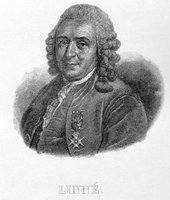
Carolus Linnaeus (1707–1778): Developed the binomial naming system and a nested classification system for organisms. However, he did not attribute these patterns to evolutionary relationships and opposed the idea of evolution.
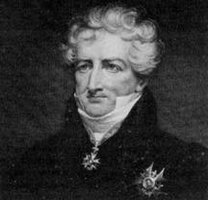
Georges Cuvier (1769–1832): Founder of paleontology and the first to accept extinction as a real phenomenon. He also opposed evolutionary change.
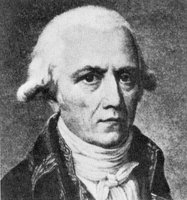
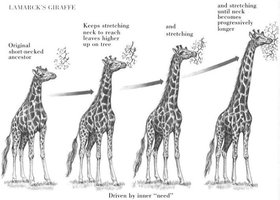
Jean-Baptiste Lamarck (1744–1829): Proposed the first mechanism for how life evolves, suggesting that organisms have an innate tendency toward increasing complexity and that acquired traits could be inherited (a concept later disproven).
Darwin and the Voyage of the Beagle
Darwin’s Journey and Observations
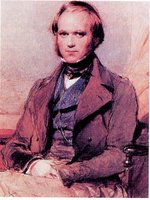
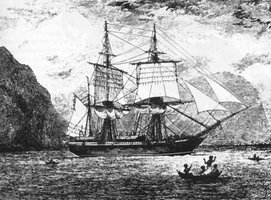
Charles Darwin (1809–1882) joined the HMS Beagle as a naturalist, embarking on a five-year circumnavigation of the globe.
He collected and observed diverse plants, animals, and fossils, noting that South American species were distinct from those in Europe and that island species often resembled those from nearby continents.
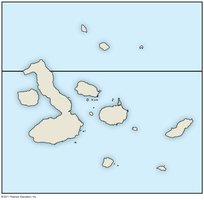
The Galápagos Islands provided key insights, as their unique organisms were similar to each other but different from mainland forms, highlighting the importance of adaptation.
Adaptations and Natural Selection
Definition and Mechanism
Adaptations are inherited characteristics that enhance an organism’s survival and reproduction in specific environments. Darwin proposed that adaptations arise through the process of natural selection, where individuals with advantageous traits survive and reproduce more successfully.
Natural selection acts on heritable variation within populations.
Over time, beneficial traits become more common, leading to adaptation.
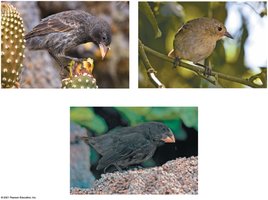
Example: Beak shapes in Galápagos finches are adapted to different diets.
Darwin’s Key Observations and Inferences
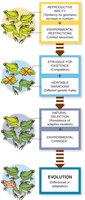
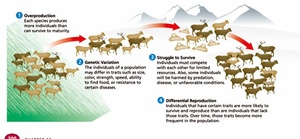
Populations produce more offspring than the environment can support.
Individuals vary in their traits, many of which are heritable.
There is a struggle for existence due to limited resources.
Individuals with traits that confer higher fitness are more likely to survive and reproduce.
Over generations, favorable traits accumulate in the population.
Darwinian Fitness
Fitness refers to an individual’s ability to survive and reproduce in its environment. Higher fitness means greater reproductive success and contribution to the next generation’s gene pool.
Modern Evidence for Evolution
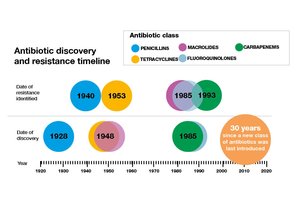
Evolution and Medicine: Antibiotic Resistance
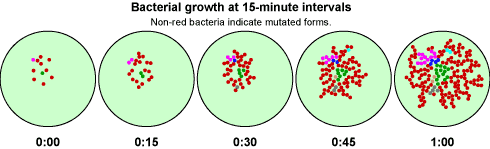
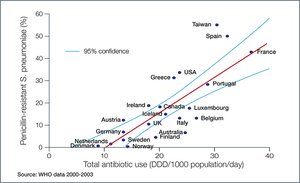
Evolutionary principles explain why disease-causing bacteria are not eliminated by antibiotics. Bacterial populations evolve resistance through natural selection, as individuals with mutations conferring resistance survive and reproduce.
Antibiotic use selects for resistant strains.
Resistance can spread rapidly in populations.
Evolution in Action: Hybridization
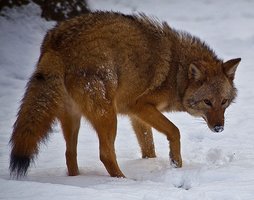
Modern examples of evolution include the emergence of hybrid species, such as the Eastern coyote (coywolf), which is a hybrid of the coyote and the wolf. This demonstrates ongoing evolutionary processes in contemporary times.
Artificial Selection
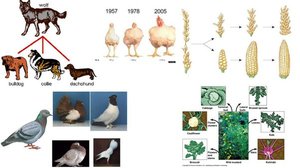
Artificial selection is the process by which humans breed plants and animals for desired traits. This demonstrates that significant changes can occur in populations over relatively short periods, supporting the plausibility of natural selection driving evolution over longer timescales.
Examples: Dog breeds, domesticated crops, and pigeons.
Homology and Vestigial Structures
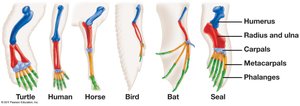
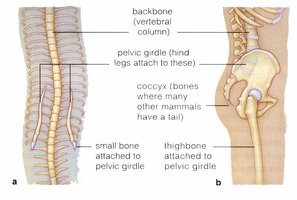
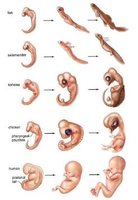
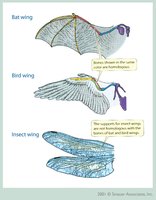
Homologous structures are anatomical features in different species that are similar due to shared ancestry. Vestigial structures are remnants of features that served important functions in ancestors but are now reduced or unused.
Homology provides evidence for common descent.
Vestigial structures illustrate evolutionary change over time.
Convergent Evolution and Analogy
Convergent evolution occurs when unrelated species evolve similar traits independently, often due to similar environmental pressures. These traits are called analogous (or homoplastic) structures and do not indicate common ancestry.
Fossil Record and Transitional Forms
The fossil record documents the history of life and reveals transitional forms that illustrate evolutionary changes. For example, fossils show the transition from land-dwelling ancestors to modern cetaceans (whales, dolphins).
Biogeography and Continental Drift
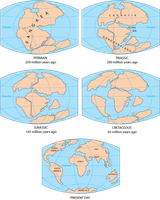
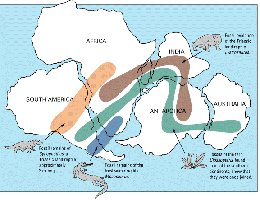
Biogeography studies the geographic distribution of species. The movement of continents (continental drift) explains patterns of species distribution and the presence of endemic species (species found nowhere else).
Summary of Key Concepts
Fitness is the ability to survive and reproduce; higher fitness means greater genetic contribution to future generations.
Evidence for evolution includes homology, the fossil record, biogeography, and observed evolutionary changes (e.g., antibiotic resistance).
Natural selection acts on populations, not individuals, and only heritable traits are subject to evolutionary change.
Not all traits are adaptive; evolutionary history and trade-offs influence the traits present in organisms.
Additional info:
Darwin’s theory was independently conceived by Alfred Wallace, and both presented their ideas jointly in 1858.
Evolutionary change is measured as shifts in the genetic composition of populations over generations.
