 Back
BackDescent with Modification: A Darwinian View of Life and the Foundations of Evolutionary Biology
Study Guide - Smart Notes
 Tailored notes based on your materials, expanded with key definitions, examples, and context.
Descent with Modification and the History of Evolutionary Thought
Early Theories of Evolution
The development of evolutionary theory involved contributions from several scientists, each proposing mechanisms for how species change over time.
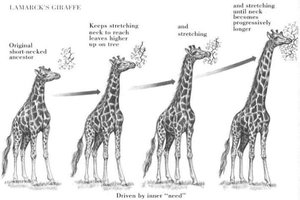
Jean-Baptiste Lamarck (1809): Proposed that evolution occurs through the inheritance of acquired characteristics. He suggested that organisms adapt to their environment by using or not using certain body parts, and these changes are passed to offspring.
Use and Disuse: Body parts used extensively become stronger, while those not used deteriorate.
Inheritance of Acquired Characteristics: Traits acquired during an organism's lifetime are inherited by the next generation.
Example: Lamarck's explanation for giraffe neck length: giraffes stretched their necks to reach higher leaves, and this trait was inherited by their offspring.
Contributions of Cuvier, Hutton, and Lyell
Other scientists provided foundational ideas about Earth's history and the fossil record, influencing Darwin's thinking.
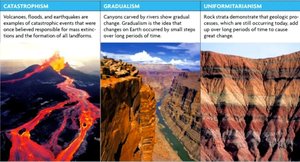
Georges Cuvier (1813): Advocated catastrophism, the idea that sudden events (e.g., floods, volcanic eruptions) caused mass extinctions and shaped Earth's surface.
James Hutton and Charles Lyell (1790s): Proposed gradualism and uniformitarianism, suggesting that geological changes occur slowly over long periods through processes still operating today.
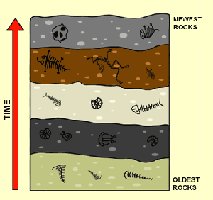
Fossils and Strata: Fossils are remains of once-living species found in sedimentary rock layers (strata), which are laid down in a specific order, allowing scientists to date fossils and reconstruct evolutionary history.
Darwin, Wallace, and the Theory of Evolution by Natural Selection
Darwin and Wallace: Parallel Discoveries
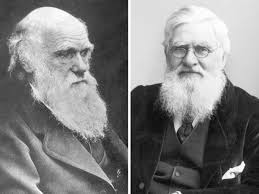
Charles Darwin and Alfred Russel Wallace independently developed the theory of evolution by natural selection, though with some differences in emphasis.
Natural Selection: The differential survival and reproduction of individuals based on inherited traits is the primary mechanism driving evolutionary change.
Darwin: Focused on natural selection acting on individuals, with traits enhancing survival and reproduction becoming more common in a population.
Wallace: Also recognized individual selection but considered selection acting on groups or species, potentially for the good of the group.
Sexual Selection: Darwin emphasized the role of aesthetics and mate choice, while Wallace saw these traits as primarily involved in survival.
Historical Note: Darwin and Wallace presented a joint paper in 1858.
Descent with Modification
Darwin's central idea was that living species descend from ancestral forms and accumulate differences over time, leading to adaptation and the diversity of life.
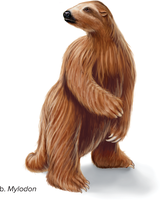
Descent with Modification: Living forms descended from extinct forms, and differences between extinct and modern specimens indicate that species are not fixed but change over time.
Adaptation: Living species can be modified by the environment, resulting in traits that enhance survival and reproduction.
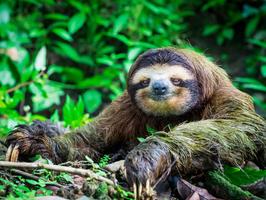
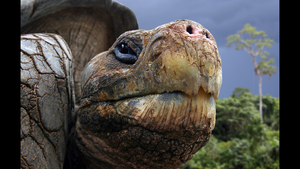
Example: Darwin observed closely related species on islands, each adapted to its unique environment, supporting the idea of descent with modification.
Mechanisms of Evolution
Natural Selection
Natural selection is the process by which individuals with advantageous traits survive and reproduce more successfully, leading to adaptation over generations.
Key Points:
Members of a population have inheritable variations.
Populations produce more offspring than the environment can support, leading to competition for resources.
Individuals with favorable traits survive and reproduce more than others.
Over time, the proportion of favorable traits increases, and the population becomes better adapted to its environment.
Gene Pool: The total collection of alleles in a population.
Genetic Variation: Originates from mutations, gene duplication, and other processes.
Natural Selection Acts on Individuals, but Populations Evolve: Only heritable traits (those encoded by alleles) can evolve.
Types of Natural Selection
Natural selection can alter the frequency distribution of heritable traits in three main ways:
Directional Selection: Favors individuals at one extreme of a trait distribution (e.g., thicker-shelled oysters survive better).
Stabilizing Selection: Favors intermediate variants and reduces extremes (e.g., intermediate-colored oysters are less likely to be preyed upon).
Disruptive Selection: Favors individuals at both extremes over intermediates (e.g., light and dark oysters survive better in certain habitats, intermediates are more vulnerable).
Sexual Selection
Sexual selection is a form of natural selection where individuals with certain traits are more likely to obtain mates.
Sexual Dimorphism: Males and females may differ in size, color, ornamentation, and behavior due to sexual selection.
Genetic Drift and Gene Flow
Other mechanisms can also change allele frequencies in populations:
Genetic Drift: Random changes in allele frequencies, especially in small populations, can lead to loss of genetic variation and fixation or loss of alleles.
Founder Effect: When a few individuals become isolated from a larger population, their allele frequencies may differ from the original population.
Bottleneck Effect: A drastic reduction in population size due to environmental change can alter allele frequencies and reduce genetic diversity.
Gene Flow: Movement of alleles between populations through migration increases genetic variation and can prevent speciation by homogenizing gene pools.
Population Genetics and the Hardy-Weinberg Principle
Population and Gene Pool
A population is a group of individuals of the same species that interbreed and produce fertile offspring. The gene pool includes all alleles at all loci in the population.
Allele Frequency: The proportion of a specific allele among all alleles at a locus in the population.
Hardy-Weinberg Equilibrium: Describes a non-evolving population where allele and genotype frequencies remain constant from generation to generation.
Conditions for Hardy-Weinberg Equilibrium
No mutations
Random mating
No natural selection
Extremely large population size
No gene flow/genetic drift
If any of these conditions are not met, allele frequencies will change, and evolution will occur.
Hardy-Weinberg Equation
The Hardy-Weinberg equation allows calculation of genotype frequencies from allele frequencies:
Where:
= frequency of homozygous dominant genotype
= frequency of heterozygous genotype
= frequency of homozygous recessive genotype
(sum of allele frequencies)
Example Calculation
In a population of 500 wildflowers: 320 red (CRCR), 160 pink (CRCW), 20 white (CWCW).
Genotype frequencies: CRCR = 0.64, CRCW = 0.32, CWCW = 0.04
Allele frequencies: CR = 0.8, CW = 0.2
Sum of allele frequencies: 0.8 + 0.2 = 1
For a recessive disease with , , , and carrier frequency (about 2%).
Evidence for Evolution
Fossil Record
The fossil record documents the history of life and shows transitional forms linking major groups (e.g., Archaeopteryx between reptiles and birds, Tiktaalik between fish and amphibians).
Biogeographical Evidence
Geographical distribution of species supports evolution. Isolated populations diverge from their common ancestor, and new species can out-compete older ones.
Anatomical Evidence
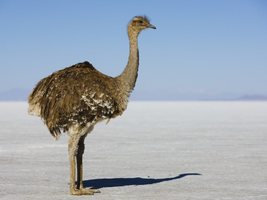
Vestigial Structures: Reduced or nonfunctional features inherited from ancestors (e.g., wings in ostriches, hip bones in whales, human tailbone).
Homologous Structures: Anatomically similar structures inherited from a common ancestor but adapted for different functions (e.g., vertebrate forelimbs).
Analogous Structures: Features with similar function but different evolutionary origins, resulting from convergent evolution.
Molecular Evidence
Similarities in DNA, RNA, and protein sequences among different organisms provide strong evidence for common ancestry and evolutionary relationships.
Summary Table: Mechanisms of Evolution
Mechanism | Description | Effect on Genetic Variation |
|---|---|---|
Natural Selection | Favors traits that enhance survival and reproduction | Can increase or decrease variation depending on selection type |
Genetic Drift | Random changes in allele frequencies, especially in small populations | Reduces variation, can lead to allele fixation or loss |
Gene Flow | Movement of alleles between populations | Increases variation within populations, decreases differences between populations |
Mutation | Random changes in DNA sequence | Source of new genetic variation |
