 Back
BackDescent with Modification: A Darwinian View of Life – Study Notes
Study Guide - Smart Notes
 Tailored notes based on your materials, expanded with key definitions, examples, and context.
Descent with Modification: A Darwinian View of Life
Introduction to Evolutionary Theory
Evolutionary biology seeks to explain the diversity, unity, and adaptation of life on Earth. Charles Darwin's theory of descent with modification by natural selection revolutionized our understanding of how species change over time. This chapter explores the historical context, mechanisms, and evidence supporting evolution.
Concept 22.1: The Darwinian Revolution Challenged Traditional Views
Historical Context of Evolutionary Thought
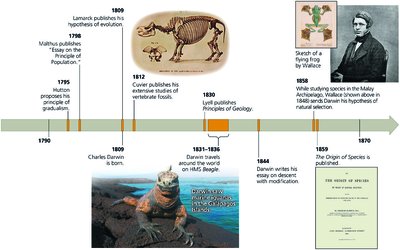
Scala Naturae: Aristotle proposed a fixed, hierarchical arrangement of life forms, known as the "scale of nature." Species were viewed as unchanging and perfectly created.
Linnaean Classification: Carolus Linnaeus developed a nested classification system (kingdom, phylum, class, etc.) and binomial nomenclature (e.g., Homo sapiens), grouping organisms by shared characteristics.
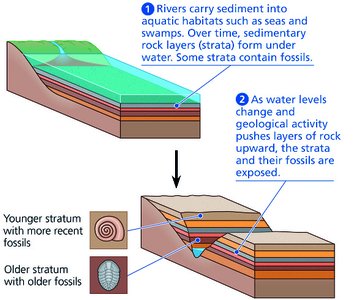
Fossils and Strata: Fossils found in sedimentary rock layers (strata) provided evidence that life forms have changed over time. Older strata contain more dissimilar fossils compared to current life forms.
Paleontology: Georges Cuvier studied fossils and proposed catastrophism—sudden events caused extinctions, but he denied evolution.
Gradualism and Uniformitarianism: James Hutton and Charles Lyell argued that geological features result from slow, continuous processes, implying Earth is much older than previously thought.
Lamarck's Hypothesis: Jean-Baptiste de Lamarck suggested that organisms evolve through use and disuse of body parts and inheritance of acquired traits. Modern genetics has refuted this mechanism.

Concept 22.2: Descent with Modification by Natural Selection
Darwin’s Research and the Voyage of the Beagle
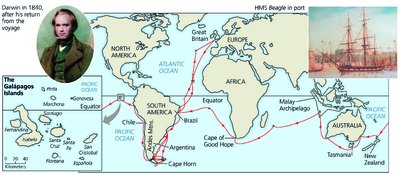
Darwin’s observations during the voyage of the HMS Beagle, especially in the Galápagos Islands, led him to hypothesize that species adapt to their environments and that new species arise from ancestral forms.
He noted that organisms on the Galápagos resembled those on the South American mainland but had unique adaptations.
Adaptation and Natural Selection
Adaptation: Inherited characteristics that enhance survival and reproduction in specific environments.
Natural Selection: The process by which individuals with advantageous heritable traits survive and reproduce more successfully, leading to the accumulation of favorable traits in the population.
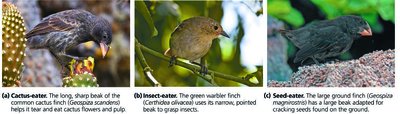
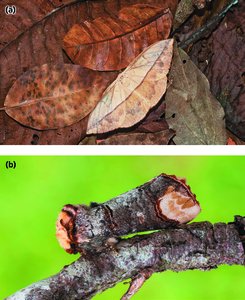
Darwin’s finches are a classic example, with beak shapes adapted to different food sources.
Descent with Modification
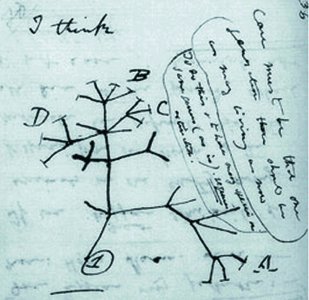
All organisms share a common ancestor, and as descendants adapt to different environments, they accumulate modifications.
Evolution can be visualized as a branching tree, with extant species at the tips and extinct lineages as dead branches.
Artificial Selection
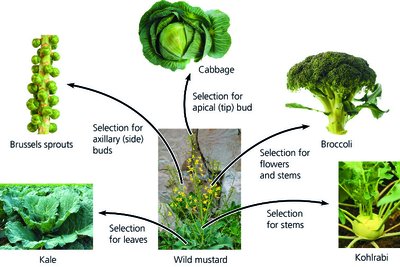
Humans have modified species through selective breeding (artificial selection), demonstrating how selection can cause significant change over generations.
Key Features of Natural Selection
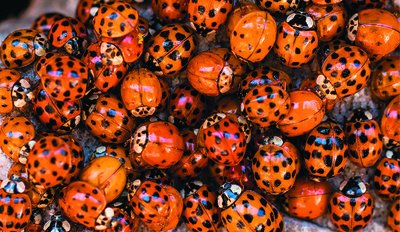
Natural selection acts on heritable variation within populations.
Populations, not individuals, evolve over time.
Environmental context determines which traits are favorable.
Concept 22.3: Evidence for Evolution
Direct Observations of Evolutionary Change
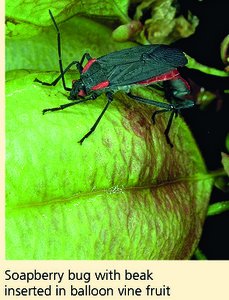
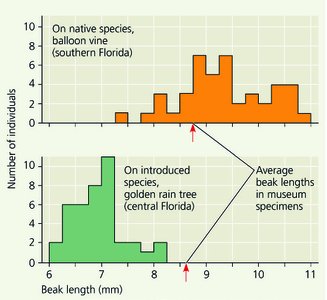
Evolution can be observed directly, such as changes in beak length in soapberry bugs in response to new food sources.
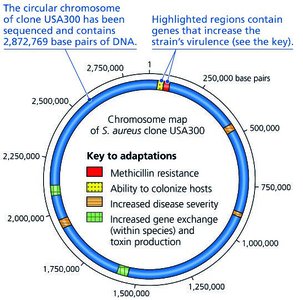
Drug resistance in bacteria (e.g., MRSA) evolves rapidly due to natural selection acting on genetic variation.
Homology
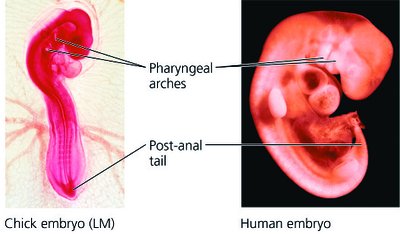
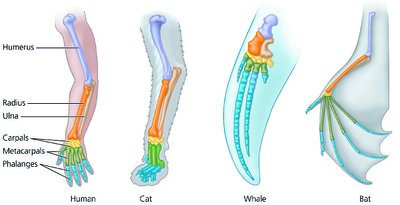
Homologous Structures: Anatomical similarities due to shared ancestry (e.g., mammalian forelimbs).
Vestigial Structures: Remnants of features that served a function in ancestors (e.g., pelvic bones in snakes).
Molecular Homology: Similarities in DNA and proteins across species indicate common ancestry.
Evolutionary Trees and Nested Patterns
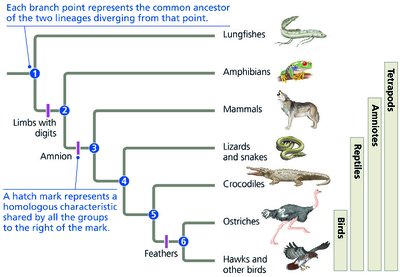
Evolutionary trees (phylogenies) depict relationships among species based on shared derived characteristics.
Convergent Evolution and Analogy
Convergent Evolution: Independent evolution of similar features in distantly related groups due to similar environmental pressures.
Analogous Structures: Similar function but not due to common ancestry (e.g., wings of bats and insects).
The Fossil Record
Fossils document the existence of now-extinct species, transitional forms, and the gradual modification of structures over time.
Fossil evidence supports the descent of cetaceans (whales, dolphins) from terrestrial mammals closely related to even-toed ungulates.
Biogeography
Geographic distribution of species reflects evolutionary history and continental drift (e.g., Pangaea).
Closely related species are often found in the same geographic region, while distantly related species may appear similar due to convergent evolution.
Summary Table: Key Evidence for Evolution
Type of Evidence | Description | Example |
|---|---|---|
Direct Observation | Evolution observed in real time | Soapberry bug beak length, MRSA resistance |
Homology | Similar structures due to shared ancestry | Mammalian forelimbs, vertebrate embryos |
Fossil Record | Transitional forms, extinct species | Whale ancestors, stickleback pelvic bones |
Biogeography | Distribution of species and fossils | Galápagos finches, freshwater fish on southern continents |
Key Terms and Concepts
Descent with Modification: The process by which species accumulate differences from their ancestors as they adapt to different environments over time.
Natural Selection: The mechanism by which individuals with advantageous traits survive and reproduce more successfully.
Homology vs. Analogy: Homology is similarity due to shared ancestry; analogy is similarity due to convergent evolution.
Vestigial Structures: Remnants of ancestral features with little or no current function.
Artificial Selection: Human-driven selection for desirable traits in plants and animals.
Practice Questions
How did Hutton’s and Lyell’s ideas about geology influence Darwin’s thinking about evolution?
Explain how natural selection leads to adaptation in populations.
Describe the difference between homologous and analogous structures, providing an example of each.
How does the fossil record support the theory of evolution?
What is the significance of biogeography in understanding evolutionary relationships?
