Back
Descent with Modification: A Darwinian View of Life (Chapter 22 Study Notes)
Study Guide - Smart Notes
 Tailored notes based on your materials, expanded with key definitions, examples, and context.
Descent with Modification: A Darwinian View of Life
Introduction to Evolutionary Biology
Evolutionary biology seeks to explain the diversity and unity of life on Earth. Charles Darwin's theory of evolution by natural selection provides a unifying framework for understanding how species change over time and adapt to their environments. This chapter explores the historical context, mechanisms, and evidence for evolution.
Endless Forms Most Beautiful
Key Observations About Life
Adaptation: Organisms are well-suited to their environments, often through specialized traits.
Unity: Living things share many characteristics, indicating common ancestry.
Diversity: There is a vast variety of life forms, each adapted to different ecological niches.
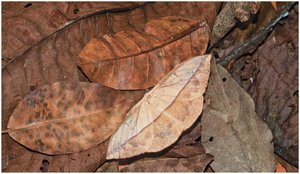
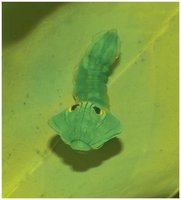
For example, lepidopteran insects (moths and butterflies) share a juvenile caterpillar stage but display distinct features as adults and juveniles, illustrating both unity and diversity.
Historical Context of Evolutionary Thought
Pre-Darwinian Views
Aristotle: Proposed the scala naturae, a ladder of life with fixed species arranged by complexity.
Old Testament: Species were viewed as individually created and unchanging.
Carolus Linnaeus: Developed taxonomy and binomial nomenclature, interpreting adaptations as evidence of divine design.
The Role of Fossils and Geology
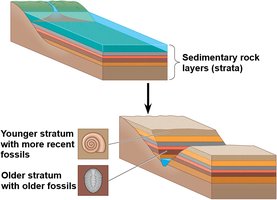
Fossils: Remains or traces of ancient organisms, typically found in sedimentary rock layers (strata).
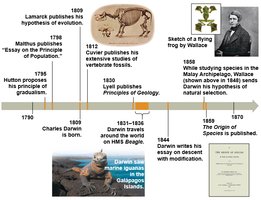
Paleontology: Founded by Georges Cuvier, who noted that deeper strata contain more dissimilar fossils and proposed catastrophism (extinctions due to sudden events).
Geology: James Hutton and Charles Lyell argued for gradual, continuous geological processes shaping Earth, influencing Darwin's thinking about slow biological change.
Lamarck’s Hypothesis of Evolution
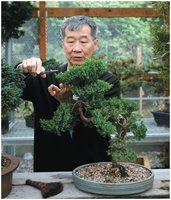
Jean-Baptiste de Lamarck: Proposed that species evolve through use and disuse of body parts and inheritance of acquired traits (e.g., giraffes stretching their necks).
Modern View: Lamarck's mechanisms are unsupported; acquired traits are not inherited genetically.
Darwin’s Theory of Evolution
The Voyage of the Beagle
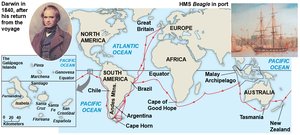
Charles Darwin's five-year voyage on HMS Beagle provided critical observations. He collected specimens, noted similarities between fossils and living species, and observed geographic variation, especially in the Galápagos Islands. These experiences led him to hypothesize that species change over time and adapt to new environments.
Adaptation and Natural Selection
Adaptations: Inherited traits that enhance survival and reproduction in specific environments.
Natural Selection: The process by which individuals with favorable traits are more likely to survive and reproduce, leading to the accumulation of those traits in the population.
Speciation: The formation of new species as populations adapt to different environments.
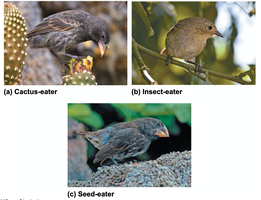
Darwin’s studies of Galápagos finches demonstrated how beak shapes evolved to exploit different food sources.
Descent with Modification
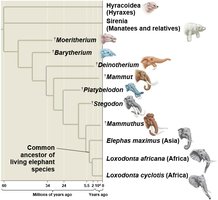
All organisms are related through descent from a common ancestor.
Over time, populations accumulate modifications (adaptations) that fit them to their environments.
The history of life is like a branching tree, with each branch representing the divergence of species.
Artificial Selection
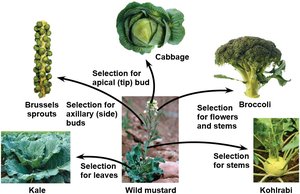
Humans have modified species through selective breeding for desired traits (artificial selection).
Examples include the diversity of crops and domestic animals derived from wild ancestors.
Darwin argued that a similar process occurs in nature (natural selection).
The Process of Natural Selection
Darwin’s Observations and Inferences
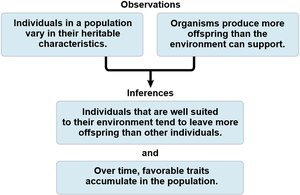
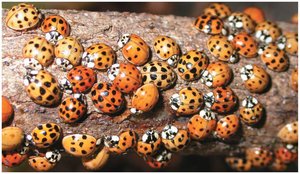
Observation 1: Members of a population vary in their inherited traits.
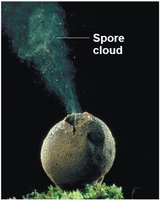
Observation 2: All species can produce more offspring than the environment can support; many offspring fail to survive and reproduce.
Inference 1: Individuals with advantageous traits leave more offspring.
Inference 2: Favorable traits accumulate in the population over generations.
Key Features of Natural Selection
Natural selection acts on heritable variation within populations.
Populations, not individuals, evolve over time.
Adaptations are environment-specific and may change if the environment changes.
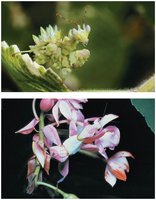
Evidence for Evolution
Direct Observations
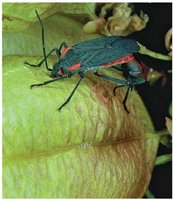
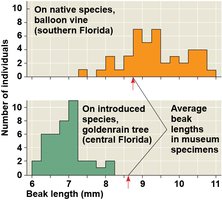
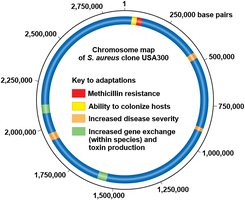
Evolution can be observed directly, such as in the adaptation of soapberry bugs to new food sources or the evolution of drug-resistant bacteria.
Homology
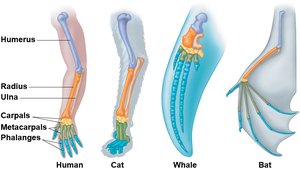
Homologous structures: Anatomical similarities due to shared ancestry (e.g., mammalian forelimbs).
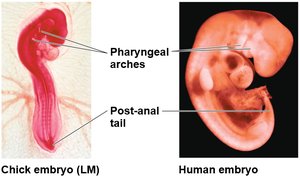
Comparative embryology: Reveals similarities in early development (e.g., post-anal tail and pharyngeal arches in vertebrate embryos).
Vestigial structures: Remnants of features that served important functions in ancestors (e.g., human appendix).
Molecular homology: Similarities in DNA and proteins among related species.
Evolutionary Trees
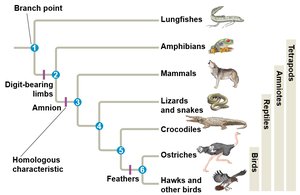
Evolutionary trees (phylogenies) depict hypotheses about relationships among species based on homologies.
Convergent Evolution
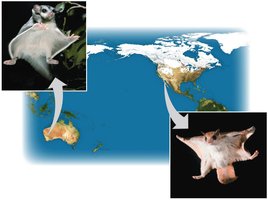
Convergent evolution produces analogous structures—similar adaptations in unrelated groups due to similar environmental pressures.
Analogous traits do not indicate common ancestry.
The Fossil Record
Fossils provide evidence for the extinction of species, the origin of new groups, and changes within groups over time.
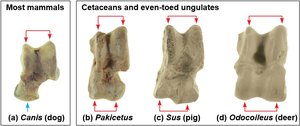
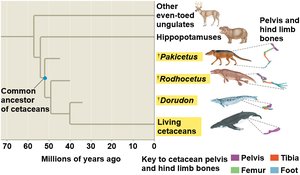
Transitional fossils document important evolutionary steps (e.g., land-to-sea transition in cetaceans).
Biogeography
Biogeography studies the geographic distribution of species.
Continental drift and the breakup of Pangaea explain patterns of species distribution.
Endemic species are found only in specific locations, such as islands, and often closely related to mainland species.
Summary of Key Concepts
Unity of life is explained by descent from a common ancestor.
Diversity of life results from adaptations to different environments over time.
Natural selection is the primary mechanism of evolutionary change.
Multiple lines of evidence support the theory of evolution, including direct observation, homology, the fossil record, and biogeography.