 Back
Descent with Modification: A Darwinian View of Life (Chapter 22 Study Notes)
Study Guide - Smart Notes
 Tailored notes based on your materials, expanded with key definitions, examples, and context.
Descent with Modification: A Darwinian View of Life
Introduction to Evolutionary Theory
Evolutionary biology underwent a major transformation with the publication of Charles Darwin's On the Origin of Species in 1859. Darwin's work introduced the concept of descent with modification, which challenged the prevailing view of species as fixed and unchanging. This chapter explores the historical context, mechanisms, and evidence for evolution by natural selection.
Historical Perspectives on Evolution
Prevailing Ideas Before Darwin
Aristotle proposed the scala naturae, a ladder of life with species viewed as fixed and arranged by complexity.
The Old Testament suggested that species were individually created and immutable.
Carolus Linnaeus developed taxonomy and the binomial nomenclature system, interpreting adaptations as evidence of divine design.
The Role of Fossils and Geology
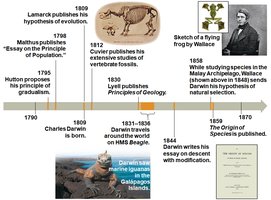
The study of fossils, primarily found in sedimentary rock layers (strata), provided evidence for changes in life forms over time. Paleontology, developed by Georges Cuvier, revealed that different strata contained distinct fossils, suggesting extinction and change.
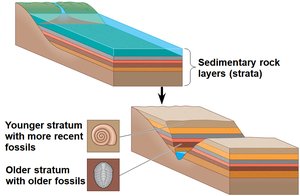
James Hutton and Charles Lyell proposed that geological changes occurred gradually over long periods, influencing Darwin's thinking about biological change.
Lamarck's Hypothesis of Evolution
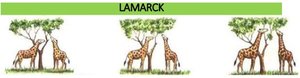
Jean-Baptiste de Lamarck suggested that species evolve through use and disuse of body parts and the inheritance of acquired characteristics.
Lamarck's ideas were later replaced by Darwin's theory, but they were important in introducing the concept of change over time.
Darwin's Life and Influences
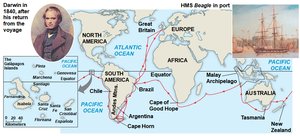
Darwin's education and experiences, including his voyage on the HMS Beagle, were crucial in shaping his ideas about evolution. He observed diverse species and fossils, particularly in the Galápagos Islands, leading him to hypothesize that species adapt to their environments over time.
Mechanisms of Evolution: Natural Selection
Descent with Modification
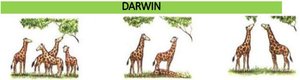
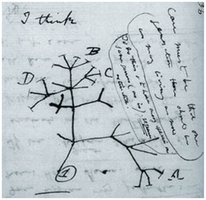
Darwin proposed that all organisms are related through descent from a common ancestor, with modifications accumulating over generations. This process explains both the unity and diversity of life.
Natural Selection Explained
Natural selection is the process by which individuals with advantageous heritable traits survive and reproduce more successfully than others.
Over time, favorable traits become more common in the population.
Natural selection acts on existing variation; it does not create new traits.
Key Observations:
Members of a population vary in their inherited traits.
All species can produce more offspring than the environment can support, leading to competition for resources.
Key Inferences:
Individuals with traits that increase survival and reproduction will leave more offspring.
This leads to the accumulation of favorable traits in the population over generations.
Artificial Selection
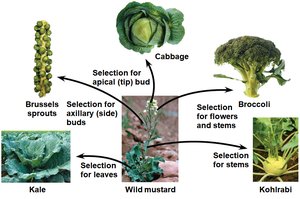
Humans have long practiced artificial selection, breeding plants and animals for desired traits. This process demonstrates how selection can shape species over time.
Evidence for Evolution
Direct Observations of Evolution
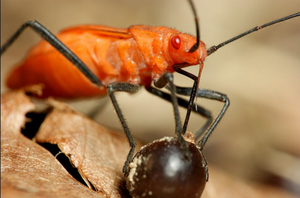
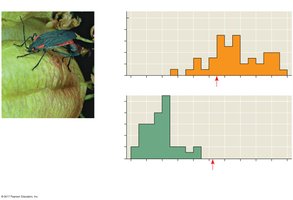
Soapberry bugs in Florida have evolved different beak lengths in response to feeding on native versus introduced plants, demonstrating rapid adaptation.
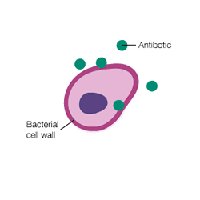
Antibiotic resistance in bacteria such as Staphylococcus aureus (MRSA) is a modern example of evolution by natural selection.
Anatomical and Molecular Homologies
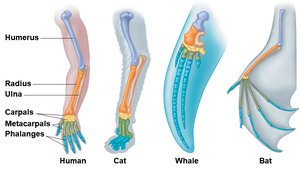
Homology refers to similarities resulting from common ancestry. Homologous structures, such as the forelimbs of mammals, have different functions but similar underlying anatomy.
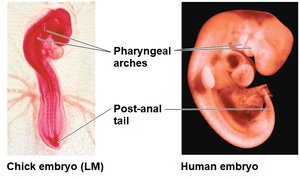
Comparative embryology reveals shared developmental features, such as pharyngeal arches and post-anal tails in vertebrate embryos.
Vestigial structures are remnants of features that served important functions in ancestors.
Molecular homologies include shared genes and genetic sequences among diverse organisms.
Convergent Evolution and Analogous Structures
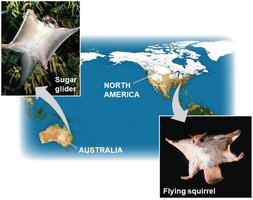
Convergent evolution occurs when unrelated species independently evolve similar traits as adaptations to similar environments. These traits are called analogous structures and do not indicate common ancestry.
The Fossil Record
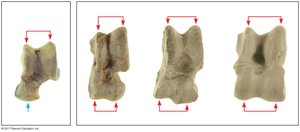
The fossil record documents the history of life, showing patterns of extinction, the emergence of new groups, and transitional forms linking major groups.
Biogeography
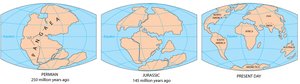
Biogeography is the study of the geographic distribution of species. The movement of continents (continental drift) and the presence of endemic species on islands provide evidence for evolution and common ancestry.
Summary Table: Homologous vs. Analogous Structures
Type of Structure | Definition | Example | Indicates Common Ancestry? |
|---|---|---|---|
Homologous | Similar anatomy, different function | Forelimbs of human, cat, whale, bat | Yes |
Analogous | Different anatomy, similar function | Wings of bat and insect | No |
Key Terms and Concepts
Evolution: Change in the genetic composition of a population over generations.
Natural selection: Differential survival and reproduction of individuals due to differences in phenotype.
Adaptation: Inherited characteristic that increases an organism's chance of survival and reproduction.
Homology: Similarity due to shared ancestry.
Analogy: Similarity due to convergent evolution, not common ancestry.
Vestigial structure: Remnant of a structure that served a function in the organism's ancestors.
Biogeography: Study of the distribution of species and ecosystems in geographic space and through geological time.
Key Equations
While this chapter is primarily conceptual, the following equation is foundational for understanding population genetics (covered in later chapters):
where p and q are the frequencies of two alleles in a population (Hardy-Weinberg equilibrium).
Additional info: This study guide expands on the provided lecture content with definitions, examples, and a summary table for clarity. The Hardy-Weinberg equation is included as foundational context for evolutionary biology, though it is covered in more detail in subsequent chapters.
