 Back
Descent with Modification: A Darwinian View of Life (Chapter 22 Study Notes)
Study Guide - Smart Notes
 Tailored notes based on your materials, expanded with key definitions, examples, and context.
Descent with Modification: A Darwinian View of Life
Introduction to Evolutionary Theory
Evolutionary biology underwent a major transformation with the publication of Charles Darwin's On the Origin of Species in 1859. Darwin's work introduced the concept of descent with modification, which challenged the prevailing view of species as fixed and unchanging. This chapter explores the historical context, mechanisms, and evidence for evolution by natural selection.
Historical Perspectives on Evolution
Prevailing Ideas Before Darwin
Aristotle proposed the scala naturae, a ladder of life with species as fixed entities.
The Old Testament suggested that species were individually created and immutable.
Carolus Linnaeus developed taxonomy and the binomial nomenclature system, interpreting adaptations as evidence of divine design.
The Role of Fossils and Geology
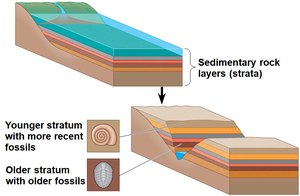
The study of fossils, primarily found in sedimentary rock layers (strata), provided evidence for the existence of extinct species and changes over time.
Paleontology was established by Georges Cuvier, who proposed that boundaries between strata represented catastrophic events.
James Hutton and Charles Lyell argued for gradual geological processes shaping Earth over long periods, influencing Darwin's thinking.
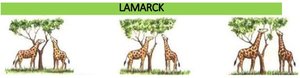
Lamarck's Hypothesis of Evolution
Jean-Baptiste de Lamarck proposed that species evolve through the use and disuse of body parts and the inheritance of acquired characteristics. However, his mechanism was later disproven.
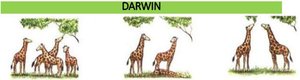
Darwin's Theory of Natural Selection
Darwin's theory differed fundamentally from Lamarck's. He proposed that natural selection, not acquired traits, drives evolution. Individuals with favorable traits are more likely to survive and reproduce, passing those traits to the next generation.
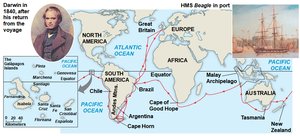
Darwin's Journey and Observations
The Voyage of the Beagle
Darwin's five-year voyage on the HMS Beagle allowed him to collect specimens and observe patterns in species distribution and adaptation, particularly in the Galápagos Islands.
Development of Evolutionary Theory
Darwin noted similarities between fossils and living species in the same region.
He hypothesized that species from South America colonized the Galápagos and diversified.
Mechanisms of Evolution
Descent with Modification
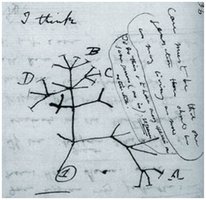
Darwin described evolution as "descent with modification," meaning all organisms are related through descent from a common ancestor, with accumulated adaptations over time.
Evolutionary trees illustrate relationships among species and the branching pattern of evolution.
Artificial Selection
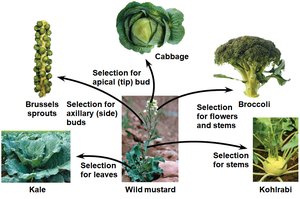
Humans have shaped species through artificial selection, breeding individuals with desired traits. This process demonstrates the power of selection in driving change.
Natural Selection: Observations and Inferences
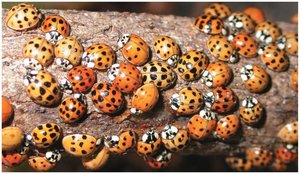
Observation 1: Members of a population vary in their inherited traits.
Observation 2: All species can produce more offspring than the environment can support, leading to competition for resources.
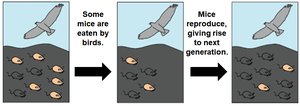
Inference 1: Individuals with advantageous traits are more likely to survive and reproduce.
Inference 2: Over generations, favorable traits accumulate in the population.
Key Features of Natural Selection
Natural selection acts on heritable variation within populations.
It increases the frequency of adaptations suited to the environment.
It does not create new traits but selects among existing variation.
Populations, not individuals, evolve over time.
Evidence for Evolution
Direct Observations of Evolution
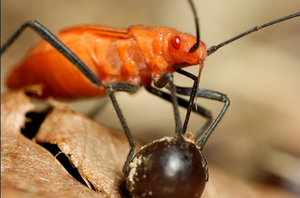
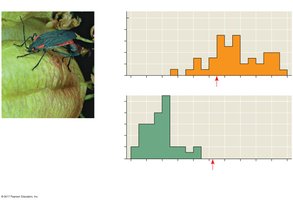
Soapberry bugs have evolved beak lengths in response to introduced plant species, demonstrating rapid adaptation.
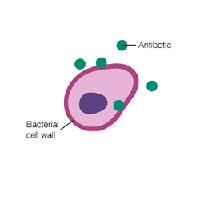
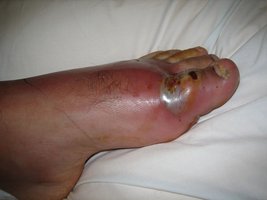
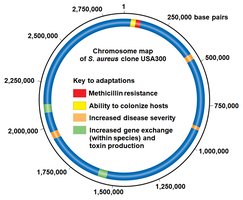
Drug-resistant bacteria such as MRSA (methicillin-resistant Staphylococcus aureus) have evolved resistance to antibiotics, illustrating natural selection in action.



Anatomical and Molecular Homologies
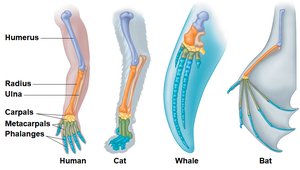
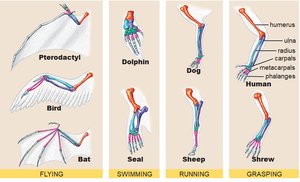
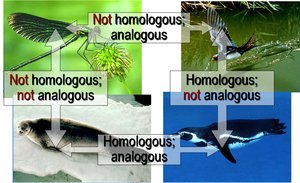
Homology refers to similarity resulting from common ancestry. Homologous structures have similar anatomy but may serve different functions in modern species.
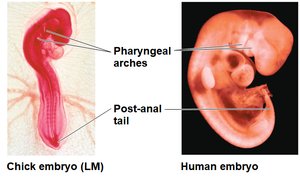
Comparative embryology reveals shared developmental features among vertebrates, such as pharyngeal arches and post-anal tails.
Vestigial structures are remnants of features that served important functions in ancestors but are reduced or nonfunctional in descendants.
Molecular homologies include shared genes and genetic sequences among diverse organisms.
Homologies and Evolutionary Trees
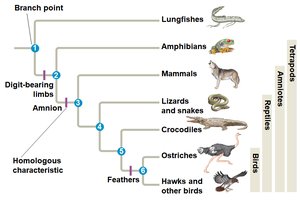
Homologies are used to construct evolutionary trees, which hypothesize relationships among species based on shared characteristics.
Convergent Evolution and Analogous Structures
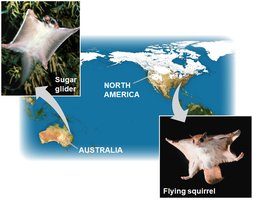
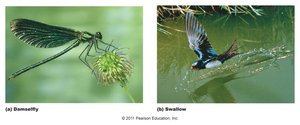
Convergent evolution occurs when unrelated species independently evolve similar traits due to similar environmental pressures. These traits are called analogous structures and do not indicate common ancestry.
The Fossil Record
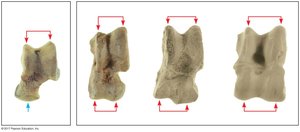
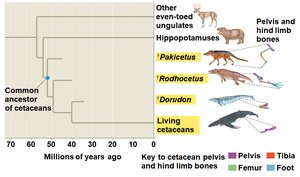
The fossil record documents the extinction, origin, and transformation of species over time. Transitional fossils provide evidence for evolutionary change within lineages.
Homologous vs. Analogous Structures
Homologous Structures | Analogous Structures |
|---|---|
Similar anatomy/structure, different functions | Different anatomy/structure, similar functions |
Indicate common ancestry | Result from convergent evolution |
Biogeography
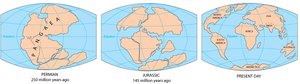
Biogeography is the study of the geographic distribution of species. The movement of continents (continental drift) and the presence of endemic species on islands provide evidence for evolution and common ancestry.
Endemic Species and Island Evolution
Endemic species are found only in specific geographic locations, often islands.
Island species are frequently closely related to mainland species, supporting the idea of colonization and subsequent diversification.
Additional info: These notes synthesize and expand upon the provided lecture content, integrating textbook-level explanations, definitions, and examples for comprehensive exam preparation.
