 Back
Descent with Modification: A Darwinian View of Life (Chapter 22 Study Notes)
Study Guide - Smart Notes
 Tailored notes based on your materials, expanded with key definitions, examples, and context.
Descent with Modification: A Darwinian View of Life
Introduction to Evolutionary Biology
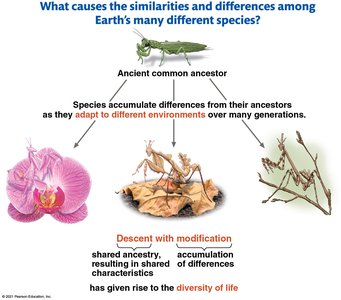
Evolutionary biology explores how species change over time, leading to the diversity and unity of life observed today. The concept of descent with modification was introduced by Charles Darwin, who proposed that species accumulate differences from their ancestors as they adapt to various environments.
Evolution: The process by which species change over generations, accumulating adaptations.
Descent with modification: Darwin's phrase summarizing evolution, emphasizing both shared ancestry and accumulated differences.
Pattern and Process: Evolution is both a pattern (revealed by scientific data) and a process (mechanisms causing change).
Historical Context and Early Ideas
Before Darwin, many scientists believed species were fixed and unchanging. Early classification systems and fossil studies laid the groundwork for evolutionary theory.
Aristotle: Proposed the scala naturae, a scale of increasing complexity.
Carolus Linnaeus: Developed the binomial naming system and nested classification, still used today.
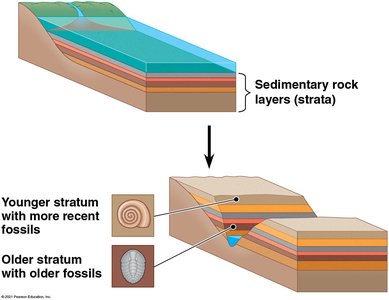
Fossils and Strata: Fossils found in sedimentary rock layers (strata) provided evidence for change over time.
Contributions of Early Scientists
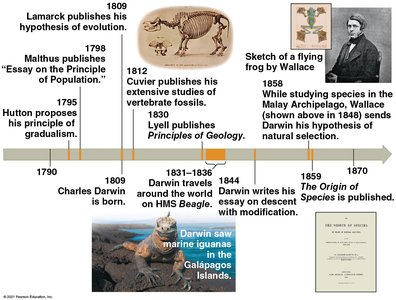
Georges Cuvier: Developed paleontology, observed that older strata contain fossils less similar to current organisms.
James Hutton: Proposed gradual geological processes shape Earth.
Charles Lyell: Suggested that geological processes operate at the same rate today as in the past.
Jean-Baptiste de Lamarck: Proposed use and disuse, and inheritance of acquired characteristics (not supported by evidence).
Darwin’s Research and the Voyage of the Beagle
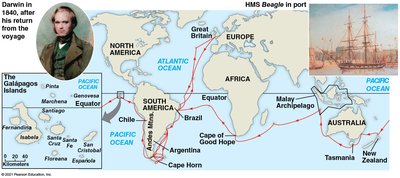
Darwin’s observations during his voyage on the HMS Beagle were crucial to the development of his theory. He noted similarities and differences among species, especially on the Galápagos Islands.
Adaptations: Inherited traits that enhance survival and reproduction.
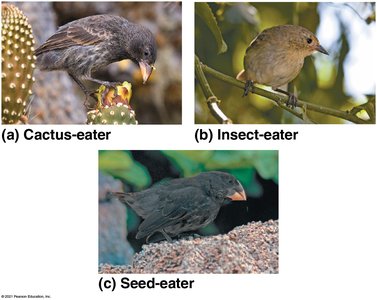
Galápagos finches: Example of adaptive radiation, where species diverge to fill different ecological niches.
Natural Selection and Adaptation
Darwin proposed natural selection as the mechanism for evolution. Individuals with advantageous traits are more likely to survive and reproduce, leading to the accumulation of favorable traits in populations.
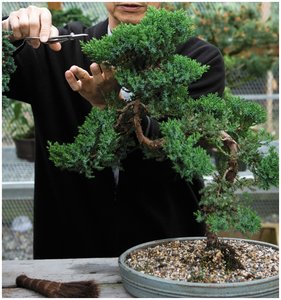
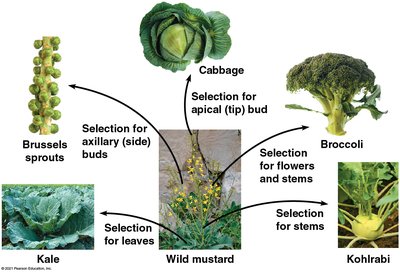
Artificial selection: Humans breed organisms for desired traits, demonstrating the power of selection.
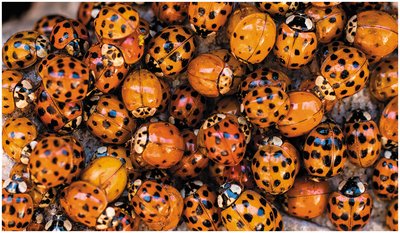
Key observations: Variation in traits and overproduction of offspring.
Key inferences: Differential survival and reproduction leads to accumulation of favorable traits.
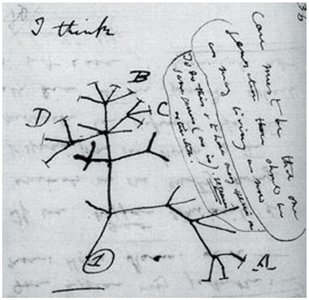
Descent with Modification and Evolutionary Trees
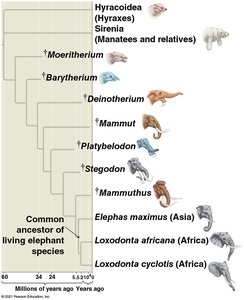
Darwin viewed the history of life as a branching tree, with all organisms related by descent from a common ancestor. Extinction and branching events explain morphological gaps between groups.
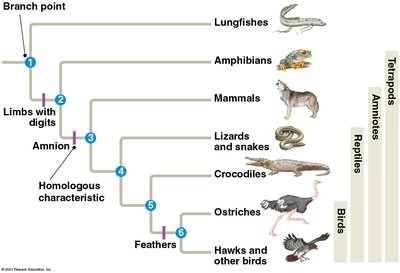
Evolutionary tree: Diagram showing relationships among species based on common ancestry.
Branching and extinction: Explain similarities and differences among groups.
Evidence for Evolution
Multiple lines of evidence support the theory of evolution, including direct observations, homology, the fossil record, and biogeography.
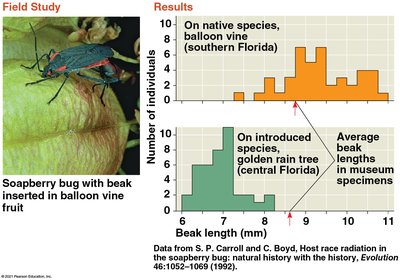
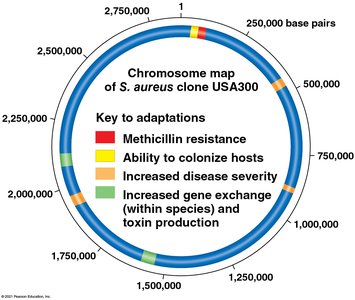
Direct observations: Evolution of traits in response to environmental changes (e.g., soapberry bugs, drug-resistant bacteria).
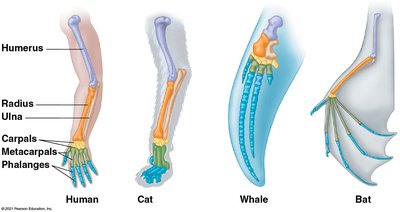
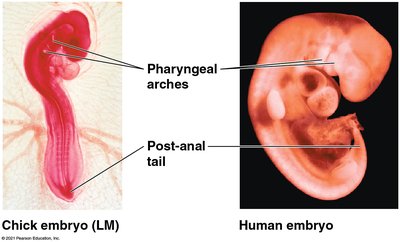
Homology: Similarity due to shared ancestry, including anatomical and molecular homologies.
Fossil record: Documents extinction, origin of new groups, and transitions.
Biogeography: Geographic distribution of species influenced by continental drift.
Key Terms and Concepts
Natural selection: Differential survival and reproduction based on inherited traits.
Homologous structures: Anatomical features inherited from a common ancestor.
Vestigial structures: Remnants of features that served a function in ancestors.
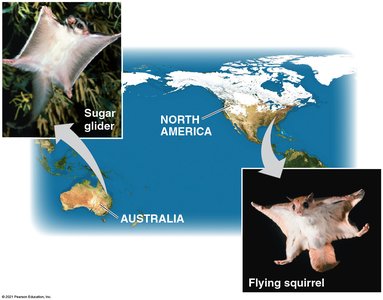
Convergent evolution: Independent evolution of similar traits in distantly related groups.
Biogeography: Study of the geographic distribution of species.
Summary Table: Types of Evidence for Evolution
Type of Evidence | Description | Example |
|---|---|---|
Direct Observation | Evolutionary change observed in real time | Soapberry bug beak length, MRSA resistance |
Homology | Similarity due to shared ancestry | Mammalian forelimbs, vertebrate embryos |
Fossil Record | Extinction, origin, and transitions documented | Transition from land to sea in cetaceans |
Biogeography | Distribution of species explained by continental drift | Galaxiidae fish in South America and Australia |
Equations and Scientific Principles
Population genetics equation: Hardy-Weinberg equilibrium (for context in later chapters)
Natural selection principle:
Conclusion
Darwin’s theory of evolution by natural selection provides a unifying framework for understanding the unity and diversity of life. Ongoing research continues to expand our knowledge of evolutionary processes and their impact on the living world.
