 Back
Descent with Modification: A Darwinian View of Life (Chapter 22) – Study Notes
Study Guide - Smart Notes
 Tailored notes based on your materials, expanded with key definitions, examples, and context.
Diversity of Life and Evolution
Introduction to Evolutionary Theory
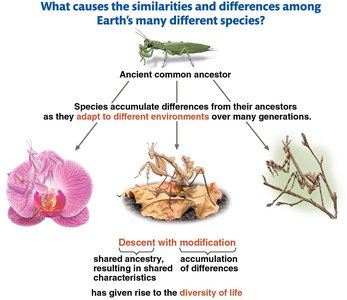
Evolution is the central theme of biology, explaining both the unity and diversity of life. The process of evolution describes how species accumulate differences from their ancestors as they adapt to different environments over time. This concept is summarized by Darwin’s phrase, descent with modification.
Evolution: The process by which modern organisms have descended from ancient ancestors, accumulating differences over generations.
Descent with modification: Shared ancestry resulting in shared characteristics, with the accumulation of differences leading to the diversity of life.
Historical Context of Evolutionary Thought
Timeline of Key Developments
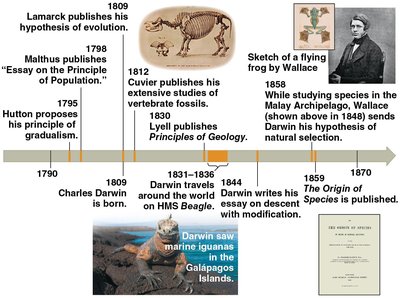
The development of evolutionary theory involved contributions from many scientists before and after Darwin. Key milestones include the proposals of gradualism, population principles, and the publication of Darwin’s On the Origin of Species.
1795: Hutton proposes gradualism.
1809: Lamarck publishes his hypothesis of evolution.
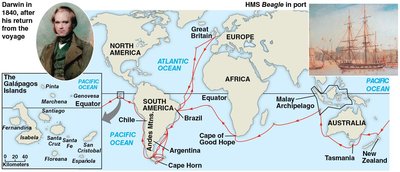
1831–1836: Darwin travels on the HMS Beagle, observing diverse species.
1858: Wallace sends Darwin his hypothesis of natural selection.
1859: Darwin publishes On the Origin of Species.
Darwin’s Voyage on the HMS Beagle
Darwin’s observations during his voyage on the HMS Beagle were foundational to his theory of evolution. He studied species in diverse environments, particularly in the Galápagos Islands, which influenced his ideas about adaptation and natural selection.
Darwin’s Focus on Adaptation
Adaptations and Natural Selection
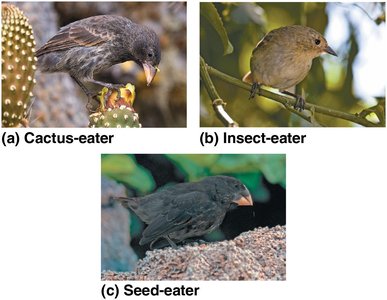
Darwin observed that adaptations are inherited characteristics that enhance an organism’s survival and reproduction in specific environments. He proposed natural selection as the mechanism for adaptation.
Adaptation: Inherited trait that increases an organism’s fitness in a particular environment.
Natural selection: Process in which individuals with certain inherited traits survive and reproduce at higher rates than others.
Key Observations and Inferences
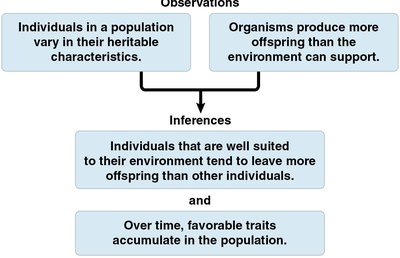
Darwin’s theory is based on two main observations and two inferences:
Observation 1: Members of a population often vary in their inherited traits.
Observation 2: All species can produce more offspring than the environment can support; many offspring fail to survive and reproduce.
Inference 1: Individuals with traits that increase survival and reproduction tend to produce more offspring.
Inference 2: Favorable traits accumulate in the population over generations.
Artificial Selection
Humans have modified species through artificial selection, breeding only individuals with desired traits. This process demonstrates the power of selection to shape organisms.
Examples include the development of diverse vegetables from wild mustard through selection for different plant parts.
Key Features of Natural Selection
Principles of Natural Selection
Natural selection acts on heritable variation within populations. It increases the frequency of adaptations favorable in a given environment and can lead to the emergence of new species if environments change.
Individuals do not evolve; populations evolve over time.
Natural selection can only act on traits that are heritable and variable.
The environment determines which traits are favorable.
Evidence for Evolution
Types of Evidence
Multiple lines of evidence support the theory of evolution:
Direct observations (e.g., evolution of drug-resistant bacteria)
Homology (anatomical and molecular similarities due to common ancestry)
The fossil record (shows extinction, origin of new groups, and changes within groups)
Biogeography (geographic distribution of species)
Direct Observations: Evolution of Drug-Resistant Bacteria
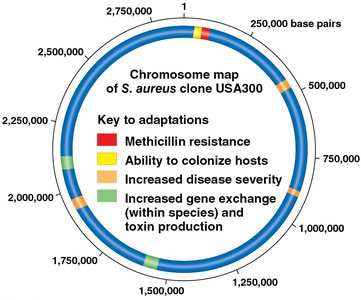
The evolution of antibiotic resistance in bacteria such as Staphylococcus aureus (MRSA) is a direct observation of natural selection. Resistance arises when bacteria with advantageous mutations survive antibiotic treatment and reproduce.
Penicillin resistance evolved by 1945; methicillin resistance by 1961.
Resistance genes can spread rapidly, especially in species with short generation times.
Homology
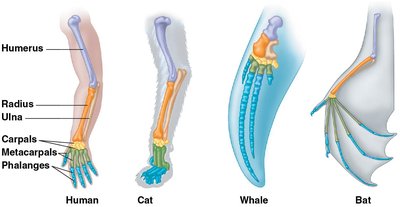
Homology refers to similarities resulting from common ancestry. Homologous structures are anatomical features that are similar in different species but may serve different functions.
Example: The forelimbs of humans, cats, whales, and bats have the same bone arrangement but different functions.
Comparative Embryology
Embryological development reveals homologies not visible in adult organisms, such as the presence of pharyngeal arches in vertebrate embryos.
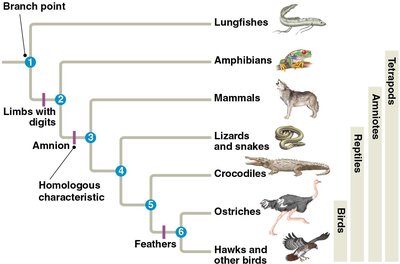
Evolutionary Trees
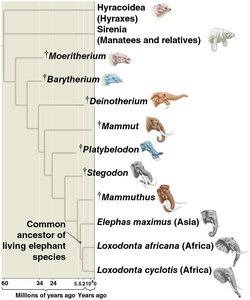
Evolutionary trees (phylogenies) depict hypotheses about relationships among species, based on anatomical and molecular data.
Convergent Evolution
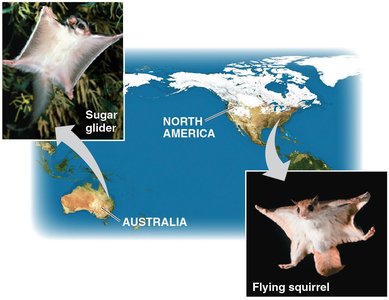
Convergent evolution occurs when distantly related organisms independently evolve similar traits as adaptations to similar environments. These traits are called analogous, not homologous.
Example: The sugar glider (Australia) and flying squirrel (North America) have similar adaptations for gliding but are not closely related.
The Fossil Record
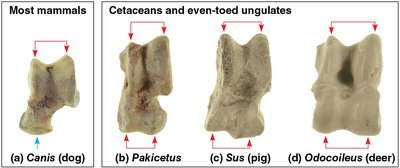
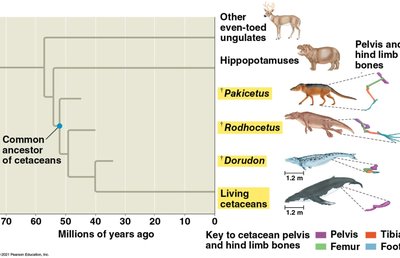
The fossil record documents the history of life, showing patterns of extinction, the origin of new groups, and evolutionary changes within groups. It provides evidence for descent with modification.
Example: Fossil evidence supports the close relationship between cetaceans (whales, dolphins) and even-toed ungulates (e.g., hippos).
Biogeography
Biogeography is the study of the geographic distribution of species. Patterns of distribution provide evidence for evolution, such as the unique species found on islands and the similarities among species on nearby continents.
Summary Table: Types of Evolutionary Evidence
Type of Evidence | Description | Example |
|---|---|---|
Direct Observation | Evolution observed in real time | Antibiotic resistance in bacteria |
Homology | Similarity due to shared ancestry | Forelimb bones in mammals |
Fossil Record | Extinct and transitional forms | Whale ancestors with hind limbs |
Biogeography | Geographic distribution of species | Unique island species |
Key Concepts and Definitions
Adaptation: Inherited trait that increases fitness in a specific environment.
Natural Selection: Differential survival and reproduction of individuals due to differences in phenotype.
Homology: Similarity due to shared ancestry.
Convergent Evolution: Independent evolution of similar features in different lineages.
Analogous Structures: Similar function, different ancestry.
Fossil Record: Chronological collection of life's remains in sedimentary rock layers.
Biogeography: Study of the distribution of species and ecosystems in geographic space and through geological time.
