 Back
(Chapter 22 Study Notes)
Study Guide - Smart Notes
 Tailored notes based on your materials, expanded with key definitions, examples, and context.
Descent with Modification: A Darwinian View of Life
Introduction to Evolution and Darwin's Contributions
Evolution is a central concept in biology, describing how species change over time through descent with modification. Charles Darwin's work revolutionized biology by providing a scientific explanation for the diversity and unity of life.
Evolution: Defined as the change in the genetic composition of a population over generations.
Descent with Modification: Darwin's phrase summarizing the process by which species arise from common ancestors and accumulate differences.
Darwin's Impact: Published The Origin of Species in 1859, introducing natural selection as the mechanism of evolution.
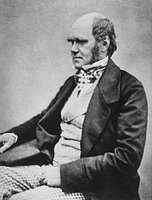
Historical Context and Prevailing Ideas
Before Darwin, most scientists believed in the fixity of species and a young Earth. Several thinkers contributed to the shift toward evolutionary thinking.
Aristotle: Proposed the scala naturae, a hierarchy of fixed species.
Linnaeus: Developed taxonomy and binomial nomenclature, viewing adaptations as evidence of divine design.
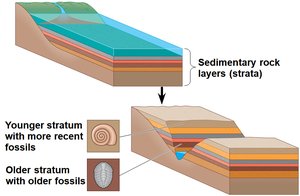
Fossils and Strata: Fossils found in sedimentary rock layers (strata) provided evidence for change over time.
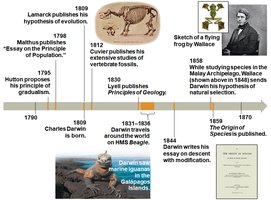
Early Theories of Evolution: Lamarck vs. Darwin
Jean-Baptiste de Lamarck proposed that organisms evolve through use and disuse of body parts and inheritance of acquired traits. Darwin, in contrast, introduced natural selection as the primary mechanism.
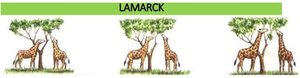
Lamarck's Theory: Traits acquired during an organism's lifetime are passed to offspring.
Darwin's Theory: Variation exists in populations; individuals with favorable traits survive and reproduce, passing those traits to the next generation.

The Voyage of the Beagle and Darwin's Observations
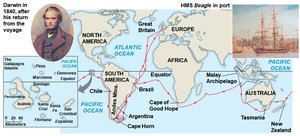
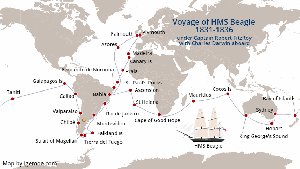
Darwin's five-year voyage on HMS Beagle provided critical evidence for his theory. He observed similarities between fossils and living species, and noted geographic variation among species.
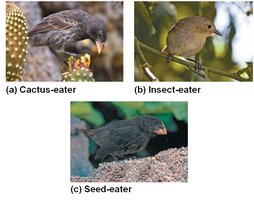
Galápagos Islands: Darwin studied finches with different beak shapes adapted to specific diets.
Geological Influences: Lyell's work suggested Earth was much older than previously thought.
Natural Selection: Mechanism of Evolution
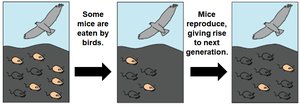
Natural selection is the process by which individuals with advantageous traits are more likely to survive and reproduce. Over generations, these traits become more common in the population.
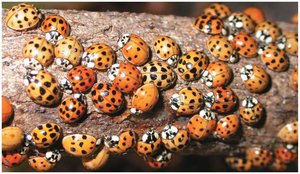
Observation 1: Variation exists in inherited traits within a population.
Observation 2: More offspring are produced than the environment can support.
Inference 1: Individuals with favorable traits leave more offspring.
Inference 2: Favorable traits accumulate in the population over generations.
Key Features and Outcomes of Natural Selection
Natural selection acts on heritable variation and leads to adaptation. Populations, not individuals, evolve over time. Environmental changes can drive the emergence of new species.
Adaptation: Traits that enhance survival and reproduction in a specific environment.
Population Evolution: Individuals do not evolve; populations do.
Mutation: Source of genetic variation; changes in DNA sequence.

Scientific Evidence for Evolution
Multiple lines of evidence support evolution, including direct observations, homology, the fossil record, and biogeography.
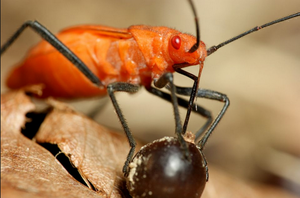
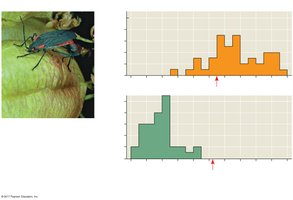
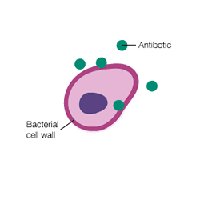
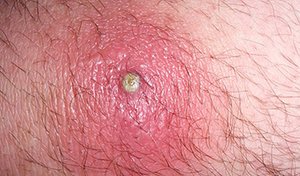
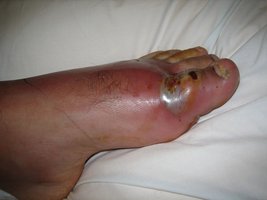
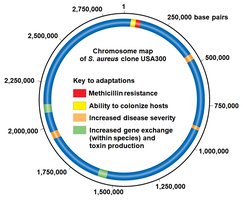
Direct Observations: Examples include changes in beak size of soapberry bugs and evolution of drug-resistant bacteria.
Homology: Similarity due to common ancestry; includes anatomical, embryological, and molecular homologies.
Fossil Record: Documents extinction, origin of new groups, and transitions.
Biogeography: Study of species distribution; explains patterns based on continental drift and island colonization.


Anatomical and Molecular Homologies
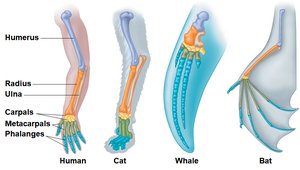
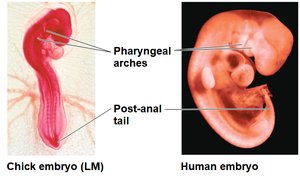
Homologous structures are anatomical features inherited from a common ancestor. Comparative embryology and molecular genetics reveal further homologies.
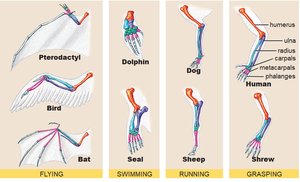
Homologous Structures: Similar anatomy, different functions (e.g., forelimbs of humans, cats, whales, bats).
Comparative Embryology: Reveals similarities in early development (e.g., post-anal tail, pharyngeal arches).
Molecular Homology: Shared genes and DNA sequences among related organisms.
Evolutionary Trees and Tree Thinking
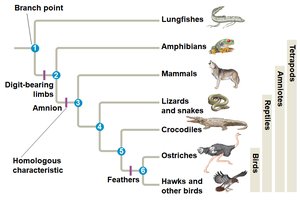
Evolutionary trees (phylogenies) illustrate relationships among species based on homologies. They can be constructed using anatomical or molecular data.
Nested Patterns: Homologies form hierarchical groups in evolutionary trees.
Phylogenetic Trees: Diagrams showing evolutionary relationships.
Convergent Evolution and Analogous Structures
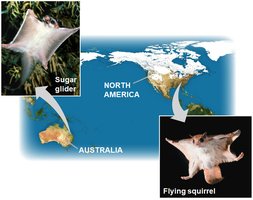
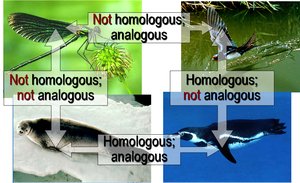
Convergent evolution occurs when unrelated species independently evolve similar traits due to similar environmental pressures. Analogous structures have similar functions but different evolutionary origins.
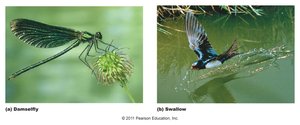
Analogous Structures: Different anatomy, similar function (e.g., wings of birds and insects).
Convergent Evolution: Does not indicate common ancestry.
The Fossil Record
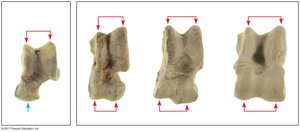
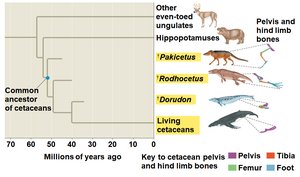
The fossil record provides evidence for the extinction of species, the origin of new groups, and evolutionary transitions.
Transitional Fossils: Document important evolutionary changes (e.g., land to sea in cetaceans).
Homologous vs. Analogous Structures
Homologous structures share ancestry but may have different functions, while analogous structures have similar functions but different origins.
Homologous: Forelimbs of mammals.
Analogous: Wings of birds and insects.
Biogeography and Endemic Species
Biogeography studies the distribution of species across the globe. Endemic species are found only in specific locations, often islands, and provide evidence for evolution through adaptation and speciation.
Pangaea: Ancient supercontinent; continental drift explains current species distributions.
Island Colonization: Mainland species colonize islands and evolve into new species.
Example: Galápagos finches evolved from mainland ancestors, adapting to different ecological niches.
*Additional info: Biogeography helps predict evolutionary patterns based on historical and environmental factors.*
