Back
Chapter 22 outline
Study Guide - Smart Notes
 Tailored notes based on your materials, expanded with key definitions, examples, and context.
Descent with Modification: A Darwinian View of Life
Overview: Endless Forms Most Beautiful
Biologists have long observed that organisms are well adapted to their environments, exhibit a rich diversity, and share a striking unity. Charles Darwin's fascination with these observations led him to propose a scientific explanation for the diversity and unity of life: evolution by natural selection. Darwin defined evolution as descent with modification, meaning that Earth's many species are descendants of ancestral species that were different from those alive today. Evolution is both a pattern (observable changes in nature) and a process (mechanisms producing diversity and unity).
Concept 22.1: The Darwinian Revolution Challenged Traditional Views
Darwin's hypothesis was influenced by the work of many earlier thinkers. Aristotle viewed species as fixed and arranged them on a ladder of increasing complexity (scala naturae). The Old Testament held that species were individually designed and perfect. Carolus Linnaeus developed a binomial system for naming and classifying species, grouping similar species into nested categories, but did not imply evolutionary kinship.
Fossils are remains or traces of organisms from the past, preserved in sedimentary rocks. Layers of rock (strata) reveal a succession of organisms throughout Earth's history.
Paleontology, developed by Georges Cuvier, showed that extinction was common and advocated catastrophism (local floods/droughts caused extinctions).
James Hutton proposed gradualism (slow, continuous geological processes), and Charles Lyell proposed uniformitarianism (geological processes unchanged over time), suggesting Earth is much older than previously thought.
Jean-Baptiste de Lamarck proposed evolution based on use and disuse and inheritance of acquired characteristics, but modern genetics disproved inheritance of acquired traits.
Concept 22.2: Descent with Modification by Natural Selection
Darwin's voyage on the HMS Beagle provided key observations. He noted that South American species were distinct from European ones, and fossils resembled modern South American species. The Galápagos Islands stimulated his interest in adaptation, as he observed finches with different beak shapes suited to their food sources. Darwin proposed that adaptations arise by natural selection, where individuals with certain inherited traits leave more offspring than others.
Natural selection is the process by which individuals with advantageous traits survive and reproduce more successfully.
Darwin's theory was influenced by Thomas Malthus's essay on population, which highlighted the potential for populations to outgrow resources.
Key points:
Natural selection acts on populations, not individuals.
Only heritable traits are affected by natural selection.
Environmental factors determine which traits are favorable.
Artificial Selection, Natural Selection, and Adaptation
Humans have modified plants and animals through artificial selection, selecting for desired traits. Darwin reasoned that natural selection could similarly modify species over time. Favorable traits accumulate, increasing the match between organisms and their environment. If environments change, natural selection may lead to new adaptations or even new species.
Concept 22.3: Scientific Evidence for Evolution
Darwin presented extensive evidence for evolution, including direct observations, the fossil record, homology, and biogeography.
Direct Observations of Evolutionary Change
Soapberry bugs in Florida evolved different beak lengths to match the size of fruits they feed on, demonstrating rapid adaptation.
Drug-resistant bacteria, such as MRSA, evolved resistance to antibiotics through natural selection acting on existing genetic variation.
Natural selection is an editing mechanism, favoring traits that increase fitness in the current environment.
Homology
Homology refers to similarities in traits due to common ancestry. For example, the forelimbs of humans, cats, whales, and bats share skeletal elements but serve different functions. Homologous structures can be seen in embryonic development and at the molecular level (e.g., universal genetic code).
Vestigial organs are remnants of structures that had important functions in ancestors.
Homologies are found in a nested pattern, reflecting the branching history of life.
Evolutionary trees summarize patterns of common descent.
Convergent evolution produces analogous traits in unrelated species due to similar environmental pressures.
The Fossil Record
The fossil record documents evolutionary patterns, showing that past organisms differed from present-day ones and that many species have become extinct. Fossils reveal the origin of major groups and evolutionary transitions, such as the evolution of cetaceans from terrestrial mammals.
Biogeography
Biogeography is the study of the geographic distribution of species. Continental drift and the breakup of Pangaea explain patterns of distribution and predict where fossils might be found. Islands often have endemic species closely related to those on the nearest mainland, reflecting colonization and subsequent adaptation.
Scientific Theory
In science, a theory is a comprehensive explanation that accounts for many observations and data. The theory of evolution by natural selection is widely accepted because its predictions withstand rigorous testing. Darwin's theory provided biology with a scientific foundation, explaining the diversity of life through natural causes.
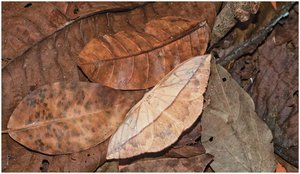
Example: Adaptation and Camouflage
Some organisms, such as certain moths, have evolved adaptations that enhance their survival. For example, a moth resembling a fallen leaf can avoid predation by blending into its environment, illustrating the power of natural selection in shaping traits that increase fitness.