 Back
Descent with Modification and Evidence for Evolution: Chapter 19 Study Notes
Study Guide - Smart Notes
 Tailored notes based on your materials, expanded with key definitions, examples, and context.
Descent with Modification and the Darwinian Revolution
Introduction to Evolutionary Theory
Evolution is a central concept in biology, explaining both the unity and diversity of life. Charles Darwin's theory of descent with modification challenged traditional views of a static, young Earth and provided a scientific framework for understanding how species change over time.
Evolution: Defined as descent with modification, referring to the process by which species change and diversify over generations.
Key Observations: The fit between organisms and their environment, the unity of life, and the diversity of life.
Pattern and Process: Evolution is both a pattern (observable changes in species) and a process (mechanisms driving these changes).
Historical Roots of Evolutionary Thought
Darwin's ideas were influenced by earlier thinkers and scientific discoveries.
Aristotle: Viewed species as fixed and arranged them on a scala naturae (scale of nature).
Carolus Linnaeus: Developed modern taxonomy and binomial nomenclature, grouping species based on shared characteristics.
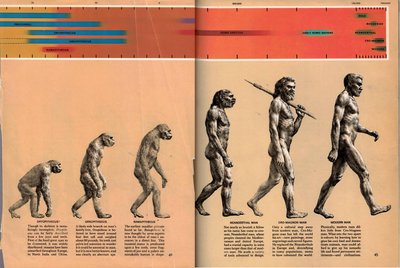
Fossils and Paleontology: Fossils in sedimentary strata revealed that species change over time. Georges Cuvier noted extinctions and differences in fossil forms.
Geology: James Hutton and Charles Lyell proposed gradual geological changes, influencing Darwin's understanding of Earth's age.
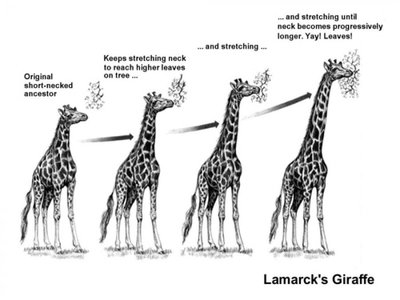
Lamarck's Hypothesis: Proposed evolution through use and disuse and inheritance of acquired traits, but lacked experimental support.
Darwin's Voyage and the Development of Natural Selection
The Voyage of the Beagle
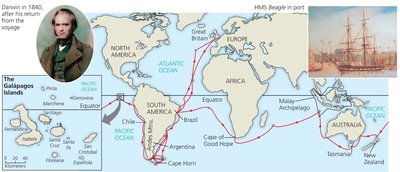
Darwin's observations during his voyage on HMS Beagle were crucial to the development of his theory.
He observed geological uplift and fossil evidence, concluding that Earth was much older than previously thought.
On the Galápagos Islands, Darwin noted that species had diverged from mainland ancestors, adapting to local environments.
Adaptation and Natural Selection
Darwin recognized adaptation as a key process in the origin of new species. He proposed natural selection as the mechanism for descent with modification.
Natural Selection: Individuals with favorable inherited traits are more likely to survive and reproduce.
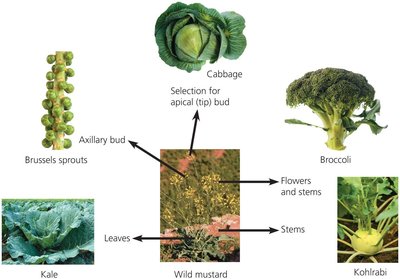
Artificial Selection: Humans selectively breed organisms for desired traits, demonstrating the power of selection.
Mechanisms and Features of Natural Selection
Observations and Inferences
Darwin's theory is based on two key observations and two inferences:
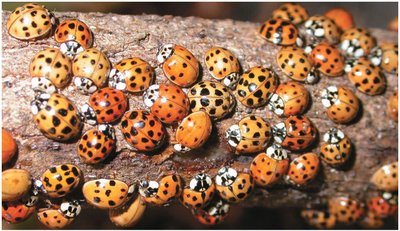
Observation 1: Members of a population vary in their inherited traits.
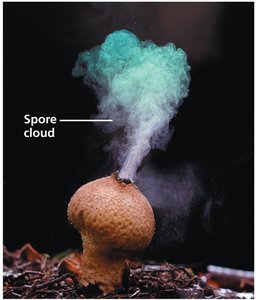
Observation 2: All species produce more offspring than the environment can support; many fail to survive.
Inference 1: Individuals with advantageous traits leave more offspring.
Inference 2: Favorable traits accumulate in the population over generations.
Key Features of Natural Selection
Natural selection acts on heritable traits that differ among individuals.
Populations evolve, not individuals.
Adaptations are context-dependent and may change with environmental shifts.

Evidence for Evolution
Direct Observations
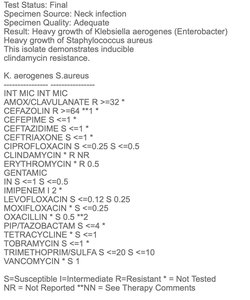
Evolutionary change has been documented in numerous scientific studies, including the evolution of drug-resistant bacteria.
MRSA: Methicillin-resistant Staphylococcus aureus evolved resistance to antibiotics through natural selection.
Natural selection selects for traits already present; it does not create new traits.

Homology
Homology refers to similarities among species due to shared ancestry.
Anatomical Homologies: Similar bone structures in mammals, despite different functions.
Comparative Embryology: Embryos of vertebrates share features such as post-anal tails and pharyngeal arches.
Vestigial Structures: Remnants of ancestral features, e.g., pelvic bones in snakes.
Molecular Homologies: Shared genes among diverse organisms.
Convergent Evolution
Convergent evolution occurs when distantly related groups independently evolve similar traits due to similar environmental pressures. These traits are analogous, not homologous.
The Fossil Record
The fossil record documents the pattern of evolution, showing changes in species over time and important transitions.
Fossils provide evidence for the origins of new groups, such as cetaceans evolving from land mammals.
Biogeography
Biogeography studies the geographic distribution of species, providing evidence for evolution.
Continental drift explains the distribution of species and predicts evolutionary events.
Islands often have endemic species closely related to mainland species, supporting the idea of adaptation and divergence.
Scientific Theory and Ongoing Research
Nature of Scientific Theories
A scientific theory explains and integrates a wide range of observations. The theory of evolution by natural selection is supported by extensive evidence and continues to stimulate new research.
The predictions of evolutionary theory are continually tested and refined.
Ongoing discoveries fill gaps and expand our understanding of evolution.
Summary Table: Types of Evidence for Evolution
Type of Evidence | Description | Example |
|---|---|---|
Direct Observation | Documented evolutionary change in living populations | Drug-resistant bacteria |
Homology | Similarity due to shared ancestry | Mammalian forelimbs |
Fossil Record | Pattern of evolution and transitions | Whale evolution |
Biogeography | Distribution of species across geography | Galápagos finches |
Examples of Adaptation
Camouflage and Mimicry
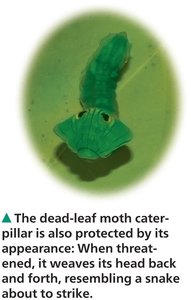
Adaptations such as camouflage help organisms survive by blending into their environment.
Dead-leaf moths and caterpillars use appearance to avoid predation.

Key Equations and Concepts
Population Genetics Equation
The Hardy-Weinberg equation is used to study genetic variation in populations:
Where p and q represent the frequencies of two alleles in a population.
Additional info:
Some images and examples were inferred to clarify adaptation and natural selection.
Tables and equations were added for completeness and exam preparation.
