 Back
Descent with Modification and Evolution of Populations: A Darwinian View of Life
Study Guide - Smart Notes
 Tailored notes based on your materials, expanded with key definitions, examples, and context.
Descent with Modification: A Darwinian View of Life
Three Key Observations About Life
Biologists have long observed that organisms are well suited for their environments, share many characteristics, and display remarkable diversity. These observations form the foundation for understanding evolution.
Adaptation: Organisms possess traits that enhance survival and reproduction in their specific environments.
Unity of Life: Despite differences, all living things share fundamental characteristics, such as the three pairs of legs, bulging eyes, triangular head, and flexible neck in Mantodea (praying mantises).
Diversity of Life: There are many species, even within a single group (e.g., 2,300 species of Mantodea), each adapted to different ecological niches.

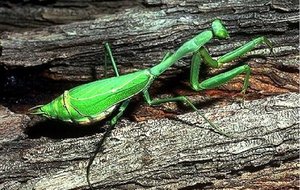
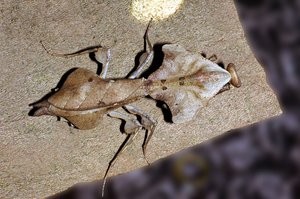
Endless Forms Most Beautiful
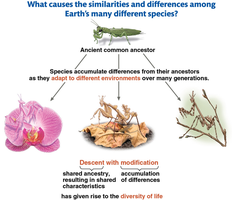
Mantises exemplify the adaptation, unity, and diversity of life. Evolution, summarized by Darwin as "descent with modification," explains how species accumulate differences from their ancestors as they adapt to different environments over time.
Evolution as Pattern and Process
Pattern: Scientific data reveal that life has evolved over time.
Process: Mechanisms such as natural selection drive the changes observed in the pattern of evolution.
The Darwinian Revolution
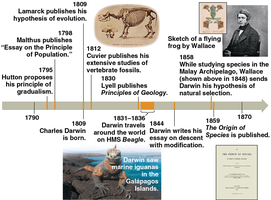
Before Darwin, most believed species were unchanging and Earth was young. Darwin’s publication of On The Origin of Species in 1859 marked the beginning of evolutionary biology. His ideas were influenced by earlier thinkers and his own observations during the voyage of the HMS Beagle.
Scala Naturae and Classification of Species
Aristotle: Proposed a fixed scale of increasing complexity (scala naturae).
Carolus Linnaeus: Developed a nested classification system and binomial nomenclature (e.g., Homo sapiens).
Early Ideas About Evolution
Jean-Baptiste de Lamarck: Proposed that traits acquired during an organism’s life could be inherited (use and disuse, inheritance of acquired characteristics). These ideas are not supported by modern evidence.
Paleontology and Geology
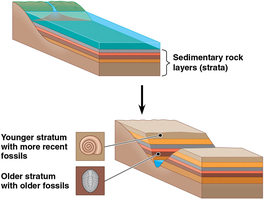
Georges Cuvier: Founded paleontology, observed that fossils in older strata differ from those in newer layers, and proposed that catastrophic events caused extinctions.
Charles Lyell: Advocated for uniformitarianism—the idea that geological processes operate at the same rate now as in the past, implying an ancient Earth.
Darwin’s Research: The Voyage of the Beagle
Darwin’s five-year voyage on the HMS Beagle provided critical observations:
Fossils resembled living species in the same region.
Earthquakes and geological uplift suggested gradual change over time.
On the Galápagos Islands, Darwin observed unique species that resembled those on the South American mainland, leading him to hypothesize colonization and diversification.
Darwin’s Focus on Adaptation
Adaptations: Inherited traits that enhance survival and reproduction in specific environments.
Darwin proposed that new species arise from ancestral forms through the gradual accumulation of adaptations.
Natural Selection
Natural selection is the process by which individuals with advantageous inherited traits survive and reproduce more successfully.
Alfred Russel Wallace independently conceived a similar theory; both presented their ideas in 1858.
Descent with Modification
All organisms are related by descent from a common ancestor. Over time, populations adapt to their environments, leading to the diversity of life. Darwin visualized this as a branching tree, with living species at the tips and extinct groups as branches that ended.
Artificial Selection, Natural Selection, and Adaptation
Artificial selection: Humans breed plants and animals for desired traits, demonstrating how selection can cause significant change.
Natural selection: Darwin observed that populations vary in inherited traits and produce more offspring than the environment can support, leading to competition and differential survival.
Key Features of Natural Selection
Only heritable traits are affected by natural selection.
Populations, not individuals, evolve over time.
Natural selection increases the frequency of favorable adaptations.
If the environment changes, new adaptations may arise, potentially leading to new species.
Evidence for Evolution
Multiple lines of evidence support evolution:
Direct observations: Examples include natural selection in response to environmental changes and the evolution of drug-resistant bacteria.
Homology: Similarities due to common ancestry, such as homologous structures (e.g., mammalian forelimbs) and vestigial structures (e.g., pelvic bones in snakes).
Fossil record: Documents transitions and relationships among groups.
Biogeography: Geographic distribution of species reflects evolutionary history and continental drift.
The Evolution of Populations
Populations as Units of Evolution
Natural selection acts on individuals, but only populations evolve. Evolution is defined as a change in allele frequencies in a population over generations (microevolution).
Example: Medium ground finches on Daphne Major evolved larger beaks in response to seed shortages.
Mechanisms of Evolution
Natural selection: Adaptation to the environment.
Genetic drift: Random changes in allele frequencies due to chance events.
Gene flow: Movement of alleles between populations.
Genetic Variation
Genetic variation: Differences in genes or DNA sequences among individuals; essential for evolution by natural selection.
Phenotype: The observable traits, influenced by genotype and environment.
Variation can be discrete (single gene, e.g., flower color) or quantitative (multiple genes, e.g., height).
Sources of Genetic Variation
Mutations: Changes in DNA sequence; can be neutral, harmful, or beneficial.
Rapid reproduction: Increases the rate at which mutations accumulate, especially in prokaryotes and viruses.
Sexual reproduction: Shuffles alleles through crossing over, independent assortment, and fertilization.
The Hardy-Weinberg Principle
The Hardy-Weinberg equation provides a mathematical model for a non-evolving population:
Allele frequencies:
Genotype frequencies:
If observed frequencies differ from expected, the population may be evolving.
Conditions for Hardy-Weinberg Equilibrium
No mutations
Random mating
No natural selection
Extremely large population size
No gene flow
Deviation from these conditions leads to evolution.
Mechanisms That Alter Allele Frequencies
Natural selection: Differential survival and reproduction favor certain alleles.
Genetic drift: Random fluctuations, especially in small populations (founder effect, bottleneck effect).
Gene flow: Movement of alleles between populations reduces differences among populations.
Types of Natural Selection
Directional selection: Favors one extreme phenotype.
Disruptive selection: Favors both extreme phenotypes.
Stabilizing selection: Favors intermediate phenotypes.
Sexual Selection
Sexual selection: Individuals with certain traits are more likely to obtain mates.
Sexual dimorphism: Differences in secondary sexual characteristics between sexes.
Intrasexual selection: Competition among one sex for mates.
Intersexual selection: Mate choice, often by females, based on traits indicating genetic quality.
Limits of Natural Selection
Selection can only act on existing variation.
Evolution is constrained by ancestry and history.
Adaptations are often compromises.
Chance events and environmental changes interact with natural selection.
