 Back
Descent with Modification and the Evidence for Evolution
Study Guide - Smart Notes
 Tailored notes based on your materials, expanded with key definitions, examples, and context.
Descent with Modification and the Evidence for Evolution
Introduction to Evolutionary Theory
Evolution is a central concept in biology, explaining both the unity and diversity of life. The theory of evolution, first articulated by Charles Darwin, describes how species change over time through descent with modification. This process is driven by natural selection, which acts on heritable variation within populations.
Key Observations Leading to Evolutionary Theory
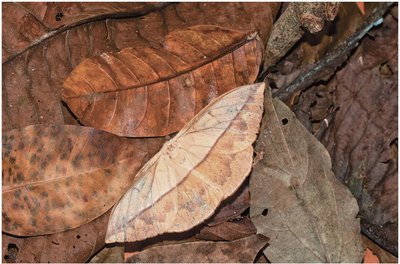
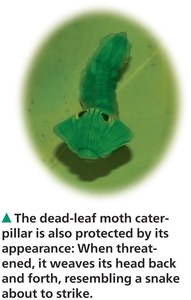
Fit between organisms and their environment: Organisms are often well-adapted to their surroundings, which enhances their survival and reproduction.
Unity of life: All living things share certain fundamental characteristics, indicating common ancestry.
Diversity of life: There is a vast array of different species, each adapted to its own environment.
Historical Roots of Evolutionary Theory
Aristotle and Scala Naturae: Aristotle viewed species as fixed and arranged them on a scale of increasing complexity.
Linnaeus and Taxonomy: Carolus Linnaeus developed a nested classification system and the binomial nomenclature for naming species (e.g., Homo sapiens).
Fossils and Paleontology: Georges Cuvier studied fossils and noted that older strata contained more dissimilar forms, suggesting extinction but not evolution.
Geology: James Hutton and Charles Lyell proposed that geological changes occur gradually, influencing Darwin's thinking about the age of the Earth.
Lamarck’s Hypothesis of Evolution
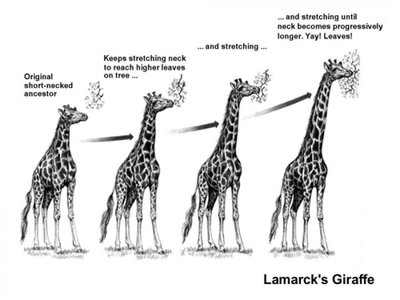
Jean-Baptiste de Lamarck proposed that species evolve through the use and disuse of body parts and the inheritance of acquired characteristics. However, this mechanism was not supported by experimental evidence.
Darwin’s Voyage and the Development of Evolutionary Theory
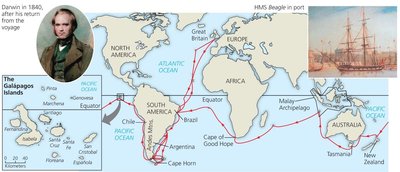
The Voyage of the Beagle: Darwin observed unique species and geological phenomena during his travels, especially in the Galápagos Islands. He hypothesized that species from the mainland colonized the islands and diverged.
Adaptation: Darwin perceived adaptation and the origin of new species as closely related processes. The Galápagos finches are a classic example of adaptive radiation.
Natural Selection: Darwin described natural selection as the mechanism of descent with modification, where individuals with favorable traits are more likely to survive and reproduce.
Descent with Modification
Darwin used the phrase "descent with modification" to summarize his perception of the unity and diversity of life. He envisioned the history of life as a tree, with a common trunk representing shared ancestry and branches representing diversity among species.
Artificial Selection, Natural Selection, and Adaptation
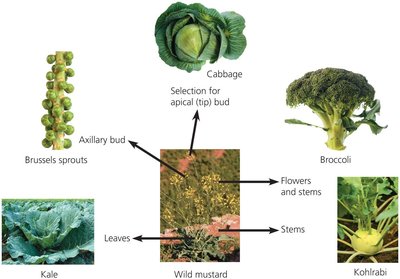
Artificial Selection: Humans modify other species through selective breeding for desired traits.
Natural Selection: In nature, individuals with advantageous traits are more likely to survive and reproduce, leading to the accumulation of favorable traits in the population.
Key Observations:
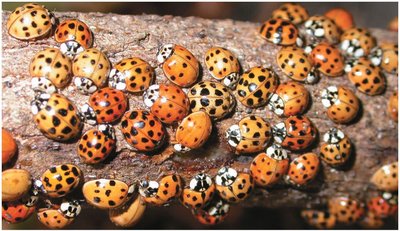
Members of a population vary in their inherited traits.
All species can produce more offspring than the environment can support.
Key Inferences:
Individuals with favorable traits leave more offspring.
Favorable traits accumulate in the population over generations.
Key Features of Natural Selection
Individuals with certain heritable traits survive and reproduce at higher rates.
Natural selection increases the frequency of adaptations favorable in a given environment.
If the environment changes, natural selection may result in adaptation to new conditions, sometimes giving rise to new species.
Populations, not individuals, evolve over time.
Natural selection acts only on heritable traits.

Evidence for Evolution
Evolution is supported by an overwhelming amount of scientific evidence from multiple sources:
Direct Observations: Evolutionary change has been documented in thousands of scientific studies.
Homology: Similarities among species due to common ancestry, including anatomical, embryological, and molecular homologies.
The Fossil Record: Fossils document the pattern of evolution and show transitions between major groups.
Biogeography: The geographic distribution of species provides evidence for evolution, especially in island endemics.
Direct Observations: Evolution of Drug-Resistant Bacteria
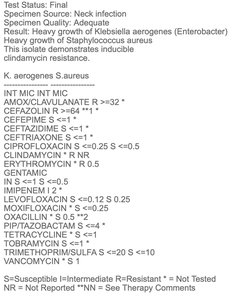
Staphylococcus aureus: Methicillin-resistant S. aureus (MRSA) strains are dangerous pathogens that have evolved resistance to multiple antibiotics.
Mechanism: MRSA uses a different protein for cell wall synthesis, allowing it to survive antibiotic treatment.
Natural Selection: Natural selection does not create new traits but selects for traits already present in the population.

Homology
Anatomical Homologies: Structures like the forelimbs of mammals show similar arrangements of bones, reflecting common ancestry.
Comparative Embryology: Embryos of vertebrates share features such as a post-anal tail and pharyngeal arches.
Vestigial Structures: Remnants of features that served important functions in ancestors but are no longer useful.
Molecular Homologies: Shared genes inherited from a common ancestor, found across diverse organisms.
Convergent Evolution
Definition: The evolution of similar features in distantly related groups due to adaptation to similar environments.
Analogous Traits: Traits that are similar due to convergent evolution, not common ancestry.
The Fossil Record
Documentation: Fossils provide evidence that species have changed through time and many have gone extinct.
Transitions: Fossils show important transitions, such as the evolution of cetaceans from land-dwelling ancestors.
Biogeography
Continental Drift: Earth's continents were once united in Pangaea and have since separated, affecting the distribution of species.
Island Endemics: Islands often have unique species closely related to those on the nearest mainland, supporting the idea of colonization and adaptation.
Scientific Theory and Evolution
Theory: In science, a theory is a well-supported explanation that integrates a variety of phenomena and is supported by continual observation and experimentation.
Evolution: The theory of evolution by natural selection is supported by direct evidence and continues to stimulate new research.
Summary Table: Types of Evidence for Evolution
Type of Evidence | Description | Example |
|---|---|---|
Direct Observation | Documented evolutionary change in populations | Drug-resistant bacteria |
Homology | Similarity due to common ancestry | Mammalian forelimbs |
Fossil Record | Pattern of evolution and transitions | Whale evolution |
Biogeography | Distribution of species | Galápagos finches |
Key Terms and Definitions
Evolution: Change in the genetic composition of a population over generations.
Natural Selection: Process by which individuals with favorable traits are more likely to survive and reproduce.
Homology: Similarity due to shared ancestry.
Convergent Evolution: Independent evolution of similar traits in different lineages.
Artificial Selection: Human-driven selection of traits in other species.
Adaptation: Trait that increases an organism's fitness in its environment.
----------------------------------------
