 Back
BackDescent with Modification: Evolution and the Diversity of Life
Study Guide - Smart Notes
 Tailored notes based on your materials, expanded with key definitions, examples, and context.
Descent with Modification
Introduction to Evolutionary Biology
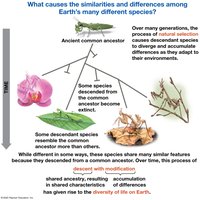
Evolutionary biology seeks to explain the similarities and differences among Earth's many species. The concept of descent with modification describes how species diverge and accumulate differences as they adapt to their environments through natural selection. This process leads to both the unity and diversity of life.
Related species share inherited characteristics from a common ancestor.
Species diverge through adaptation, sometimes resulting in extinction.
Evolution is both a pattern (observable in data) and a process (mechanisms causing change).
The Darwinian Revolution
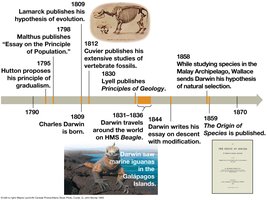
Charles Darwin developed a scientific explanation for the diversity of life, culminating in his publication of The Origin of Species in 1859. His ideas were influenced by earlier scientists and his travels aboard the HMS Beagle.
Darwin's hypothesis triggered the era of evolutionary biology.
His ideas developed gradually, influenced by the intellectual context of his time.
Historical Perspectives on Species and Change
Scala Naturae and Classification
Aristotle viewed species as fixed and arranged them on a scale of increasing complexity (scala naturae). Linnaeus developed the binomial naming system and a nested classification, grouping species based on similarities.
Linnaeus believed similarities were due to creation, not evolution.
Darwin later argued for classification based on evolutionary relationships.
Fossils and the Study of Change
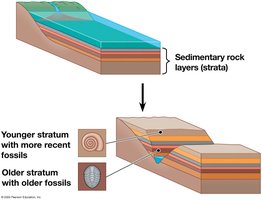
Fossils, found in sedimentary rock strata, provide clues to past life and document changes over time. Paleontology, developed by Georges Cuvier, revealed that extinctions were common and that strata contained different fossils.
Strata form as new layers of sediment compress older ones.
Older strata contain more dissimilar fossils compared to current life forms.
Geological Influences
James Hutton and Charles Lyell proposed that slow, gradual geological processes shape Earth's features. Their views influenced Darwin's realization that Earth is much older than previously thought, allowing time for biological change.
Lamarck’s Hypothesis of Evolution
Jean-Baptiste de Lamarck proposed that species change through use and disuse of body parts and the inheritance of acquired characteristics. Although later refuted, his was the first testable mechanism for evolution.
Traits acquired during an organism's life cannot be inherited.
Darwin’s Research and the Voyage of the Beagle
Darwin’s Observations
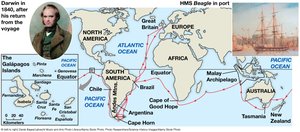
During his voyage on the HMS Beagle, Darwin collected and observed thousands of plants and animals. He noted that fossils in South America resembled living organisms there more than those in Europe, and that island species diverged from mainland ancestors.
Adaptation and Natural Selection
Darwin observed adaptations—heritable traits that enhance survival and reproduction. He hypothesized that new species arise from ancestral forms through gradual accumulation of adaptations.
Natural selection is the mechanism of descent with modification.
Individuals with favorable traits are more likely to survive and reproduce.
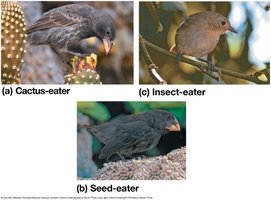
Key Features of Natural Selection
Principles of Natural Selection
Natural selection increases the frequency of adaptations favorable in a given environment. If the environment changes, new adaptations may arise, sometimes leading to new species.
Individuals do not evolve; populations evolve over time.
Natural selection acts only on heritable traits.
Adaptive traits vary by environment and time.
Evidence for Evolution
Direct Observations
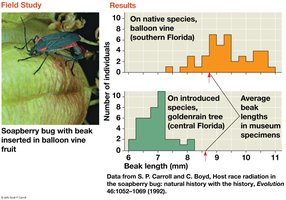
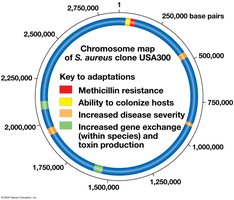
Evolutionary change has been documented in thousands of studies. Examples include natural selection in response to introduced species and the evolution of drug-resistant bacteria.
Homology
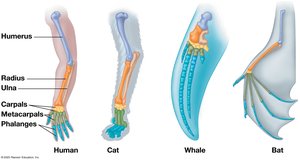
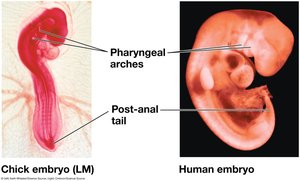
Homology refers to similarity resulting from common ancestry. Anatomical homologies, such as mammalian forelimbs, and molecular homologies, such as shared genes, provide evidence for evolution.
Homologous structures are variations on a structural theme present in a common ancestor.
Vestigial structures are remnants of ancestral features.
Convergent Evolution
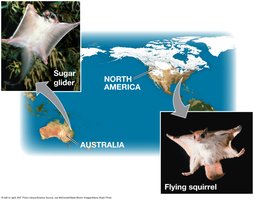
Convergent evolution is the independent evolution of similar features in different lineages. Analogous features have similar function but not common ancestry.
The Fossil Record
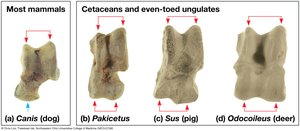
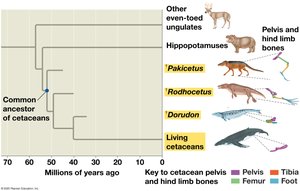
The fossil record documents the pattern of evolution and species change through time. Fossils help determine the origins of new groups and document important transitions, such as the evolution of cetaceans from land mammals.
Biogeography
Biogeography is the study of the geographic distribution of species. Continental drift and island endemism provide evidence for evolution, as species adapt to new environments and diverge from their ancestors.
Theoretical Foundations of Evolution
Scientific Theory
The theory of evolution by natural selection is supported by extensive evidence and integrates diverse areas of biological study. It continues to stimulate new research and understanding.
Summary Table: Types of Evidence for Evolution
Type of Evidence | Description | Example |
|---|---|---|
Direct Observation | Evolutionary change observed in real time | Soapberry bug beak length, drug-resistant bacteria |
Homology | Similarity due to common ancestry | Mammalian forelimbs, vertebrate embryos |
Fossil Record | Documented changes in species over time | Transition from land to sea in cetaceans |
Biogeography | Distribution of species across geographic regions | Island endemics, continental drift |
Key Equations and Concepts
Natural Selection and Population Genetics
Evolution can be defined as a change in the genetic composition of a population across generations. The Hardy-Weinberg equation is used to study genetic variation:
where p and q are the frequencies of two alleles in a population.
Summary of Observations and Inferences
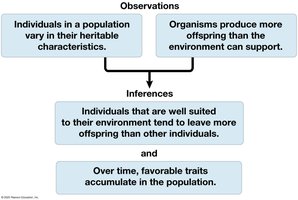
Individuals vary in their heritable characteristics.
Organisms produce more offspring than the environment can support.
Individuals well suited to their environment leave more offspring.
Favorable traits accumulate in the population over time.
Additional info: These notes expand on the original lecture slides by providing definitions, examples, and context for each concept, ensuring a comprehensive and self-contained study guide for exam preparation.
