 Back
Descent with Modification, Evolution of Populations, and Speciation: Study Notes
Study Guide - Smart Notes
 Tailored notes based on your materials, expanded with key definitions, examples, and context.
Descent with Modification: A Darwinian View of Life
Introduction to Evolutionary Theory
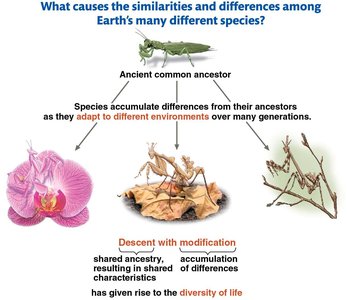
Evolution is the central theme of biology, explaining both the unity and diversity of life. Charles Darwin's theory of evolution by natural selection revolutionized our understanding of how species change over time. The concept of "descent with modification" describes how species accumulate differences from their ancestors as they adapt to different environments.
Evolution: The process by which species accumulate differences from their ancestors over generations.
Descent with modification: Darwin's phrase summarizing evolution, emphasizing both shared ancestry and the accumulation of differences.
Pattern and process: Evolution is both a pattern (observable changes in life forms) and a process (mechanisms causing these changes).
Historical Context and Darwin's Contribution
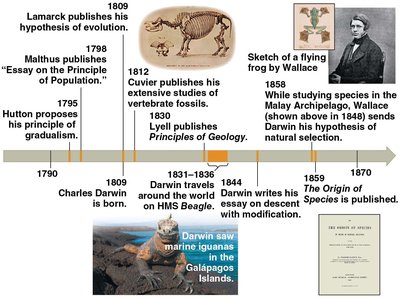
Before Darwin, most believed species were unchanging and Earth was young. Influences on Darwin included the study of fossils, geological theories, and earlier evolutionary hypotheses.
Carolus Linnaeus: Developed a classification system and binomial nomenclature.
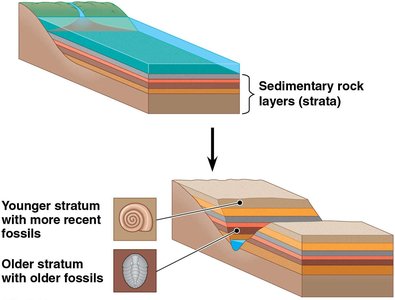
Fossils and strata: Fossils found in sedimentary rock layers (strata) provided evidence for change over time.
Paleontology: Founded by Georges Cuvier, who noted that older strata contain fossils less similar to current organisms.
Lamarck: Proposed evolution by use and disuse and inheritance of acquired characteristics (not supported by evidence).
Darwin's Voyage and Observations
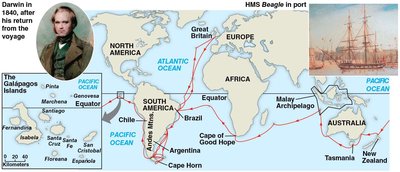
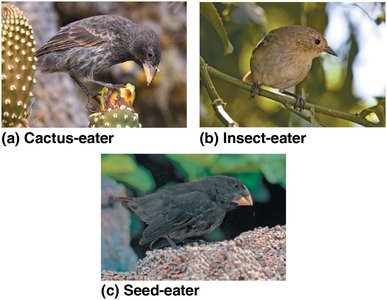
Darwin's journey on the HMS Beagle provided key observations of adaptation and diversity, especially in the Galápagos Islands.
Adaptations: Inherited traits that enhance survival and reproduction in specific environments.
Natural selection: The process by which individuals with advantageous traits survive and reproduce more successfully.
Key Features of Natural Selection
Individuals with certain heritable traits survive and reproduce at higher rates.
Natural selection increases the frequency of favorable adaptations.
If the environment changes, natural selection may result in adaptation to new conditions, potentially leading to new species.
Populations, not individuals, evolve over time.
Evidence for Evolution
Multiple lines of evidence support the theory of evolution:
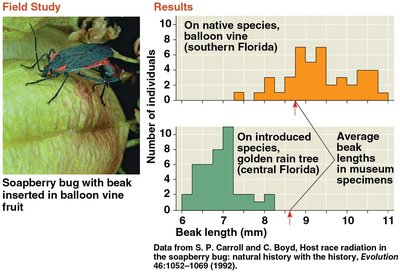
Direct observations: Examples include natural selection in response to introduced species and the evolution of drug-resistant bacteria.
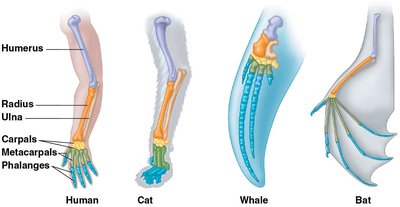
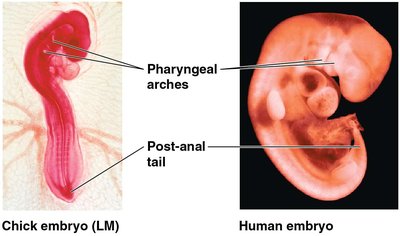
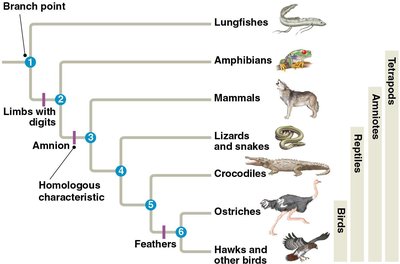
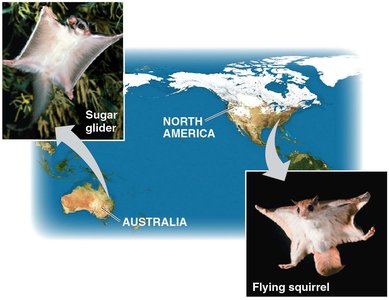
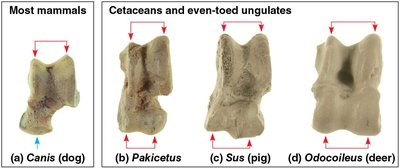
Homology: Similarity resulting from common ancestry, including anatomical, embryological, and molecular homologies.
The fossil record: Documents the extinction, origin, and change of species over time.
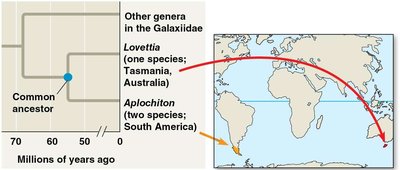
Biogeography: The geographic distribution of species supports evolutionary relationships.
The Evolution of Populations
Genetic Variation and Its Sources
Genetic variation is essential for evolution. It arises from mutations, gene duplication, and sexual reproduction.
Genetic variation: Differences in genes or DNA sequences among individuals.
Phenotype: The observable traits of an organism, influenced by genotype and environment.
Mutation: A change in the nucleotide sequence of DNA, which can introduce new alleles.
Gene pool: All copies of every allele at every locus in all members of a population.
Hardy-Weinberg Equilibrium
The Hardy-Weinberg equation describes the genetic makeup of a non-evolving population. It provides a baseline to detect evolutionary change.
Equation:
Allele frequencies:
Conditions for equilibrium: No mutations, random mating, no natural selection, extremely large population size, no gene flow.
Mechanisms of Evolutionary Change
Natural selection: Differential survival and reproduction of individuals due to differences in phenotype.
Genetic drift: Random changes in allele frequencies, especially significant in small populations (e.g., founder effect, bottleneck effect).
Gene flow: Movement of alleles between populations, which can reduce differences between populations.
Modes of Selection
Directional selection: Favors individuals at one extreme of the phenotypic range.
Disruptive selection: Favors individuals at both extremes of the phenotypic range.
Stabilizing selection: Favors intermediate variants and acts against extreme phenotypes.
The Origin of Species
Species Concepts and Reproductive Isolation
Speciation is the process by which one species splits into two or more species. The biological species concept defines a species as a group of populations whose members can interbreed and produce viable, fertile offspring.
Reproductive isolation: Biological barriers that prevent members of different species from interbreeding.
Prezygotic barriers: Prevent fertilization (e.g., habitat, temporal, behavioral, mechanical, gametic isolation).
Postzygotic barriers: Prevent hybrid offspring from developing into viable, fertile adults (e.g., reduced hybrid viability, reduced hybrid fertility, hybrid breakdown).
Modes of Speciation
Allopatric speciation: Occurs when populations are geographically separated, leading to divergence.
Sympatric speciation: Occurs without geographic separation, often through polyploidy, sexual selection, or habitat differentiation.
Gradualism vs. Punctuated Equilibrium
Gradualism: Species diverge slowly and steadily over time.
Punctuated equilibrium: Species remain unchanged for long periods, punctuated by brief periods of rapid change.
Microevolution vs. Macroevolution
Microevolution: Changes in allele frequencies within a population over time.
Macroevolution: Broad patterns of evolutionary change above the species level, including speciation and extinction events.
