 Back
Descent with Modification, Evolutionary Theory, and Phylogeny
Study Guide - Smart Notes
 Tailored notes based on your materials, expanded with key definitions, examples, and context.
Descent with Modification and the Foundations of Evolutionary Theory
Historical Context and Early Theories
The development of evolutionary theory was influenced by several early scientists and their observations of the natural world. Their work laid the groundwork for Darwin's ideas about species change over time.
Paleontology: The study of fossils, largely developed by Georges Cuvier, revealed that different layers (strata) of rock contained different fossils, suggesting changes in life forms over time.
Catastrophism: Cuvier proposed that boundaries between strata were caused by catastrophic events that led to mass extinctions.
Uniformitarianism: James Hutton and Charles Lyell argued that Earth's features resulted from slow, continuous processes, influencing Darwin's thinking about gradual biological change.
Lamarckism: Jean-Baptiste Lamarck hypothesized that species evolve through use and disuse of body parts and the inheritance of acquired characteristics, though this mechanism was later disproven.

Darwin’s Research and the Voyage of the Beagle
Charles Darwin was inspired by his early interest in nature, his education, and the influence of naturalists like Alexander von Humboldt. His five-year voyage on the HMS Beagle (1831–1836) was pivotal in shaping his ideas about evolution.
Darwin collected specimens and observed that fossils resembled living species from the same region, and living species resembled those from nearby regions.
He experienced geological events, such as earthquakes, and noted the uplift of rocks, supporting Lyell’s ideas of gradual change.
His observations in the Galápagos Islands led him to hypothesize that species from South America colonized the islands and diversified.

Adaptation and Natural Selection
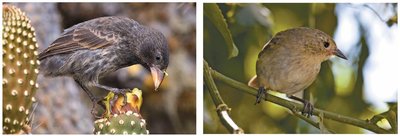
Darwin’s observations led him to focus on adaptation—the process by which species become better suited to their environment. He concluded that adaptation and the origin of new species are closely related, as seen in the diversification of Galápagos finches.
Natural Selection: The process in which individuals with favorable inherited traits are more likely to survive and reproduce.
Darwin and Alfred Russel Wallace independently conceived the theory of natural selection.
Darwin described evolution as descent with modification, emphasizing the branching pattern of life from common ancestors.
Evidence for Evolution
Types of Evidence
Multiple lines of evidence support the theory of evolution:
Homology: Similarities in structure due to shared ancestry.
Fossil Record: Documents the pattern of evolution and reveals extinct species.
Biogeography: The geographic distribution of species provides evidence for evolution.
Direct Observations: Examples include changes in beak size in Galápagos finches.
Homology and Comparative Anatomy
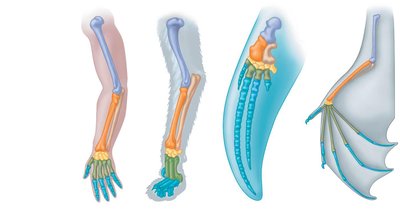
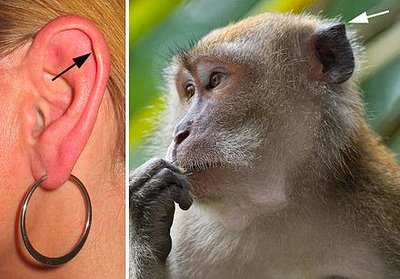
Homologous structures are anatomical features that are similar due to shared ancestry, even if their functions differ. For example, the forelimbs of humans, cats, whales, and bats share the same basic bone structure.
Comparative Embryology
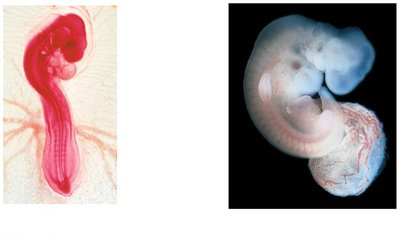
Embryological development reveals homologies not visible in adult organisms. All vertebrate embryos, for example, have a post-anal tail and pharyngeal arches.
Vestigial Structures and Molecular Homologies
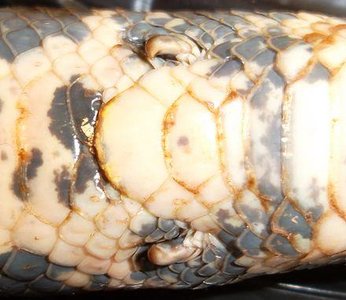
Vestigial structures are remnants of features that served important functions in ancestors. Molecular homologies include genes shared among organisms due to common ancestry.
Analogies and Convergent Evolution
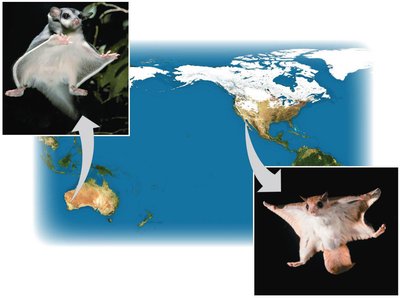
Convergent evolution is the independent evolution of similar features in distantly related groups, resulting in analogous structures that serve similar functions but do not indicate common ancestry.
Phylogeny and Systematics
Phylogeny and Evolutionary Trees
Phylogeny is the evolutionary history of a species or group. Systematics is the discipline that classifies organisms and determines their evolutionary relationships, often represented as branching phylogenetic trees.
Phylogenetic trees are hypotheses about evolutionary relationships.
Homologies form nested patterns in evolutionary trees.

Taxonomy and Binomial Nomenclature
Taxonomy is the science of classifying and naming organisms. Carolus Linnaeus developed the system of binomial nomenclature, where each species is given a two-part Latin name (Genus species).
Example: Homo sapiens (humans)
Hierarchical classification groups species into increasingly inclusive categories: Domain, Kingdom, Phylum, Class, Order, Family, Genus, Species.

Cladistics and Group Types
Cladistics is a method for building phylogenetic trees based on common descent. Groups are classified as:
Monophyletic: Includes an ancestor and all its descendants (a clade).
Paraphyletic: Includes an ancestor and some, but not all, descendants.
Polyphyletic: Includes distantly related species but not their most recent common ancestor.
Shared Ancestral and Derived Characters
Characters used in cladistics are classified as:
Shared ancestral character: Originated in an ancestor of the group.
Shared derived character: An evolutionary novelty unique to a particular clade.
Taxon | Hair | Amnion | Four walking legs | Hinged jaws | Vertebral column |
|---|---|---|---|---|---|
Lancelet (outgroup) | 0 | 0 | 0 | 0 | 0 |
Lamprey | 0 | 0 | 0 | 0 | 1 |
Bass | 0 | 0 | 0 | 1 | 1 |
Frog | 0 | 0 | 1 | 1 | 1 |
Turtle | 0 | 1 | 1 | 1 | 1 |
Leopard | 1 | 1 | 1 | 1 | 1 |
Outgroups and Ingroup Comparison
An outgroup is a species or group closely related to the ingroup (the group being studied) but diverged before the ingroup. Comparing outgroups and ingroups helps distinguish ancestral from derived characters.
Molecular Homologies and Tree Construction
Systematists use morphological and molecular data to infer phylogenies. Homology is similarity due to shared ancestry, while analogy is similarity due to convergent evolution. Computer programs analyze DNA sequences to construct trees.
Maximum Parsimony and Maximum Likelihood
These principles help identify the best phylogenetic tree:
Maximum Parsimony: The simplest explanation (fewest evolutionary changes) is preferred.
Maximum Likelihood: The tree most likely to have produced the observed data, given specific models of DNA change.
Phylogenetic Bracketing
Phylogenetic bracketing allows scientists to infer characteristics of ancestors based on features shared by descendants. For example, birds and crocodiles share traits such as four-chambered hearts and nest building, suggesting these traits were present in their common ancestor and in dinosaurs.
Summary Table: Key Terms and Concepts
Term | Definition |
|---|---|
Homology | Similarity due to shared ancestry |
Analogy | Similarity due to convergent evolution |
Clade | A group consisting of an ancestor and all its descendants |
Monophyletic | Group containing ancestor and all descendants |
Paraphyletic | Group containing ancestor and some descendants |
Polyphyletic | Group containing distantly related species, not their ancestor |
Outgroup | Species closely related to, but not part of, the ingroup |
Shared ancestral character | Trait present in ancestor of the group |
Shared derived character | Trait unique to a particular clade |
Additional info: This guide integrates foundational concepts from Chapters 22 (Descent with Modification: A Darwinian View of Life) and 26 (Phylogeny and the Tree of Life) of a General Biology curriculum, providing a comprehensive overview of evolutionary theory, evidence, and modern phylogenetic methods.
