 Back
BackDescent with Modification: The Foundations of Evolutionary Biology (Chapter 19)
Study Guide - Smart Notes
 Tailored notes based on your materials, expanded with key definitions, examples, and context.
Descent with Modification: The Foundations of Evolutionary Biology
Introduction to Evolutionary Theory
Evolutionary biology explores how populations change over time through inherited characteristics. The concept of descent with modification forms the basis of modern evolutionary thought, emphasizing the gradual accumulation of changes in populations across generations.
Key Concepts in Evolution
Evolution: Defined as descent with modification (Darwin), or more specifically, as the change in the genetic composition of a population from generation to generation.
Adaptation: Inherited characteristics that enhance an organism’s ability to survive and reproduce in specific environments.
Natural Selection: The mechanism by which individuals with favorable adaptations are more likely to survive and reproduce, passing those traits to future generations.
Evolutionary Fitness: The relative ability of an individual to survive and produce offspring in its environment.
Historical Perspectives on Evolution
Early ideas about the diversity of life and its origins laid the groundwork for evolutionary theory.
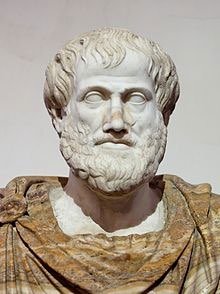
Aristotle (384–322 BCE): Proposed that species are fixed and unchanging, arranging life forms on a scala naturae (ladder of increasing complexity).
Old Testament (Creationism): Suggested that Earth is approximately 6,000 years old and that species were individually designed for specific purposes.
Carolus Linnaeus (1707–1778): Founded taxonomy and developed binomial nomenclature (genus, species). Classification was based on anatomy and morphology.
Contributions from Geology and Paleontology
Georges Cuvier (1769–1832): Paleontologist who studied fossils and noted that deeper strata contained very different fossils from current life. He opposed evolution, attributing changes to catastrophic events followed by repopulation.
James Hutton (1726–1797): Proposed that geological change results from slow, gradual, and continuous processes.
Charles Lyell (1797–1875): Argued that Earth’s processes operate at the same rate in the past as in the present, implying that Earth is very old and that slow, subtle changes can lead to significant transformations over time.
Early Evolutionary Theories
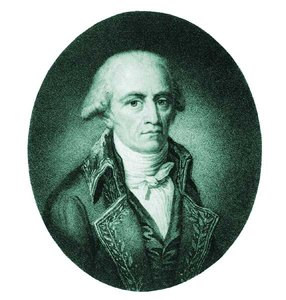
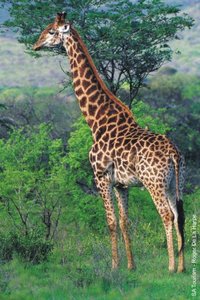
Jean-Baptiste de Lamarck (1744–1829): Published a theory of evolution in 1809. Proposed the ideas of use and disuse (body parts used become stronger) and inheritance of acquired characteristics (modifications acquired during life can be passed on). Although his mechanism was incorrect, he recognized that species evolve.
Population Growth and Competition
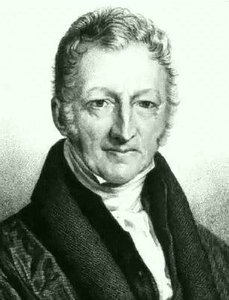
Thomas Malthus (1766–1834): Observed that more individuals are born than can survive, leading to competition for limited resources. This struggle for existence influences which individuals survive and reproduce.

Charles Darwin and the Voyage of the Beagle
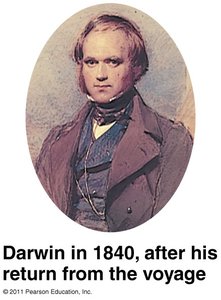
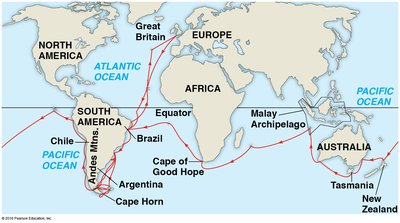
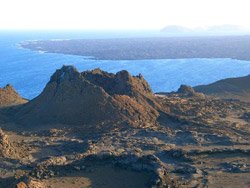
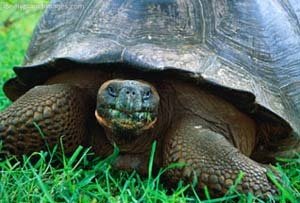
Charles Darwin (1809–1882) was an English naturalist who, during his voyage on the HMS Beagle (1831–1836), collected and studied a wide variety of specimens. His observations, especially in the Galápagos Islands, were crucial in developing his theory of natural selection.
Galápagos Islands: A Natural Laboratory
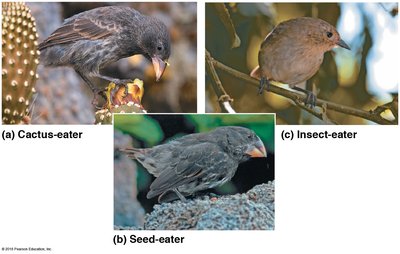
The Galápagos Islands provided unique examples of adaptation and speciation. Darwin observed that species on different islands had distinct traits suited to their environments, such as variations in the beaks of finches.
Darwin’s Finches: The beak shapes and sizes of finches varied depending on their food sources, illustrating adaptive radiation.
Development of the Theory of Natural Selection
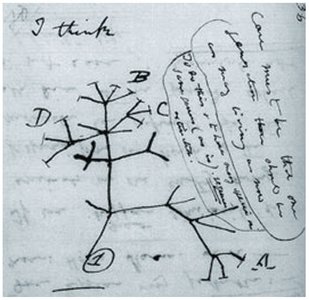
Darwin waited 30 years before publishing his ideas. Alfred Russell Wallace independently conceived a similar theory, prompting Darwin to publish On the Origin of Species in 1859.
Darwin described evolution as "descent with modification" and identified natural selection as the mechanism.
Key Principles of Natural Selection
Variation: Individuals in a population vary in their traits, many of which are heritable.
Overproduction: More offspring are produced than can survive, leading to competition for resources.
Differential Survival and Reproduction: Individuals with advantageous traits are more likely to survive and reproduce.
Adaptation: Over generations, favorable traits become more common in the population.
Populations Evolve, Not Individuals: Evolutionary change occurs in populations over time, not within individual organisms.
Artificial Selection vs. Natural Selection
Artificial Selection: Humans select for desirable traits through breeding (e.g., dog breeds, crop varieties).
Natural Selection: The environment "selects" for traits that enhance survival and reproduction.
Evidence for Evolution
Fossil Record: Shows changes in species over time and the appearance of new forms.
Homologous Structures: Anatomical similarities among different species due to shared ancestry.
Analogous Structures: Similar functions but different evolutionary origins, resulting from convergent evolution.
Biogeography: Geographic distribution of species supports patterns of descent with modification.
Direct Observation: Examples include antibiotic resistance in bacteria and changes in beak size in Galápagos finches.
Summary Table: Key Contributors to Evolutionary Thought
Name | Contribution |
|---|---|
Aristotle | Species are fixed; scala naturae |
Carolus Linnaeus | Taxonomy; binomial nomenclature |
Georges Cuvier | Paleontology; catastrophism |
James Hutton | Gradualism in geology |
Charles Lyell | Uniformitarianism; Earth is very old |
Jean-Baptiste de Lamarck | Early theory of evolution (use/disuse, inheritance of acquired traits) |
Thomas Malthus | Population growth and competition |
Charles Darwin | Natural selection; descent with modification |
Alfred Russell Wallace | Co-discoverer of natural selection |
Conclusion
Evolutionary theory, grounded in the concept of descent with modification, explains the diversity of life through mechanisms such as natural selection. The integration of evidence from multiple scientific disciplines continues to support and refine our understanding of how populations change over time.
