 Back
BackDescent with Modification: The Foundations of Evolutionary Biology
Study Guide - Smart Notes
 Tailored notes based on your materials, expanded with key definitions, examples, and context.
Descent with Modification and the Concept of Evolution
What is Evolution?
Evolution is defined as the change in allele frequencies (genetic composition) within a population over time. This process leads to the diversity of life forms observed on Earth. A population is a group of individuals of the same species living in the same place at the same time, while a species is a group of interbreeding organisms that produce fertile offspring.
Allele frequency: The proportion of different genetic variants (alleles) in a population.
Population: The unit of evolution; evolutionary changes occur at the population level, not in individuals.
Pre-Darwinian Evolutionary Ideas
Typological Thinking and the Ladder of Life
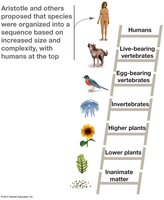
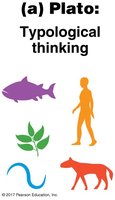
Before Darwin, many naturalists believed in typological thinking, the idea that species are unchanging types with fixed characteristics. Aristotle proposed a 'ladder of life,' organizing species by increasing complexity, with humans at the top.
The Binomial System
In the 1700s, Carl Linnaeus developed the binomial system for naming species, using a two-part name: genus and specific epithet (e.g., Homo sapiens).
Genus: The first part of the name, indicating the broader group.
Specific epithet: The second part, identifying the species within the genus.
Lamarckism
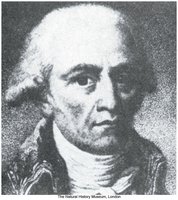
Jean Baptiste de Lamarck proposed that organisms acquire adaptations during their lifetime and pass them to their offspring (inheritance of acquired characteristics). This idea, known as Lamarckism, suggested that evolution was transformational, with organisms changing through use and disuse of parts.
Darwin, Wallace, and the Voyage of the Beagle
Darwin's Journey
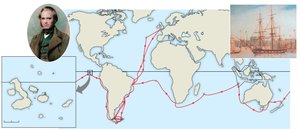
Charles Darwin's observations during the voyage of the HMS Beagle (1831–1836) were foundational to evolutionary theory. He studied diverse species, especially on the Galápagos Islands, noting variations that would later inform his ideas on natural selection.
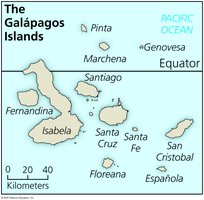
Galápagos Finches and Adaptive Radiation
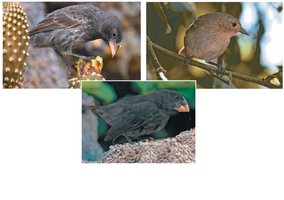
Darwin observed that finches on different islands had beaks adapted to specific diets, illustrating adaptive radiation—the diversification of a group of organisms into forms filling different ecological niches.
Cactus-eater: Long, sharp beak for eating cactus flowers and pulp.
Seed-eater: Large beak for cracking seeds.
Insect-eater: Narrow, pointed beak for grasping insects.
Alfred Russel Wallace
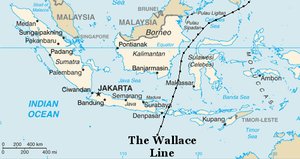
Alfred Russel Wallace independently conceived the theory of evolution by natural selection. His work in the Malay Archipelago led to the identification of the "Wallace Line," a boundary separating species with Asian and Australian affinities.
Darwin's Theory: Descent with Modification by Natural Selection
Key Observations Explained by Evolution
Darwin's theory of descent with modification explains:
The unity of life (shared characteristics due to common ancestry)
The diversity of life (modifications over time)
Organisms' adaptations to their environments
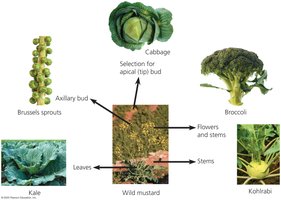
Artificial Selection
Humans have modified species through artificial selection, breeding individuals with desired traits. This process demonstrates how selection can drive significant changes in organisms over generations.
Natural Selection: The Mechanism of Evolution
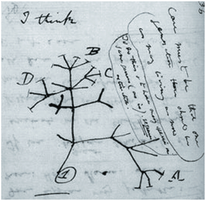
Natural selection is the process by which individuals with advantageous heritable traits survive and reproduce more successfully, leading to the accumulation of favorable traits in the population.
Variation: Individuals in a population vary in their traits.
Overproduction: More offspring are produced than can survive.
Differential survival and reproduction: Individuals with traits better suited to the environment leave more offspring.
Adaptation: Over generations, favorable traits become more common.
Key Features of Natural Selection
Populations, not individuals, evolve over time.
Natural selection acts only on heritable traits that differ among individuals.
Adaptive traits vary with environment and time.
Modes of Natural Selection
There are three main modes of natural selection:
Directional selection: Favors individuals at one extreme of the phenotypic range.
Disruptive selection: Favors individuals at both extremes.
Stabilizing selection: Favors intermediate variants, acting against extremes.
Mode | Description | Effect |
|---|---|---|
Directional | Favors one extreme | Shifts population mean |
Disruptive | Favors both extremes | Increases variation |
Stabilizing | Favors intermediates | Reduces variation |
Evidence for Evolution
Homology
Homology refers to similarities among species due to shared ancestry. These can be:
Genetic homology: Similar DNA sequences among different species.
Developmental homology: Similar embryonic development patterns.
Structural homology: Similar anatomical structures (e.g., limb bones in vertebrates).
Convergent Evolution
Convergent evolution is the independent evolution of similar features in distantly related groups, resulting in analogous structures that serve similar functions but do not arise from a common ancestor.
Common Misconceptions About Evolution
Selection acts on individuals, but evolutionary change occurs in populations.
Acclimation (short-term physiological change) is not adaptation (heritable evolutionary change).
Evolution is not goal-directed or progressive; it does not produce 'higher' or 'lower' organisms.
Adaptations do not arise because organisms 'want' or 'need' them.
